
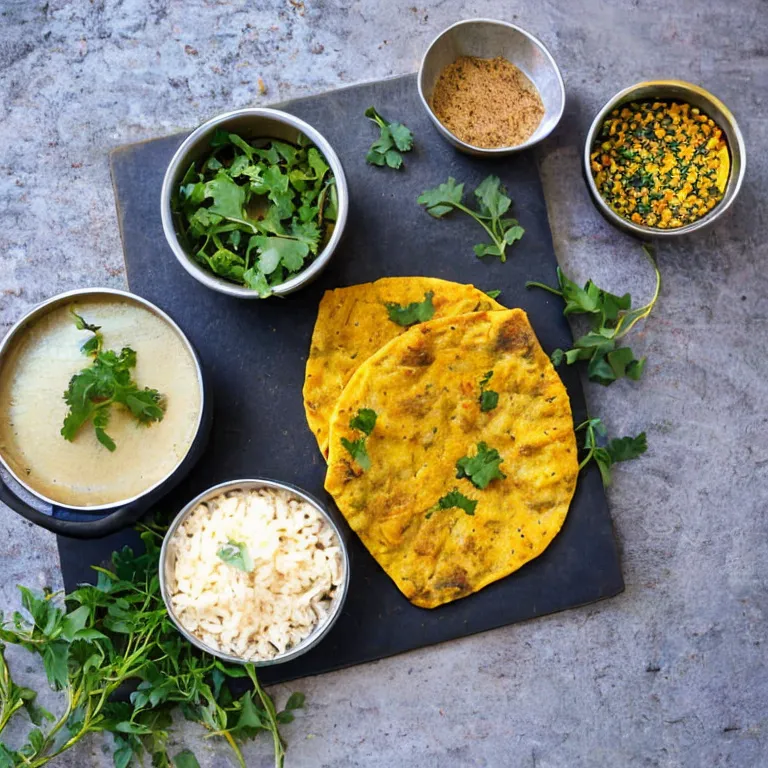
Methi Thepla is a traditional Gujarati flatbread that the whole family will love - perfect for breakfast, lunchboxes or as a travel-friendly snack; made with whole wheat flour and fresh fenugreek leaves, this wholesome version is toddler-friendly with no added salt or sugar, soft and easy to tear, great for baby-led weaning and can be adapted to use spinach instead of fenugreek for milder flavour, served with yogurt or pickle for adults, or kept plain for fussier eaters; follow this simple recipe for an authentic Indian flatbread that introduces your child to leafy greens while keeping everything nutritious, soft and utterly delicious.
General Information
- Servings: 4 (about 8 small toddler pieces each)
- Keywords: methi thepla, toddler friendly, no salt, no sugar, fenugreek, flatbread, soft
- Calories: ~250 kcal per serving (approximate)
- Protein: ~7 g per serving (approximate)
- Carbs: ~40 g per serving (approximate)
- Fats: ~8 g per serving (approximate)
- Preparation time: 20 minutes
- Cooking time: 20 minutes
Hi, I’m Steve - an account manager and dad of two. I like quick, sensible meals that keep the kids happy and parents sane. These methi theplas are soft, mild, and made without added salt or sugar so they suit little tummies. I chop everything small and make the breads extra soft so there are no choking worries.
Ingredients
All measurements metric. The recipe makes about 8 medium theplas; cut into toddler-safe pieces as described below.
- 200 g whole wheat flour (atta)
- 100 g fresh fenugreek leaves (methi), packed (about 1 generous handful after stems removed)
- 50 g plain unsweetened yogurt (about 50 ml)
- 1 small carrot, finely grated (about 40 g)
- 1 teaspoon ground cumin (about 2 g)
- 1/2 teaspoon ground coriander (about 1.5 g)
- 1/4 teaspoon turmeric powder (about 0.5 g)
- 1 teaspoon oil for dough (about 5 ml)
- 20 ml neutral oil for cooking (sunflower, canola or light olive oil)
- 80-100 ml warm water, as needed to knead
- Optional: pinch of asafoetida powder (hing) if you use it and your child has had it before
Notes about ingredients and safety:
- No salt, no sugar. Yogurt is unsweetened and low in sodium. Avoid processed or packaged ingredients with hidden salt.
- Fenugreek leaves can be bitter. Fresh leaves, chopped very fine, are mild when mixed with carrot and yogurt.
- Avoid whole seeds or nuts that could be choking hazards. All spices here are powdered.
Directions
I’ll walk you through each step like I’m standing in your kitchen. If you’ve never cooked much, no worries. I once burnt toast so badly that the smoke alarm joined the family dinner. We learn.
- Prep your workspace and tools
- Get a clean cutting board, a sharp small knife, a bowl, a teaspoon, a measuring jug, a grater, and a heavy frying pan or non-stick skillet.
- Keep a small plate for toddler pieces and a larger plate for adult pieces.
- Turn the stove to medium heat when you need it. Safety first: keep children away from the hot pan.
- Wash and prepare the fenugreek leaves (methi)
- Rinse 100 g fresh fenugreek leaves under cool running water. Put them in a bowl of water and swish, then lift them out so dirt drops to the bottom of the bowl.
- Spread on a clean tea towel and pat dry or let them air dry 5-10 minutes. We want leaves mostly dry so dough does not get too wet.
- Remove thick stems by pinching and pulling. Thick stems can make chewy pieces that bother little mouths.
- Stack the leaves like a few playing cards, roll them up tightly, and then chop very, very fine. Aim for pieces smaller than 2 mm so they do not form stringy bits. If you prefer, use kitchen scissors to snip them finely.
- Grate the carrot and measure yogurt
- Peel the small carrot and grate it finely using the small holes of a box grater. Tiny grated pieces blend into the dough and add natural sweetness without being a choking hazard.
- Measure 50 g (about 50 ml) unsweetened plain yogurt and give it a quick whisk in a small bowl to smooth it.
- Mix dry spices and flour
- In a large bowl, put 200 g whole wheat flour, 1 teaspoon ground cumin, 1/2 teaspoon ground coriander, and 1/4 teaspoon turmeric. If you use a pinch of asafoetida, add it now.
- Give the dry mix a stir with a spoon so spices are even.
- Combine greens, carrot and wet ingredients
- Add the finely chopped methi and the grated carrot to the flour mix. Toss them with your fingers so the greens are evenly distributed.
- Add the yogurt and 1 teaspoon (5 ml) oil. Start mixing with your fingers or a spoon.
- Knead the dough (step-by-step)
- Add 50 ml warm water to start. Mix until the dough starts to come together.
- If the dough is crumbly, add another 10-20 ml warm water, a little at a time. You want a soft, pliable dough that is not sticky.
- Knead for about 3 to 4 minutes. To knead, press the dough with the heel of your hand away from you, fold it back, turn, and repeat. Think light, steady pressure, like gently massaging the dough.
- Form a smooth ball. Cover with a clean cloth and rest for 10 minutes. Resting helps the dough relax so it rolls easily.
- Divide and shape
- After resting, divide dough into 8 equal balls, each about 30-35 g. Roll each between your palms to smooth.
- Lightly dust a clean surface with a pinch of whole wheat flour. Using a small rolling pin, roll each ball into a round about 10 cm across and about 2-3 mm thick. For toddlers we want soft, not crispy, so keep them slightly thicker than store-bought theplas.
- If you haven’t rolled before, press gently with the rolling pin, turn the circle a quarter turn, and roll again. If edges crack, pinch them back together with your fingers.
- Cook the theplas
- Heat a heavy non-stick pan over medium heat. To test if the pan is ready, sprinkle a few drops of water; they should sizzle gently and evaporate.
- Place one rolled thepla on the pan. Cook for about 45-60 seconds until you see small bubbles forming on the surface.
- Flip and brush lightly with oil (about 1 teaspoon split between both sides). Cook the second side for another 45-60 seconds.
- Flip once more and press gently with a spatula so it cooks evenly. If you prefer extra-soft breads for toddlers, after flipping once more, cover the pan with a lid for 20-30 seconds so the thepla steams slightly. This keeps them soft and easy to chew.
- Repeat for all the theplas. Keep cooked ones covered with a clean cloth to stay soft.
- Cut into toddler-safe pieces
- Let cooked theplas cool to lukewarm. Never give hot food to little ones.
- For toddlers, cut into bite-sized pieces: aim for roughly 2 cm squares or small triangular pieces no longer than 4-5 cm. Avoid long rolled strips that could slip into the throat. If the thepla is soft, use a knife or kitchen scissors to make neat small pieces.
- Test the piece by tasting: it should be soft and easy to mash between your fingers.
- Serving and storage
- Serve warm or at room temperature. Pair with a mild dip or mash if desired (see Recommended Sides).
- Store leftovers in an airtight container in the fridge for up to 2 days. Reheat gently in a pan with a splash of water and a lid to steam rather than crisp up.
Little safety reminders
- Cool food to lukewarm before giving to toddlers.
- Cut into small pieces and always supervise while eating.
- Introduce new ingredients one at a time if your child has food sensitivities.
Recommended Sides
- Mild plain mashed avocado: smooth and creamy, spread it thinly on the thepla pieces.
- Unsweetened plain yogurt mixed with a pinch of very finely grated cucumber for a cooling dip.
- Soft mashed cooked sweet potato, cooled and served as a dip or smear.
- Steamed, very soft peas mashed lightly and mixed with a tiny bit of yogurt.
Jokes
- Why did the thepla go to school? To get a little dough-cation.
- My kids call this dinner “green bread.” I call it “stealth veg success.”
- Why do kids like my theplas? Because they loaf around the table.
- I tried to make a thepla sing. Now it has perfect rolls.
- What’s a dad’s favorite spice? A pinch of pride.
- If a thepla ran a meeting, it would always start on a roll.
If you want, I can show a quick photo guide to rolling and cutting, or suggest a dipping sauce recipe that stays low salt.
Shop Ingredients
Find these ingredients on Amazon:
As an Amazon Associate I earn from qualifying purchases.
Suggested Recipes
You Might Also Like
 Never miss a recipe from us, subscribe to our newsletter