
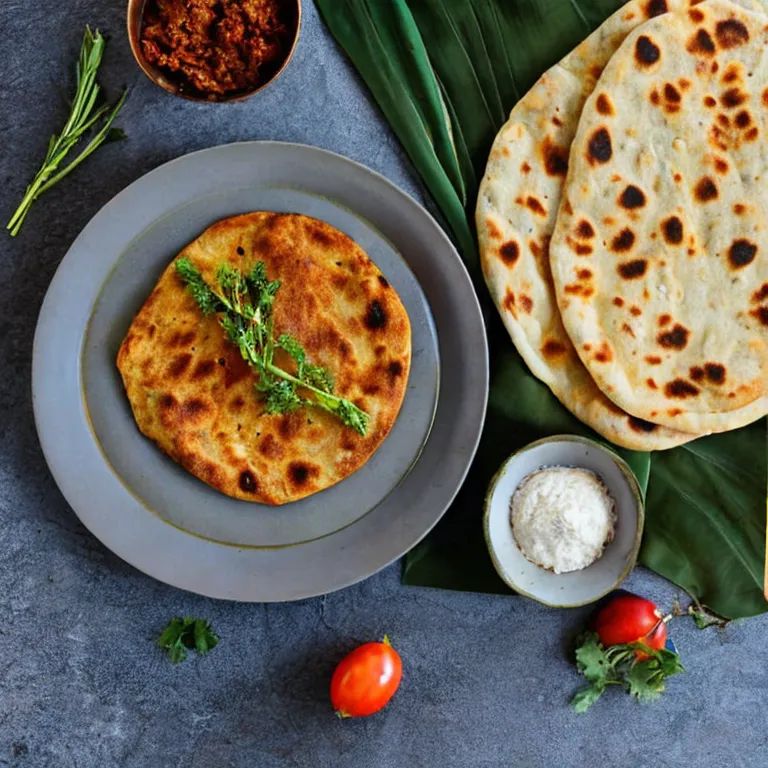
Tandoori Roti is a classic Indian flatbread that the whole family will love - perfect for scooping up curries, wrapping around vegetables or simply enjoying with a smear of butter; made with wholemeal flour and baked until soft with lightly crispy edges, this wholesome version is toddler-friendly with no added salt, easy for little hands to hold and tear, great for baby-led weaning and can be adapted to use a mix of white and wholemeal flour for softer texture, made on a stovetop griddle if you don’t have an oven, or cut into fun shapes for fussier eaters; follow this simple recipe for restaurant-quality flatbread that brings authentic Indian flavours to your family table while keeping everything simple, nutritious and utterly delicious.
General Information
- Servings: 4 toddler portions
- Keywords: tandoori roti, toddler recipe, no salt, no sugar, kid friendly, wholemeal, flatbread
- Calories: ~307 kcal per serving
- Protein: ~11 g per serving
- Carbs: ~55 g per serving
- Fats: ~7 g per serving
- Preparation time: 30 minutes (includes resting the dough)
- Cooking time: 15 minutes
G’day, I’m Steve - an account manager who juggles spreadsheets by day and two noisy kids by night. I like simple, inventive dinners that don’t require a PhD in cooking. This toddler-friendly Tandoori Roti is low fuss, has no added salt or sugar, and is soft and easy for little hands to hold. I’ve kept spices mild and the pieces small so grown-ups can relax a bit at the dinner table. Let’s get into it.
Ingredients
- 300 g wholemeal (whole wheat) flour, plus extra for dusting
- 120 g plain unsweetened yogurt (room temperature)
- 80-100 ml warm water (about 40°C, not hot)
- 15 ml olive oil (1 tablespoon) plus 5 ml for brushing during cooking
- 1 teaspoon (2 g) mild sweet paprika for colour
- 1/2 teaspoon (1 g) ground cumin (mild flavour)
- 1/4 teaspoon (0.5 g) turmeric (optional, small amount for colour)
- 1/4 teaspoon (0.5 g) garlic powder (optional, very mild)
- Small splash lemon juice (5 ml) optional, for grown-up taste if you want
- Soft unsalted butter or a little extra olive oil to finish (optional)
Notes on ingredients and safety
- No added salt or sugar. Yogurt must be plain and unsweetened. Avoid store-bought flavored yogurts.
- No nuts, no seeds, no whole chickpeas. These can be choking hazards or high in salt in commercial products.
- Spices are mild. If your child is new to spices, leave out paprika or reduce it. Always watch for food reactions with new ingredients.
- Cut the cooked roti into toddler-friendly strips (see Directions) and check temperature before serving.
Directions
Prep and measuring for absolute beginners
- Clear a flat surface and a mixing bowl. Put a tea towel to one side for covering the dough later.
- Measure flour with a kitchen scale for accuracy. If you don’t have a scale, spoon the flour into a measuring cup and level it off with the back of a knife. Too much flour makes roti tough.
Mix the dough
-
In a bowl, combine 300 g wholemeal flour, 1 teaspoon paprika, 1/2 teaspoon ground cumin, 1/4 teaspoon turmeric (if using), and 1/4 teaspoon garlic powder (if using). Mix the dry spices through the flour with your fingers or a spoon so the colour looks even. Dad tip: my kids think the orange colour makes it magic bread. Magic equals dinner eaten faster.
- Make a small well in the centre of the flour and add 120 g plain yogurt and 15 ml olive oil.
- Slowly add 80 ml warm water while stirring with a spoon or your hand. If the mixture looks dry, add another 10-20 ml. You want a soft, slightly tacky dough that comes together in a ball. It should not be sticky to the point it clings to your fingers like a Velcro sock.
Kneading the dough (step-by-step)
-
Turn the dough onto a lightly floured surface. Use the heels of your hands to push the dough away from you, fold it back, then push again. Repeat for 5-7 minutes until the dough is smooth and springs back gently when you press it with a finger. If it feels stiff, add a teaspoon of water and knead a bit more. If it is too sticky, dust a little flour.
-
Cover the dough with a damp tea towel or cling film and let it rest 20-30 minutes. Resting relaxes the gluten so the rotis are softer. This is a good time to wrangle kids, answer emails, or stare into the fridge like it will tell you dinner ideas.
Divide and shape
- After resting, divide the dough into 8 equal pieces. For this batch each piece will be about 40 g. Roll each piece into a smooth ball between your palms.
- Lightly sprinkle flour on your bench and rolling pin. Flatten a ball and roll into a circle about 12-14 cm across and roughly 2 mm thick. If you are worried about thickness, make them a touch thicker for softness. Keep the others covered while you roll so they do not dry out.
Cooking on the stovetop (easy and reliable)
- Heat a heavy non-stick frypan or cast iron pan over medium heat. You can test heat by flicking a little water into the pan; it should sizzle briefly and evaporate.
- Place a rolled roti into the dry pan. Cook for about 60-90 seconds until you see small pale brown spots and the surface looks set. Flip with a spatula.
- Cook the second side for another 60-90 seconds. Brush a little olive oil or unsalted butter (about 2-3 ml) on the cooked side and press gently with the spatula to help it soften and puff a little. Flip again and cook for 10-20 seconds. We are aiming for soft, not crispy.
- Transfer the cooked roti to a plate and cover with a clean tea towel to keep them soft while you finish the rest. Repeat with remaining dough.
Cooling and cutting safely for toddlers
- Let the rotis cool down to lukewarm. Always test a bit yourself on the edge before giving to a child.
- For toddlers, cut each roti into thin strips about 1.5 cm wide and 6-8 cm long, or small triangle pieces roughly the same size. The strips should be thin and flexible so a toddler can bite and chew easily. Avoid handing whole rounds to young toddlers as they can be a gagging risk.
Serving tips and texture fixes
- If the roti is a little firm, sprinkle with a teaspoon of warm water and steam lightly in a covered pan for 30 seconds; this softens them.
- Store leftovers in an airtight container in the fridge for 2 days. Reheat wrapped in a damp paper towel in a low oven or microwave until just warm. Always cool to safe temperature first.
Recommended Sides
- Mashed avocado: ripe avocado, mashed smooth. No salt. Add a squeeze of lemon for grown-ups if desired.
- Plain yogurt dip: 100 g plain unsweetened yogurt mashed with a little mashed steamed sweet potato for sweetness and creaminess. No salt.
- Steamed carrot and pumpkin mash: steam until very soft, then mash until smooth. Great for dipping pieces of roti.
- Mild chickpea mash: cook chickpeas until very soft and mash thoroughly with a little olive oil and lemon. Make sure texture is smooth to avoid choking hazards.
- Soft cooked shredded chicken: cook chicken until very tender, then shred finely. Mix with a little yogurt to stop it drying out.
Jokes
- Why did the roti go to school? To become well-rounded, of course.
- My kids call these “magic strips” because they disappear faster than my inbox on a Friday.
- If a roti could talk it would probably ask for a playdate with the avocado. They make a lovely pair.
If you want, I can give a version with wholemeal and a hidden veg like mashed beetroot for extra colour, or show you how to make these in the oven if you prefer hands-off cooking.
Shop Ingredients
Find these ingredients on Amazon:
As an Amazon Associate I earn from qualifying purchases.
Suggested Recipes



 Never miss a recipe from us, subscribe to our newsletter