
Tips for easy and safe food preparation for toddlers
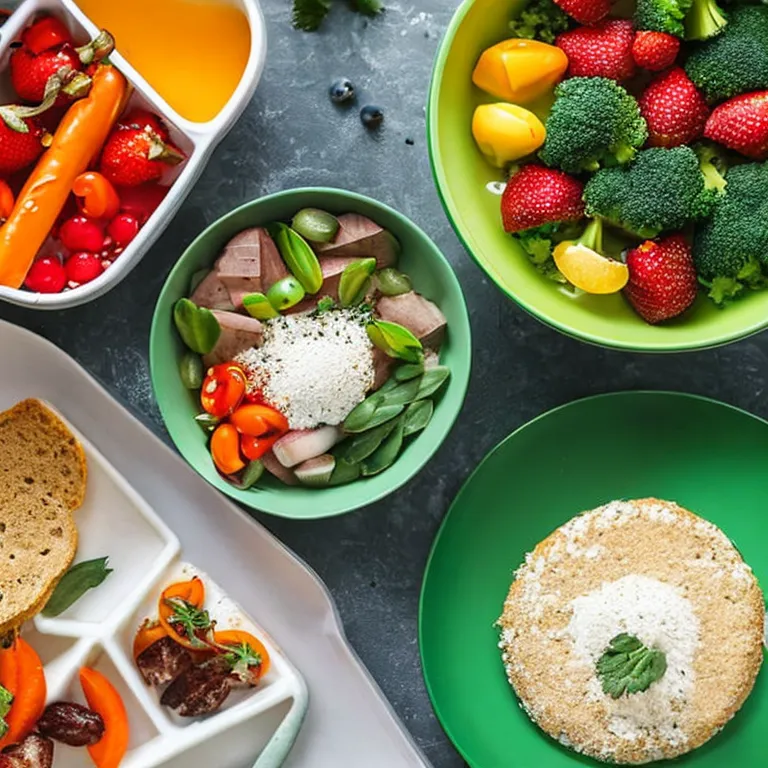
If peanuts are off the table, you can still get all the creamy, spreadable goodness kids love without the risk. Here are easy swaps and practical tips that actually work at snack time, in lunchboxes and in baking.
Best swaps and how to use them
- Sunflower seed butter: the closest texture to peanut butter and great on toast, sandwiches and in smoothies. Go smooth rather than crunchy for toddlers. If it separates, give it a good stir and keep it in the fridge once opened.
- Pumpkin seed butter: a tasty, slightly nuttier flavour. Lovely mixed with mashed banana on toast or spooned into warm porridge.
- Soy nut butter: similar texture and often labelled as a peanut-free alternative. Check labels for other allergen warnings.
- Hummus: excellent for dips and sandwiches, and pairs really well with soft veg like cooked carrot sticks or cucumber ribbons.
- Avocado: mashed avocado is creamy, mild and full of healthy fats. Smear thinly on toast or dollop into wraps.
- Greek yogurt or cottage cheese: great spreadable options that add protein. Sweeten slightly with fruit puree for variety.
- Cream cheese or ricotta: mild and familiar, works well with fruit slices or on toasted muffin halves.
- Banana mash: for baking or sandwiches, banana can replace peanut butter in many recipes for sweetness and texture.
Substituting in recipes
- For most recipes you can swap seed or soy butters 1:1 for peanut butter. If the batter feels too dry, add a tablespoon of oil or a splash of milk.
- In cookies and slice fillings, seed butters behave very similarly. For satay-style sauces, try tahini or a sunflower seed butter base with a splash of soy sauce and a little honey.
Safety and school/kindy rules
- Never give whole nuts to toddlers. Even small nut pieces are a choking hazard.
- Many centres ban tree nuts even if peanuts are allowed, so check kindy or school policies before packing almond or cashew butters.
- Look for “peanut-free” or “made in a peanut-free facility” if that is a requirement for your child’s centre. Conversely, a “may contain traces of peanuts” warning means avoid the product.
Cross-contact and prep tips
- Keep separate knives, storage containers and a dedicated jar if someone in the household has a peanut allergy. Wiping a blade is not enough to remove residue.
- Avoid using the same toaster for nutty and non-nutty breads unless you have a dedicated toaster or use foil to separate slices.
- Wash hands and surfaces thoroughly after spreading to reduce cross-contamination.
Introducing new spreads
- Try a small amount at home first and watch for any signs of allergy over 24 hours. If there is family history of allergies or any concern, check with your GP or an allergy clinic before introducing new nut or seed products.
Quick snack ideas
- Smooth sunflower butter, banana and a dash of milk blended into a quick smoothie.
- Hummus with soft steamed carrot sticks or pita cut into thin strips.
- Toast with mashed avocado and a sprinkle of mild cheese.
- Yogurt mixed with a spoonful of seed butter and mashed fruit for a dip.
Little practical hacks
- Thin thick spreads with a splash of milk to make them less sticky for little mouths.
- Use small silicone containers for kinder snacks so portions are obvious and spill risk is lower.
- Keep one jar of the “safe” spread in a top shelf if you need to prevent accidental use by other family members.
If there are any allergy concerns, check with your GP or allergy service before swapping in new products. These options should make snack prep simple, safe and tasty for little ones without missing out on flavour.
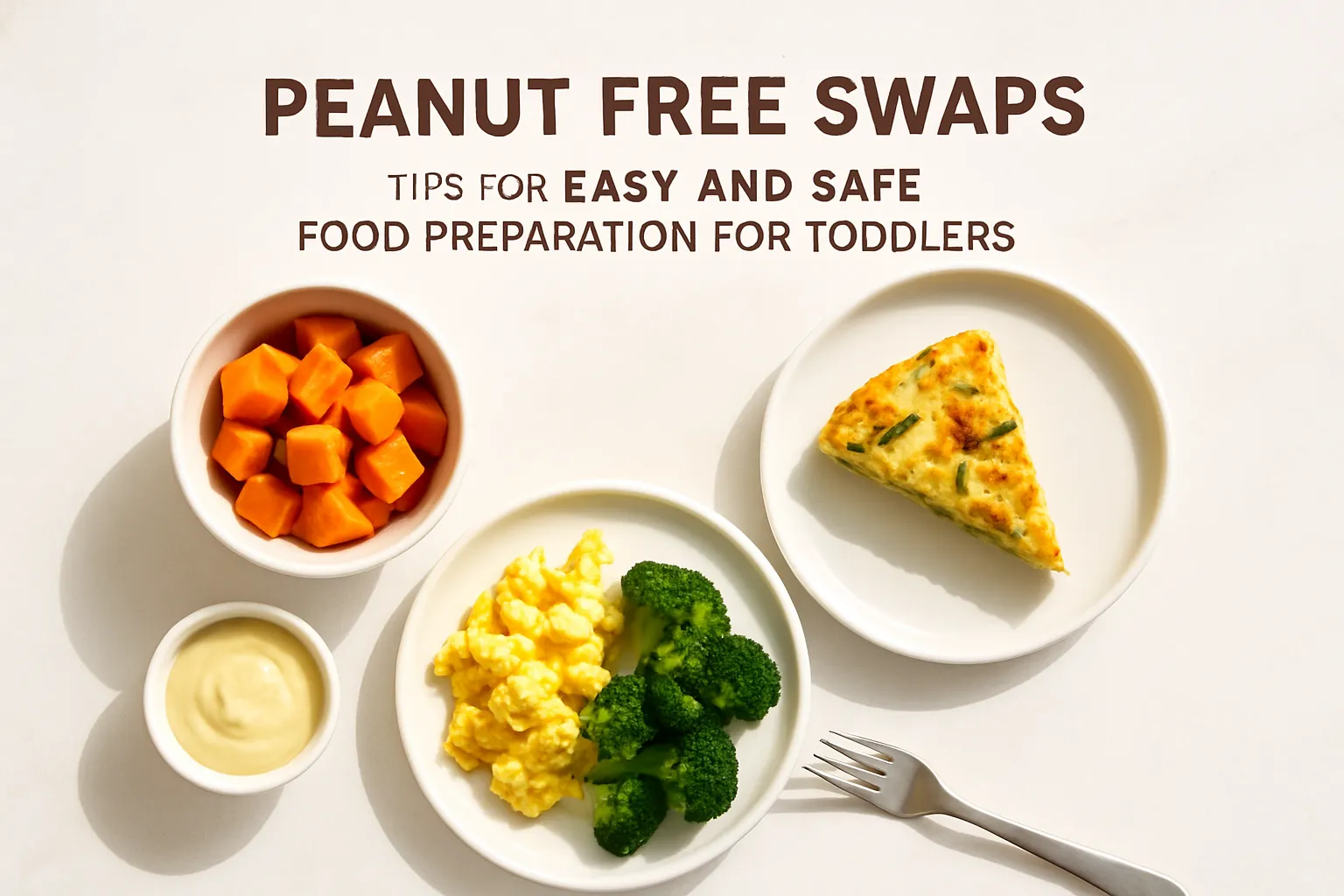
If your toddler balks at strong flavours, keep things calm and simple. Here are easy, practical ways to make meals more acceptable without losing nutrition.
- Keep flavours single and gentle. Think butter, olive oil, a little grated cheese, or a tiny splash of unsalted stock rather than lots of herbs and spices.
- Use naturally sweet veg and fruit. Roast pumpkin, sweet potato or carrots to bring out sweetness. Steamed apple or pear is great with a sprinkle of cinnamon.
- Offer one new thing at a time. Pair it with something they already like so the plate feels familiar rather than scary.
- Small portions of new foods. A teeny taste is less intimidating and means less waste. You can offer repeats across meals rather than piling a big serve on the plate.
- Mild dips win. Plain full‑fat yoghurt, mashed avocado, mild hummus or ricotta are brilliant for dunking and make new textures easier to handle.
- Gentle herbs and aromatics are your friends. Basil, parsley and chives add interest without overwhelming. Cooked onion or garlic becomes sweet and soft, which most kids prefer to raw.
- Swap textures, not just flavours. If they reject a puree, try the same food as a soft finger food or a lightly mashed version. Texture often matters more than taste.
- Use neutral carriers. Plain pasta, mashed potato, rice or toast mellow strong tastes and help children accept new things by association.
- Try the “mix a spoonful” trick. Stir a spoon of a new veg puree into something familiar like porridge, yoghurt or mashed potato so the new flavour is subtle at first.
- Lightly season if needed. A tiny pinch of cinnamon on fruit or a dusting of mild paprika on roast veg can make flavours more kid-friendly. Avoid adding salt or sugar.
- Let them choose between two simple options. Asking “carrot sticks or peas?” gives autonomy and reduces refusals.
- Keep offering. Tastes change. A food refused today might be accepted after several gentle exposures, so leave pressure out and offer it again another day.
Little, consistent tweaks to flavour and texture usually get better results than dramatic recipe changes. Celebrate the small wins and keep meals relaxed.
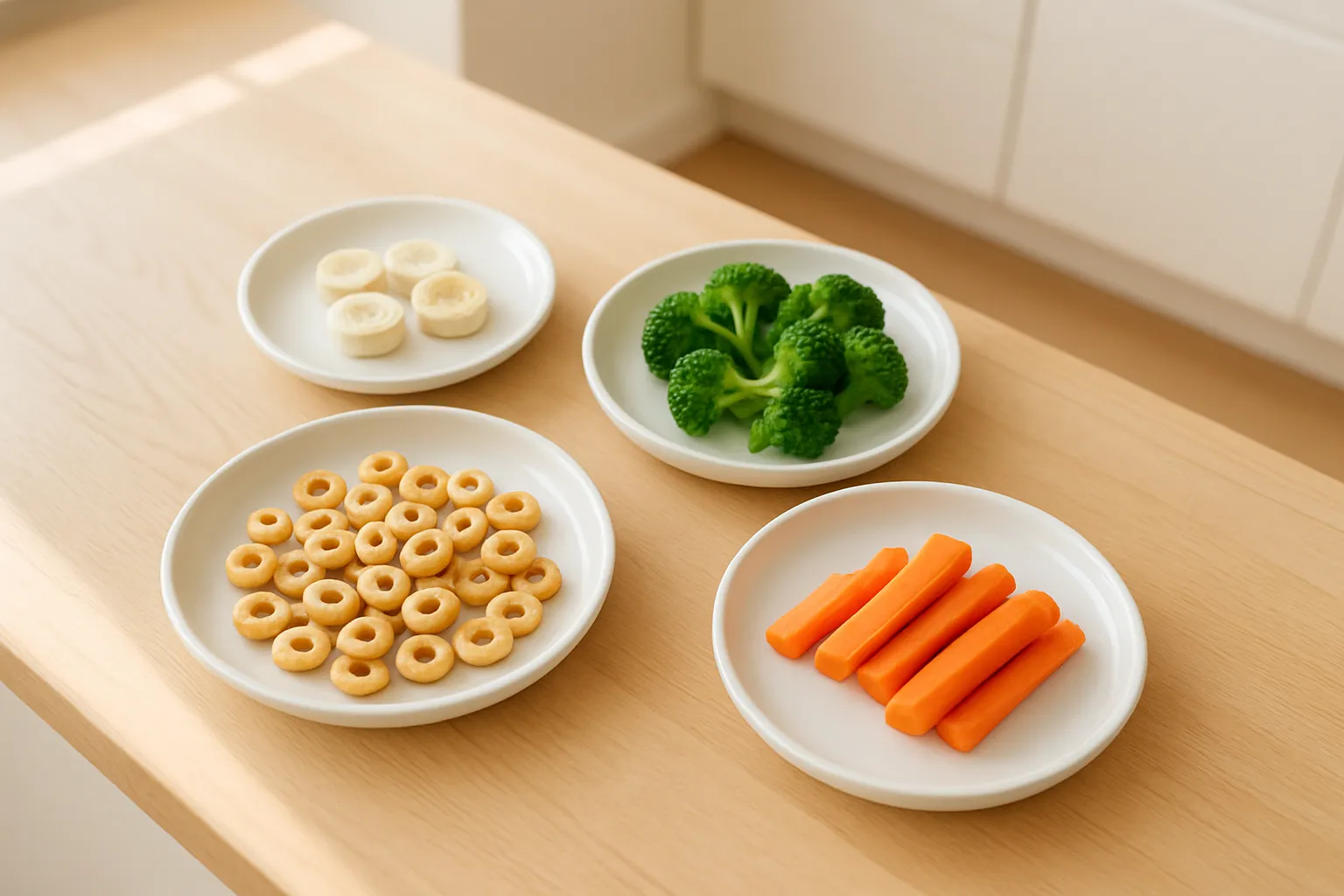
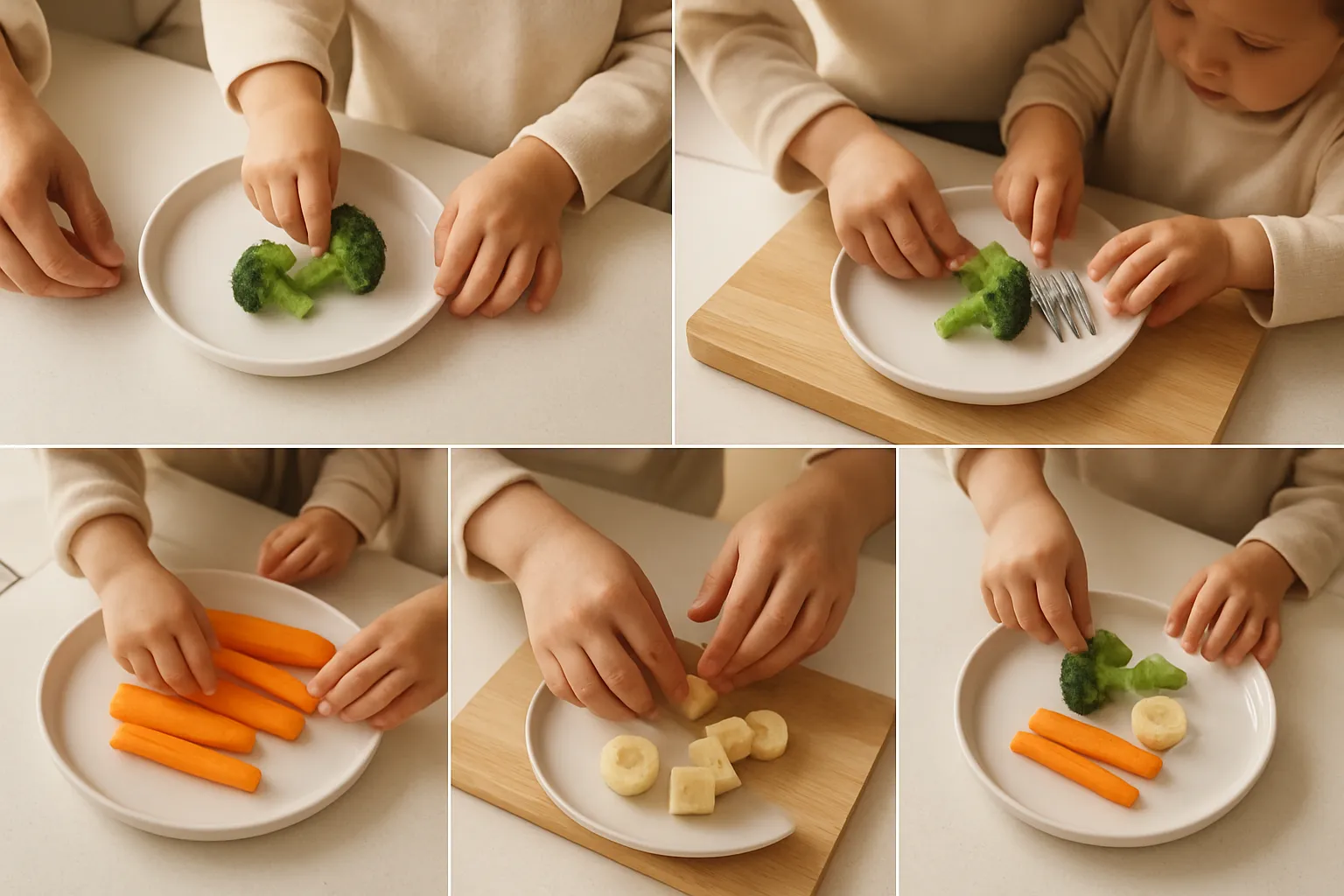
Keep calm and set up the kitchen so you can actually cook while keeping your little one safe and close by.
-
Create a safe zone. Put a play-safe space or kid station near where you work. A high chair, booster with tray or a little table with toys and chef-safe jobs like stirring with a silicone spoon or wiping a board will keep them occupied and part of things without being underfoot.
-
Supervise, always. Even the best-proofed kitchen can’t replace eyes on your toddler. If you need to step away, take them with you or put them somewhere safe and secure before you leave.
-
Stove and oven rules. Use back burners when possible and always turn pot handles to the back or side so they can’t be grabbed. Fit stove knob covers if your hob is easily accessible. Teach the “hot is hands-off” rule and model it every time.
-
Hot liquids are the biggest risk. Keep kettles, jugs and mugs well away from edges, don’t carry hot drinks while holding or carrying your child, and pour away from them. When reheating bottles or food, stir and test temperatures before serving.
-
Knife and sharp item safety. Keep knives in a high cupboard or in a locked block. If your toddler helps with food prep, give them blunt, child-safe utensils and tasks like tearing lettuce or pressing cookie cutters.
-
Cut food to safe sizes. Slice grapes, cherry tomatoes, hot dogs and similar items lengthwise and into small pieces to reduce choking risk. Soft, sticky and round pieces need extra attention.
-
Choking hazards and small items. Keep whole nuts, popcorn, small hard candies and non-food items out of reach. Regularly sweep or vacuum the floor so stray bits don’t become a snack.
-
Secure cupboards and drawers. Latch cleaning supplies, medicines and heavy items. Use magnetic or childproof locks for low cupboards and keep sharp or heavy cookware up high.
-
Keep floors dry and clear. Wipe spills straight away and avoid rugs that slip. A clutter-free floor lowers trip risks when you’re carrying hot dishes.
-
Oven and appliance precautions. Use oven locks if you have curious little hands. Place slow cookers and mixers at the back of the bench and run cords towards the back so toddlers can’t pull them.
-
Microwave safety. Stir food well and test the temperature in multiple spots. Be careful with steam when lifting covers.
-
Cleaning and chemicals. Store all detergents, cleaning sprays and batteries locked away. Note the Poisons Information Centre 13 11 26 and keep it handy, plus 000 for emergencies.
-
First aid and preparation. Do a basic first aid and CPR course if you can. Keep a well-stocked first aid kit in the house and a plan for what to do if there’s a burn or choking incident.
-
Small practical habits. Use non-slip mats, keep oven mitts and a firm tray for carrying hot things, close bin lids or use a pedal bin that locks, and avoid tablecloths little hands can yank.
-
Teach and involve. Simple rules and consistent consequences work wonders. Ask them to call you before touching anything, give one-step instructions, and praise every safe choice so good habits stick.
A few small changes make the kitchen less stressful and a lot safer. You’ll still need full attention, but with these setups you can actually enjoy cooking while keeping your toddler safe.
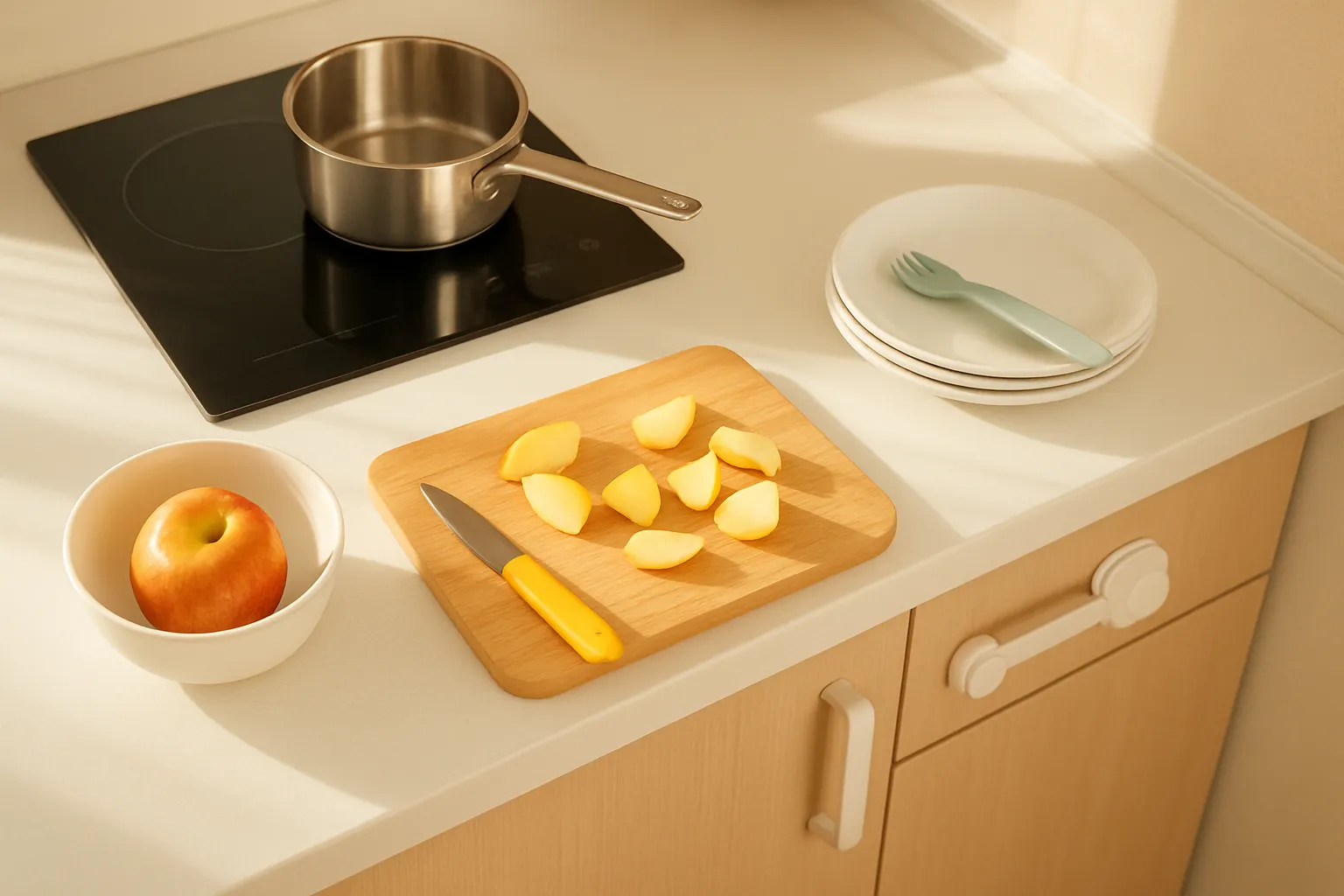
With those safety basics in mind, here are easy, practical ways to get a batch cook happening without the stress.
What to make
- Go for forgiving bases: bolognese, lentil dahl, mild curries, shredded chicken, meatballs, frittatas, soups and casseroles freeze and reheat well.
- Breakfast and snacks are gold: mini muffins, pancake batches, baked oats, bliss balls and pancake pouches freeze brilliantly.
- Purees and mash can be frozen in small portions to mix into meals or lunchboxes.
Portioning and packing
- Portion into toddler-sized servings straight away so you only defrost what you need. Use small containers, reusable silicone moulds or ice cube trays for single-serve bits.
- Lay zip-lock bags flat for freezer space saving and faster thawing. Label with contents and date before they go in.
- Keep a plain, mild portion for the toddler and a spiced or sauced-up version for adults so you’re not cooking two different meals.
Cooling, storing and safety
- Cool food quickly by spreading it out in shallow containers, then pop in the fridge within two hours. Put lids on once cold.
- Fridge: aim to use cooked food within about three days. Freezer: best quality for a couple of months. Don’t refreeze food that’s already been defrosted.
- Reheat until piping hot and stir well to avoid cold spots, then check a spoonful reaches a safe, toddler-friendly temperature before serving.
Time savers and tricks
- Double recipes you already make. Freeze half in toddler portions and the rest for dinners.
- Sheet-pan baking: roast a tray of veg and protein together, then mix and match through the week.
- Use a slow cooker or oven overnight for hands-off bulk cooking. Shred meat, portion and freeze for quick meals.
- Prep ahead on quiet evenings: chop veg, pre-cook grains and beans, or assemble freezer meals for a quick shove in the oven.
Kitchen kit that helps
- Silicone muffin trays, ice cube trays, shallow airtight containers and flat freezer bags.
- A good set of labels and a permanent marker.
- A decent box grater and food processor to speed up shredding and pureeing.
A couple of quick meal ideas to batch
- Mild bolognese frozen in 1-cup portions for pasta, toasties or sneaky veg sauces.
- Meatballs frozen on a tray then bagged - serve with mash or in little noodle bowls.
- Pancake batter frozen in disc shapes for quick breakfasts straight into the pan.
- Smoothie packs: fruit, spinach, oats pre-bagged so mornings are five seconds away.
Little routines make a big difference. A couple of hours on the weekend can mean several no-fuss meals during the week, and you’ll always have something safe and toddler-friendly on hand.
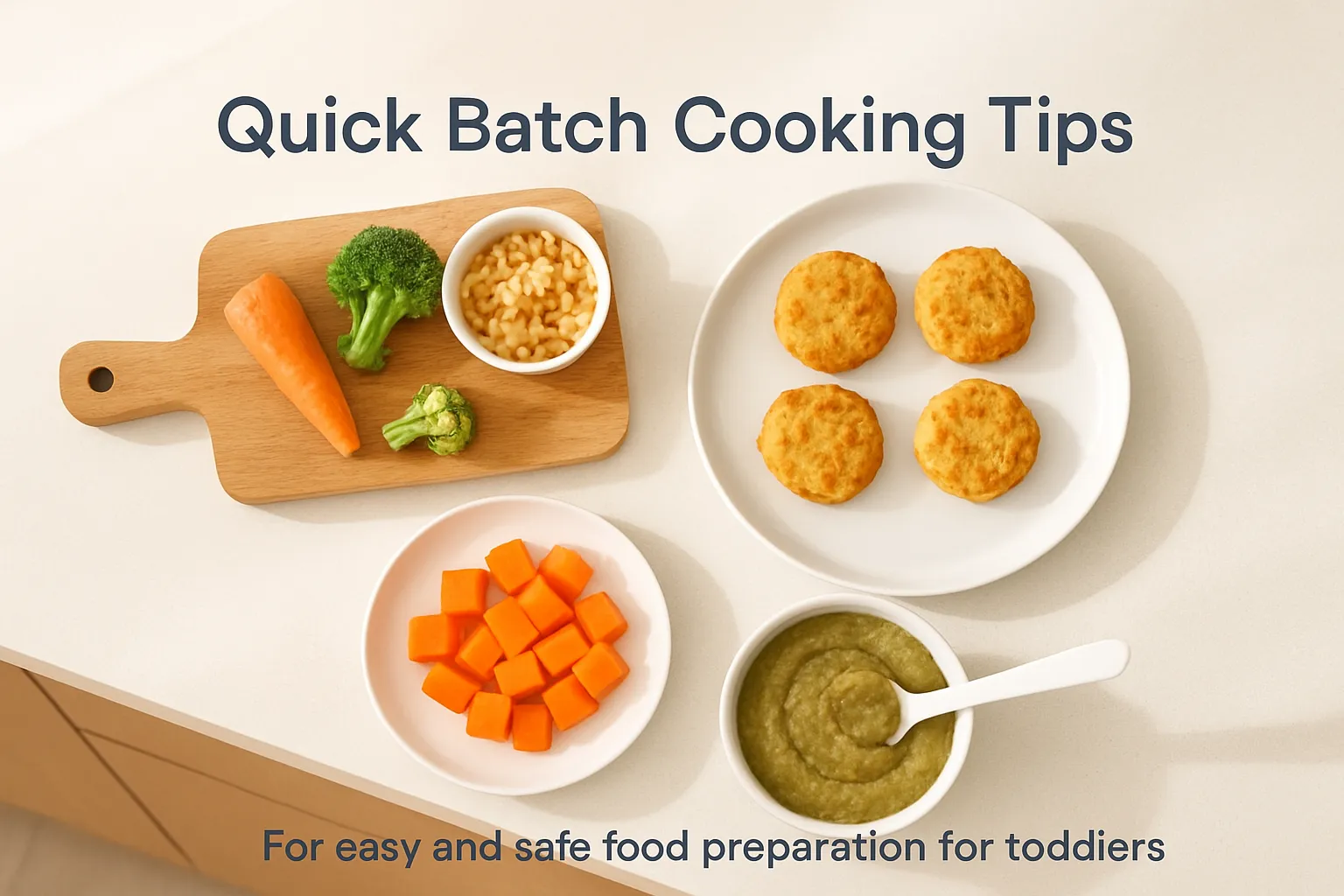
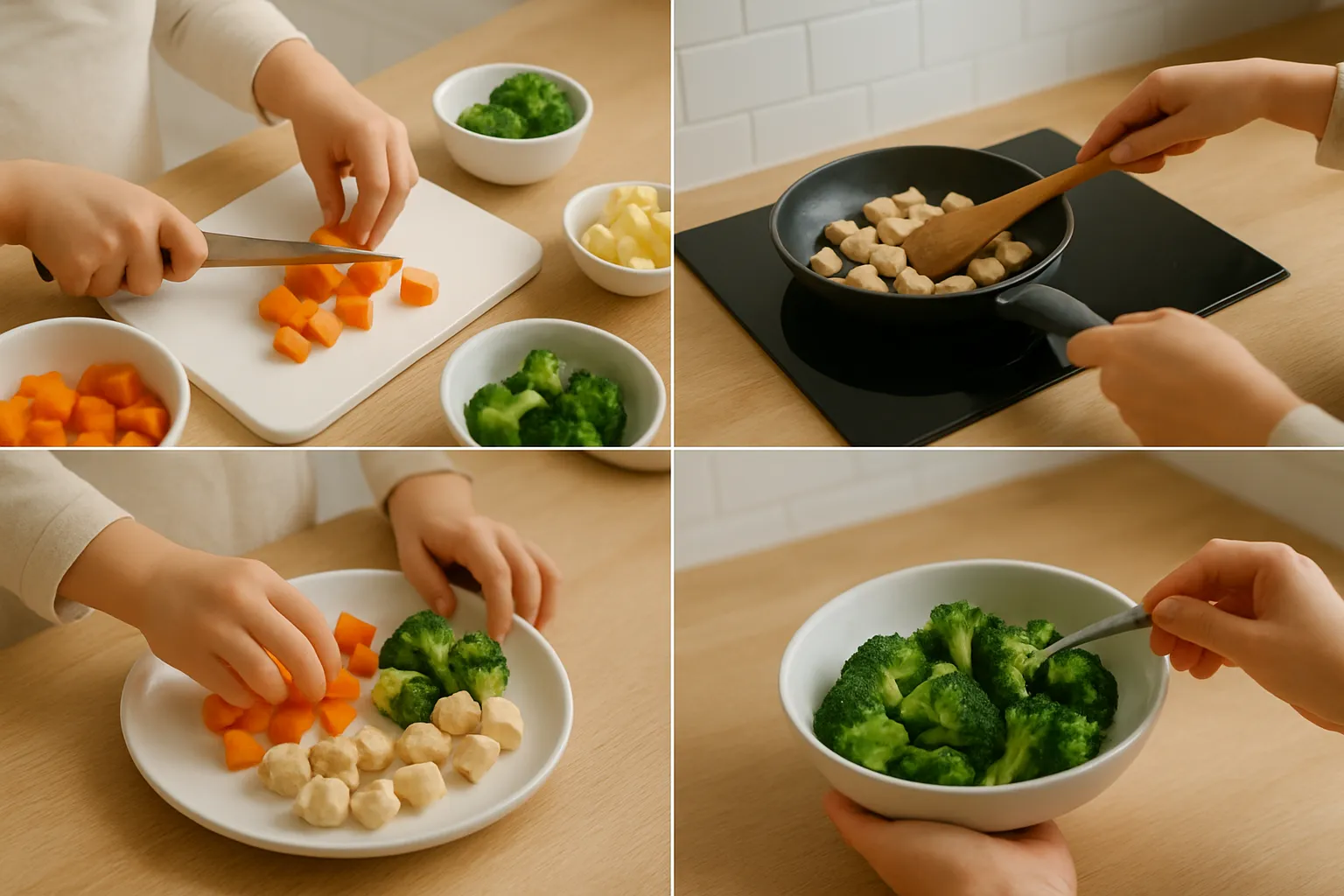
Keep two plates going at the same time. Build a simple, toddler-safe base and then add a few bold finishing touches to your own plate so you get something interesting without extra cooking.
Practical ways to do it
- One-base, two-finishes
- Roast a tray of veg and chicken or chickpeas. Mash or chop some veg for the toddler, then toss your portion with chilli flakes, lemon, feta and fresh herbs. The toddler gets plain roasted veg, you get punchy flavours.
-
Make a pot of plain pasta. Reserve a small bowl before stirring in garlic, anchovy, capers and chilli for your bowl. Toss the toddler’s with butter and grated cheese.
- Fast flavour jars
- Keep jars in the fridge with things that instantly change a meal: basil pesto, preserved lemons, chilli oil, quick pickles, harissa mayo. Spoon a bit onto your plate while leaving toddler portions plain.
-
Batch a big jar of herby dressing at the start of the week. It transforms leftovers into something grown-up in seconds.
- Split-cook favourites
- Shakshuka style: cook the tomato base mild for the toddler, scoop out a small portion, then turn up the heat and add chilli, feta and olives to yours.
-
Stir-fries: cook veg and protein in a neutral sauce, lift out toddler’s serve, then add soy, oyster, sesame and chilli to the pan for your bowl.
- No-cook evenings
- Cold plates are lifesavers after bedtime. Smoked salmon or tinned fish, crisp greens, marinated feta, olives and sourdough make a proper adult meal with zero reheating. Keep toddler snacks separate.
-
A quick charcuterie plate with sliced apple, hummus, pickles and leftover roast veg feels indulgent and takes five minutes.
- Upgrade frozen or pantry basics
- Frozen dumplings or gnocchi get restaurant-level treatment if you pan-fry them until crisp and finish with chilli oil, lemon zest and parsley. Keep toddler’s portion boiled or steamed and plain.
-
Canned beans become a smoky bean salad with smoked paprika, olive oil, capers and lemon. Serve a milder, mashed version for the little one.
- Small finishing touches that go a long way
- Fresh herbs, a squeeze of citrus, toasted seeds, crumbled feta or a drizzle of flavoured oil. They’re quick, cheap and change the whole meal.
- A scattering of crunchy nuts or seeds adds texture but keep them off the toddler’s portion for safety until they’re older.
Quick mini-recipes
- 5-minute avocado feta toast
-
Mash avocado into two bowls. One gets a dash of lemon and a sprinkle of mild cheese for the toddler. To yours, add crumbled feta, chilli flakes, lemon zest and a drizzle of honey.
- Speedy miso bowl
- Make a neutral grain bowl. To one portion add plain steamed veg for the toddler. To yours stir through a spoonful of miso, sesame oil, spring onion and a soft-boiled egg.
Kitchen hacks that actually help
- Prep a few condiment jars at the weekend. Little jars of zesty oil, pickled red onion or toasted seed mix make weeknight meals feel special.
- Use a small frying pan for your add-ins. While the toddler eats from the main plate, crisp off bacon, fry garlic or reduce a sauce in a separate pan so flavours don’t mix.
- Keep a tray of toddler-safe finger foods ready for “I need to eat now” moments. That buys you five to ten minutes to finish your own plate or add your grown-up touches.
A gentle safety reminder Keep spicy, salty or crunchy add-ons away from little hands and bowls. Use separate utensils so the toddler doesn’t get a taste of something too strong.
These tricks mean you can eat something grown-up without a big extra effort. Little swaps, quick finishes and a couple of flavour jars in the fridge are all you need to keep meals both family-friendly and interesting.
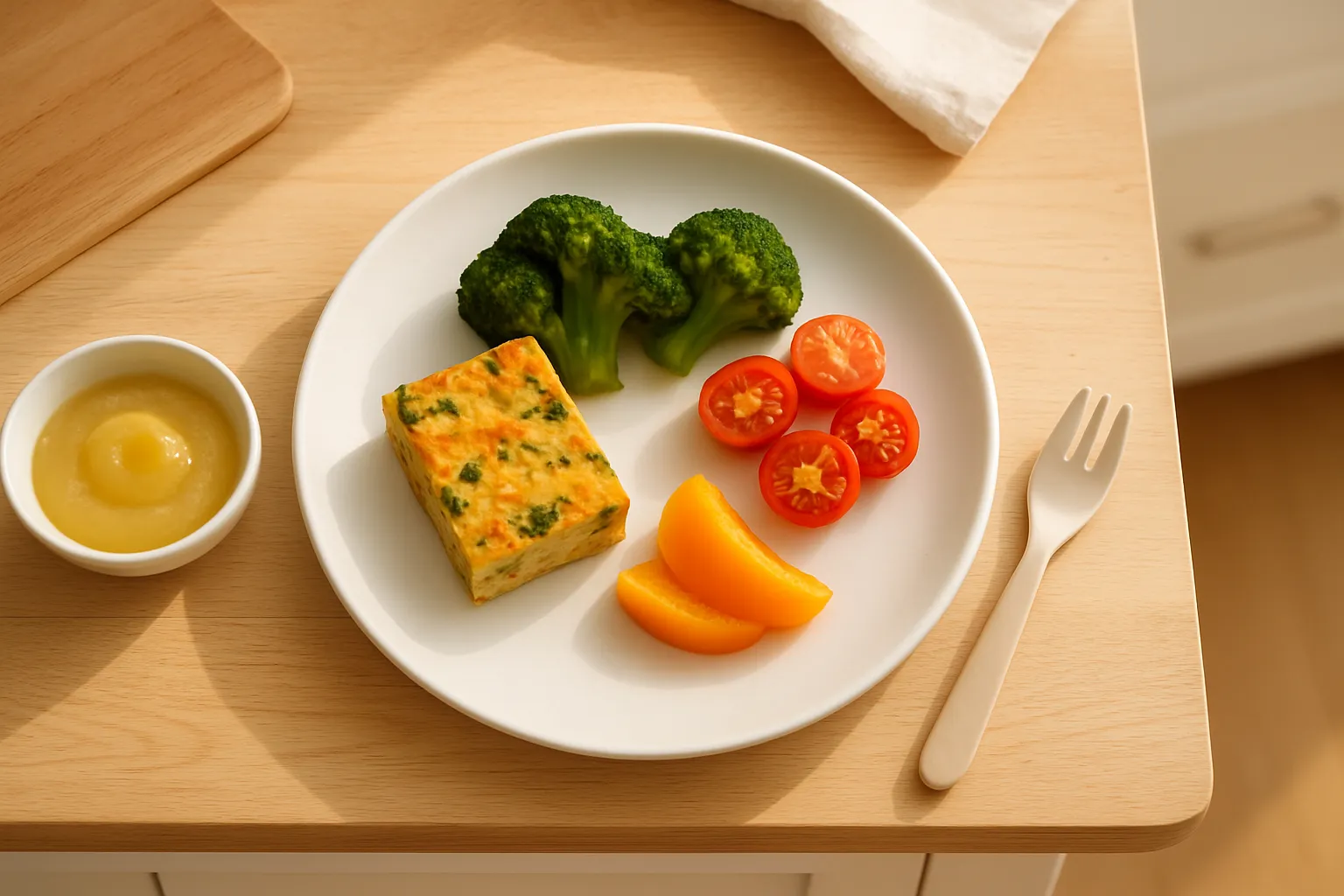
Browse Cuisines
From the Blog
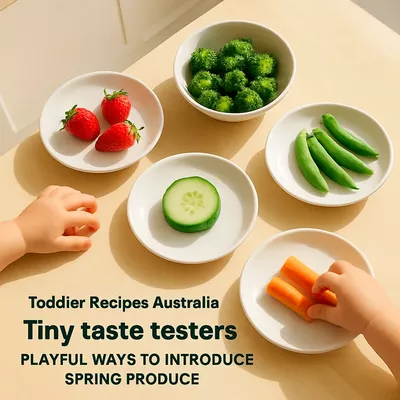
First up, a few no-fuss spring winners that keep sticky fingers and big clean-ups to a minimum. Quick to prep and easy for little hands to manage, these are the sorts of things I reach for when we want something...
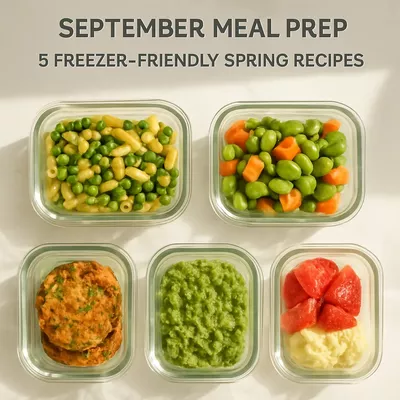
Nice - here’s how Steve keeps dinner simple without sacrificing flavour or sanity. A few good habits and the right packing tricks mean you can pull a proper family meal out of the freezer in minutes.
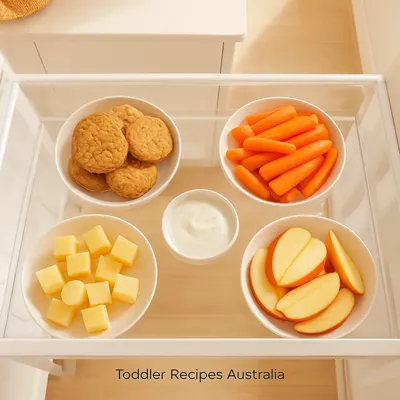
Righto, a couple of quick fridge fixes will make everything a whole lot easier. These are the simple, practical habits and setups that keep snacks safe, obvious and actually reachable for little hands.
 Never miss a recipe from us, subscribe to our newsletter