
Tips for adding flavor to toddler food
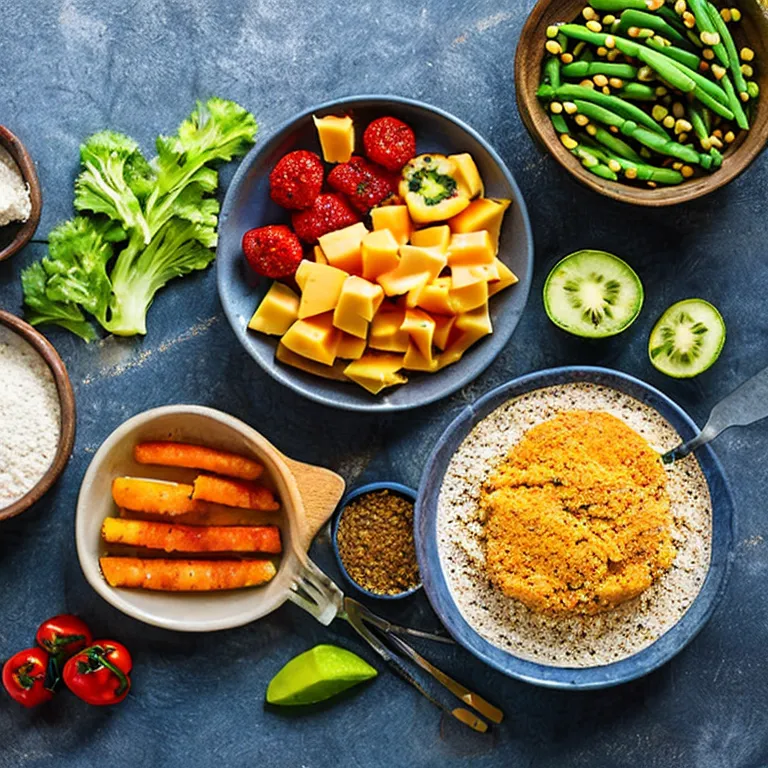
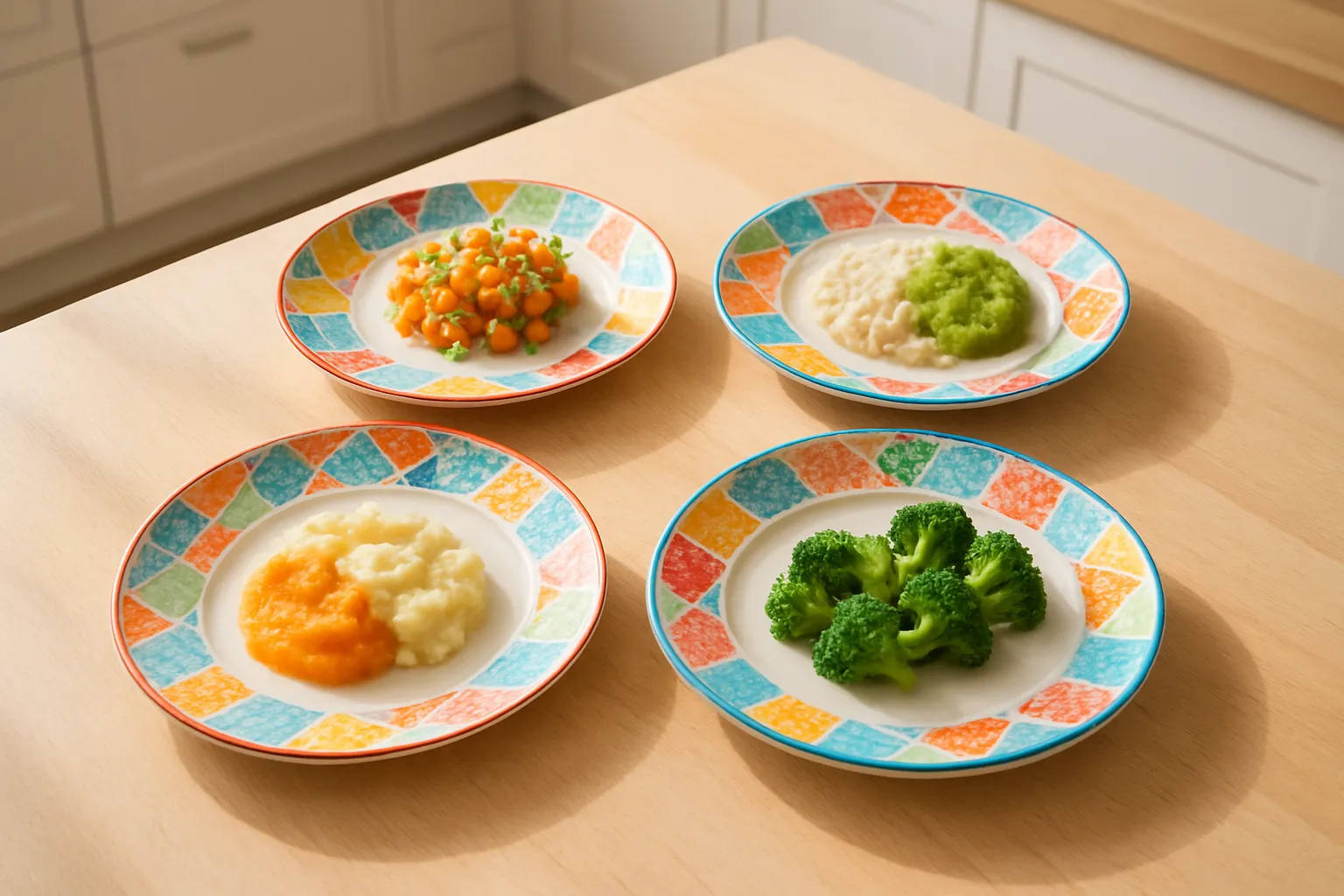
A bit of design goes a long way at the dinner table. Small tweaks to shape, colour and arrangement can make new flavours feel less scary and more fun.
-
Faces and animals: Turn a bowl of mash, veg and protein into a cheeky face. Use pea eyes, carrot smiles and a slice of avocado as a hat. Flavour tip: fold a tiny bit of mild pesto or mashed roasted tomato into the mash so each forkful picks up a subtle herb or tomato note.
-
Rainbow plates: Line up steamed veg by colour, from beetroot to corn. Kids love the pattern, and mixing veg textures adds interest. Flavour tip: roast the veg with a drizzle of olive oil and a pinch of smoked paprika or cinnamon on sweet veg (sweet potato, pumpkin) to bring out natural sweetness.
-
Little garden patch: Serve brown rice or quinoa as “soil”, add steamed peas, corn kernels and soft diced carrot as “seedlings”. Drizzle a lemony yoghurt dressing on the side for dipping. The tiny citrus hit brightens flavours without overwhelming.
-
Mini skewers and nibble boards: Thread soft cooked chicken, cherry tomatoes halved, cheese cubes and cooked pumpkin on short skewers or toothpicks. Kids love the picking action. Flavour tip: a tiny smear of hummus or smashed avocado on the board gives a creamy, savoury boost.
-
Storybook plates: Base a meal around a favourite book character colours or theme. Make a “bear picnic” with toasted pita triangles, slices of pear and mild cheese. Flavour tip: toast the pita and brush with a little garlic-infused olive oil for gentle savoury depth.
Quick prep tricks that dress up flavour
- Roast for depth: Roasting veg and cut-up fruit caramelises natural sugars, making flavours richer and more interesting.
- Finish with a tiny hit: A squeeze of lemon, a sprinkle of grated cheddar, or a dusting of mild paprika at the end lifts a whole plate.
- Combine textures: Soft (mashed veg), creamy (yoghurt or ricotta), and crunchy (toasted bread crumbs or crushed cereal) make eating more fun and highlight taste contrasts.
- Keep seasonings gentle: Think sweet spices like cinnamon on apple or savoury notes like oregano or smoked paprika in tiny amounts. Always try new spices on your own first and start with a pinch.
Safety and sanity tips
- Chop food into toddler-safe sizes and avoid whole grapes, nuts and hard raw veg.
- Prep extras of the “design bits” (peas, cherry tomatoes, little toast fingers) so assembling a fun plate takes only minutes.
- Let kids point to what they want on the plate sometimes; that small choice helps them try new things.
Simple presentation and a few tiny flavour boosts will change how a toddler sees their meal. Keep it relaxed, make it colourful, and have a couple of go-to designs ready for busy nights.
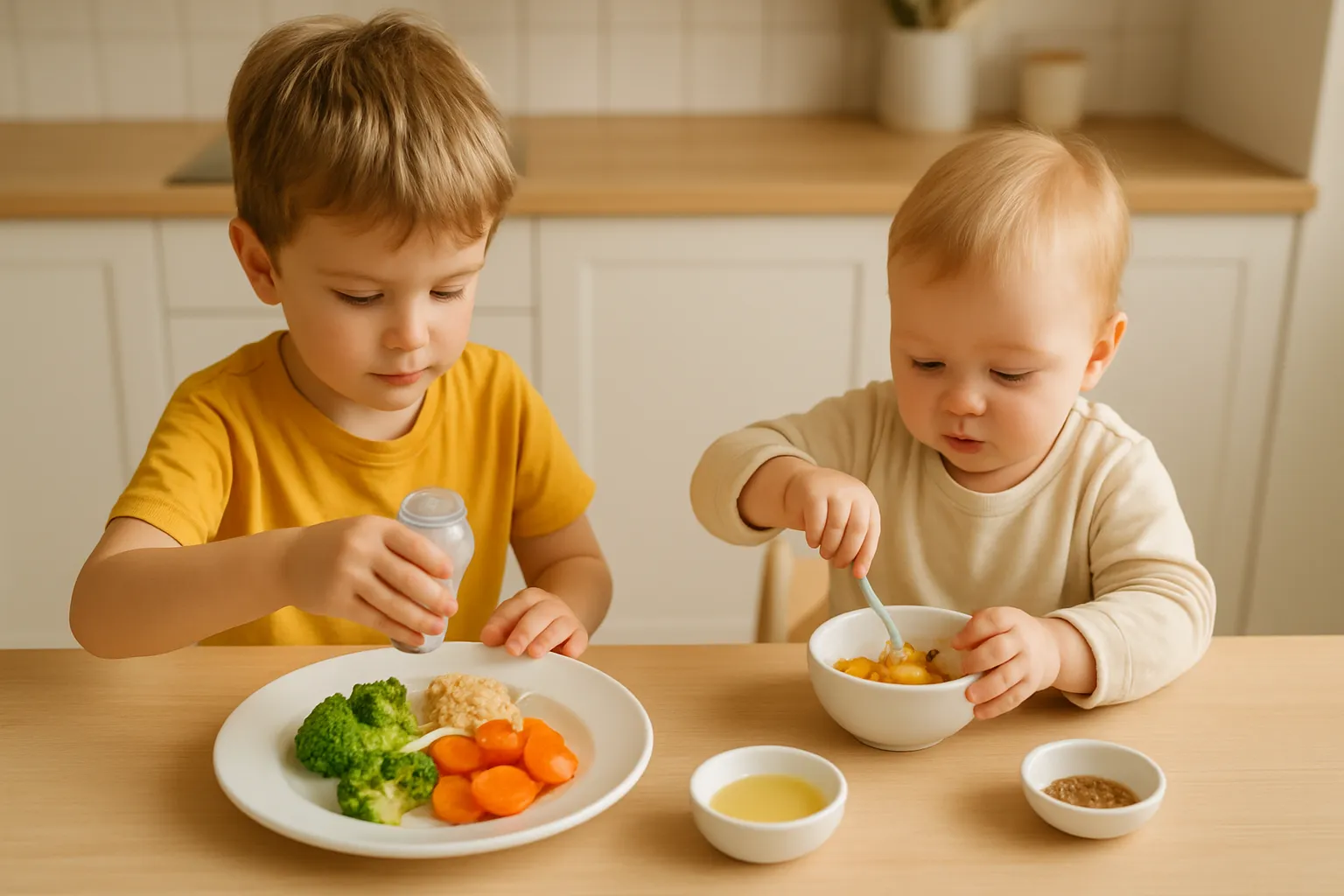
Getting the boys into the kitchen is one of the easiest ways to make food more interesting and get them excited about flavours. Keep it low-pressure and fun, and you’ll be surprised how much more likely they are to try new things.
Set up a safe space
- Give them a sturdy step stool or child-height bench so they can reach. Non-slip mats help heaps.
- Keep the sharp stuff and hot pans out of reach. Use child-safe knives, peelers and scissors for older toddlers.
- Pre-measure things into small bowls so they can pour and tip without making a mess.
Simple, flavour-focused jobs by age
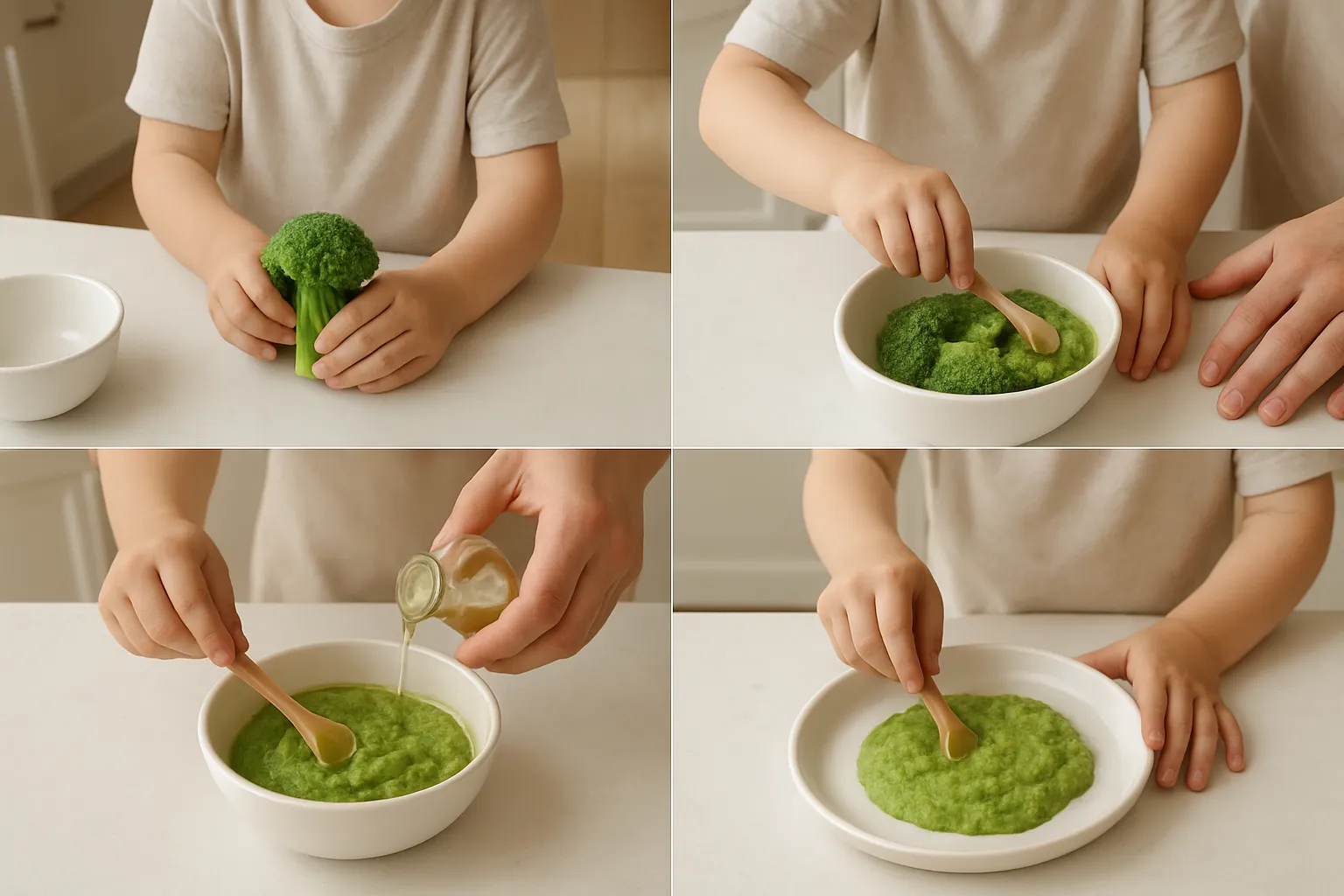
- 1-2 years: Washing fruit, tearing soft basil leaves, sprinkling cheese or seeds, stirring mashed veg. These little actions give sensory exposure to new tastes.
- 3-4 years: Mashing avocados, squeezing lemons, pressing garlic with a press, stirring dressings, scattering herbs or a pinch of cinnamon on porridge.
- 5+ years: Measuring spices, zesting citrus, chopping soft veg with a toddler knife, assembling mini kebabs, helping whisk marinades.
Make flavour part of the fun
- Seasoning station: Set out tiny pots of mild spices and herbs (cinnamon, smoked paprika, mild curry powder, dried oregano), plus lemon wedges and grated cheese. Let them choose one thing to add to their plate. It gives them control and a chance to experiment.
- Herb picking: A little pot of parsley, coriander or basil on the bench is gold. Teach them to smell before they pick. Snipping fresh herbs feels special and the aroma is a big sell for taste.
- Taste-test game: Put three tiny spoons with different flavours - sweet, salty, tangy - and let them vote on a favourite. Use this to tweak dinner flavours together.
- Build-your-own bowls: Prep small bowls of flavoured bits - roasted corn, beans, grated carrot, feta, plain yogurt, mild salsa - and let them assemble. Kids love being the boss of their plate.
Keep praise specific and low-pressure Comment on what they did rather than whether they ate. “You picked the basil, that smells amazing” hits better than pressure to finish veggies.
Clean-up is part of the job Give them a little cloth for wiping, hand them a scrap bowl, or get them to help put peels in the compost. It teaches responsibility and keeps the kitchen sane.
Getting the boys involved turns flavour-tweaking into play, builds confidence and makes dinner time a team effort.
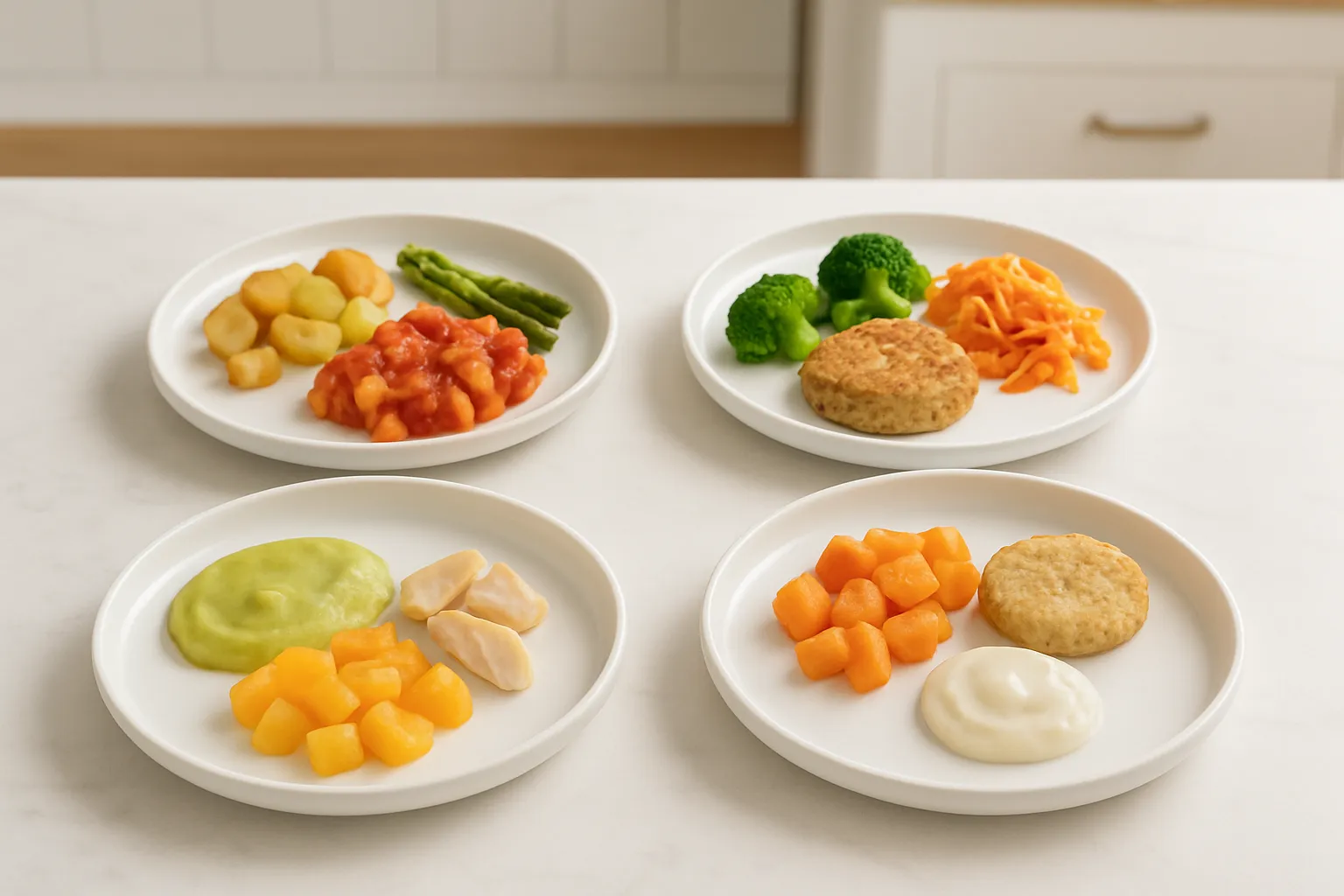
Start by dividing the plate into little blocks of colour and texture. The idea is small, distinct pockets of food so your toddler can see and try each thing without it all getting mushed together.
Practical tips
- Pick 4 to 6 different colours. Aim for bright veg, a fruit, something soft, something crunchy, a grain or protein and a small dip. Colour draws the eye and makes tasting less scary.
- Keep portions tiny. Think pinch-sized pieces or quartered bites so it feels like a sampler rather than a full serve.
- Mix textures. Soft (smashed avocado, mashed sweet potato), creamy (yoghurt or mild hummus), chewy (small pasta or quinoa), and crunchy (toast strips, thin carrot batons). Different textures make the plate more interesting.
- Mild flavour pops. Add a squeeze of lemon, a tiny sprinkle of mild paprika, a few basil leaves, or a pinch of mild grated cheese to lift bland things without overwhelming.
- Safety first. Cut grapes and cherry tomatoes in halves or quarters, remove seeds and pips, and avoid whole nuts or hard chunks. No honey for under 12 months.
- Use cookie cutters or small cutters to shape sandwiches, pieces of cooked beetroot, or cheese. Shapes help sell the idea of a quilt patch.
- Keep a tiny dip in each square. A dab of yoghurt, hummus, tahini yoghurt, or a mild salsa gives flavour without making everything messy.
- Balance sweet and savoury in each bite where possible. Put a sweet fruit square next to a savoury cheese or ham square so little mouths get a tiny contrast.
- Prep the night before. Roast a tray of mixed veg and keep them in the fridge. In the morning you can quickly assemble a colourful plate.
Sample quilt plate combos
- Orange square: roasted sweet potato cubes. Green square: steamed peas or edamame (shelled). Cream square: smashed avocado with lemon. Yellow square: scrambled egg. Red square: halved strawberries or tomato pieces. Little pot: plain yoghurt.
- Purple square: roasted beetroot coins, thinly sliced. Brown square: small beef or lentil ragu on soft pasta. White square: ricotta with a drizzle of olive oil. Crunch square: thin toast soldiers.
- Summer picnic: watermelon cubes, cucumber ribbons, corn kernels, cottage cheese, thin cold lamb slices, hummus.
Make it fun. Let kids pick one square, name the colours, or match a toy to a square. The quilt look makes tasting feel like play, and that goes a long way toward getting new flavours into little tummies.
When dinner’s a scramble and you need something quick that actually tastes like something, these tiny fixes make weeknight meals go from bland to “Mum, yum” without extra cooking.
- Stir in a spoonful of plain yoghurt or crème fraîche. It smooths sauces, cools spicy bits, and gives a lovely tang. Great with curries, tomato pasta and mashed veg.
- Grate a little hard cheese over warm food. Parmesan or cheddar melts nicely into pasta, veggies or soups and kids love the salt-free hit of flavour.
- A drizzle of olive oil or a pat of butter lifts steamed veg and mash. Try a flavoured olive oil like garlic or lemon for extra oomph, but use sparingly.
- Zest lemon or orange over fish, roasted veg or chicken. Citrus brightens flavours in seconds without adding salt.
- Keep a jar of roasted garlic in the fridge. Mash a clove into mashed potato, soups or pasta sauces for deep, sweet garlic flavour that’s gentle on tummies.
- Stir a teaspoon of miso paste into soups, noodle bowls or mashed veg for umami richness. Use low-salt versions and start small.
- Tomato paste is magic. Fry a small spoon in a little oil for a minute, then add to sauces or stews for concentrated tomato flavour.
- Quick veg purée: blitz leftovers or frozen veg with a bit of stock or milk and swirl into sauces, casseroles or bolognaise. Sneaks veg in and boosts taste.
- Mild pesto or tahini thinned with a splash of water can transform pasta or roasted veg. Watch for nut allergies and go seed-based if needed.
- A tiny pinch of warm spices like smoked paprika, mild curry powder or cinnamon can totally change a dish. Start tiny and mix into sauces or roasted veg.
- Crunchy finishers: toasted breadcrumbs, crushed cornflakes or finely chopped toasted seeds give texture and flavour. Make sure seeds are ground or mixed in for little ones to avoid choking.
- Warm stock instead of water lifts rice, couscous and mashed potato. Use low-salt or homemade stock for a healthier boost.
- Quick herb trick: toss in fresh parsley, basil or coriander right at the end. Herbs add freshness and bright flavour with no cooking fuss.
- Soft cheese dollop: ricotta or cream cheese stirred into risotto, pasta or soup adds creaminess and mild tang that kids often love.
- Pre-roasted veg or store-bought rotisserie chicken are lifesavers. Shred chicken and mix with a little yoghurt, lemon zest and mild mustard for an instant flavour-packed filling.
A few safety and seasoning notes: keep salt and strong chillies to a minimum, avoid whole nuts for toddlers and don’t give honey under 12 months. Taste as you go and keep portions of flavour small so little palates can adjust.
These tiny tweaks take seconds and make a real difference on those busy nights. Try one or two and you’ll notice dinner gets eaten more without extra fuss.
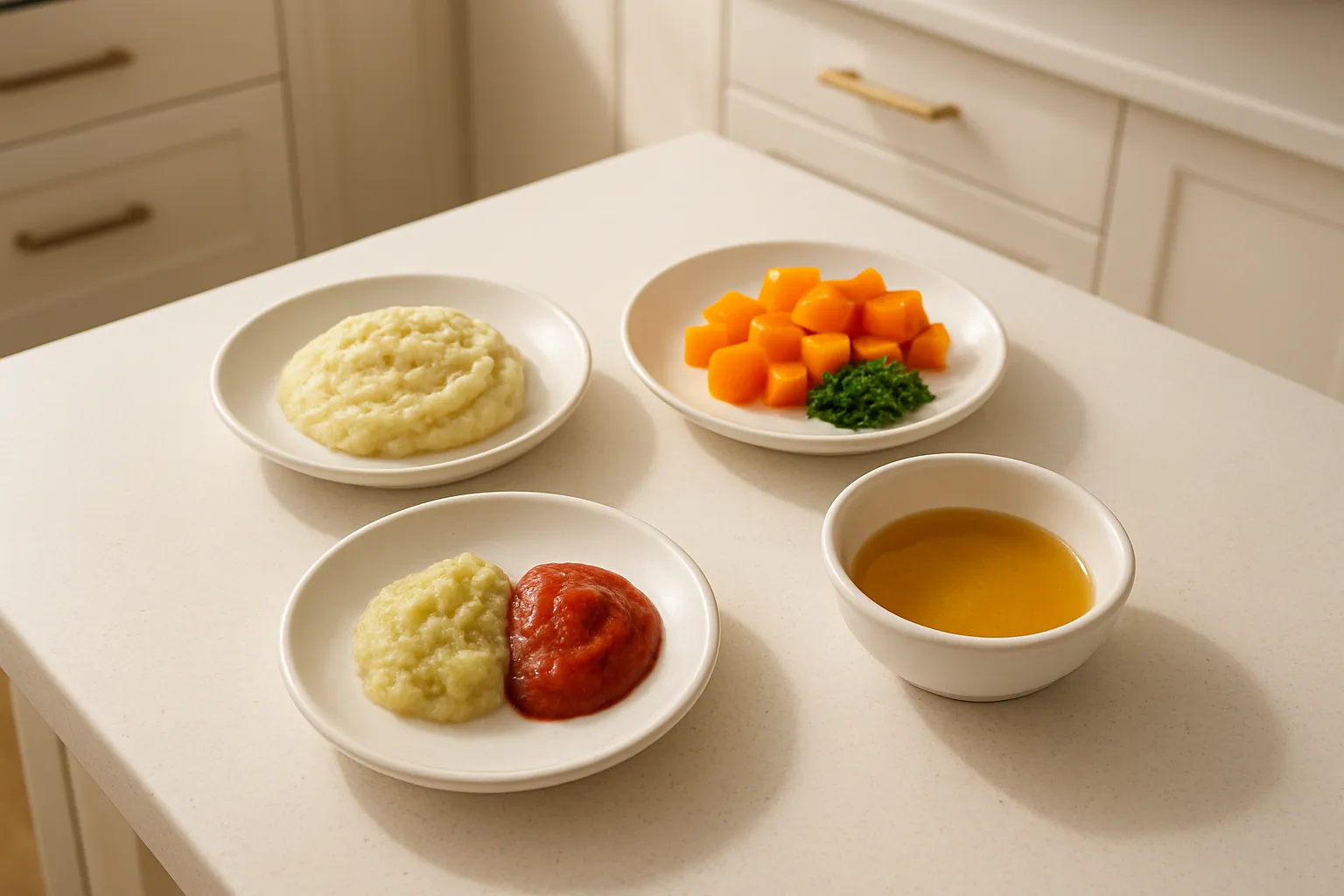
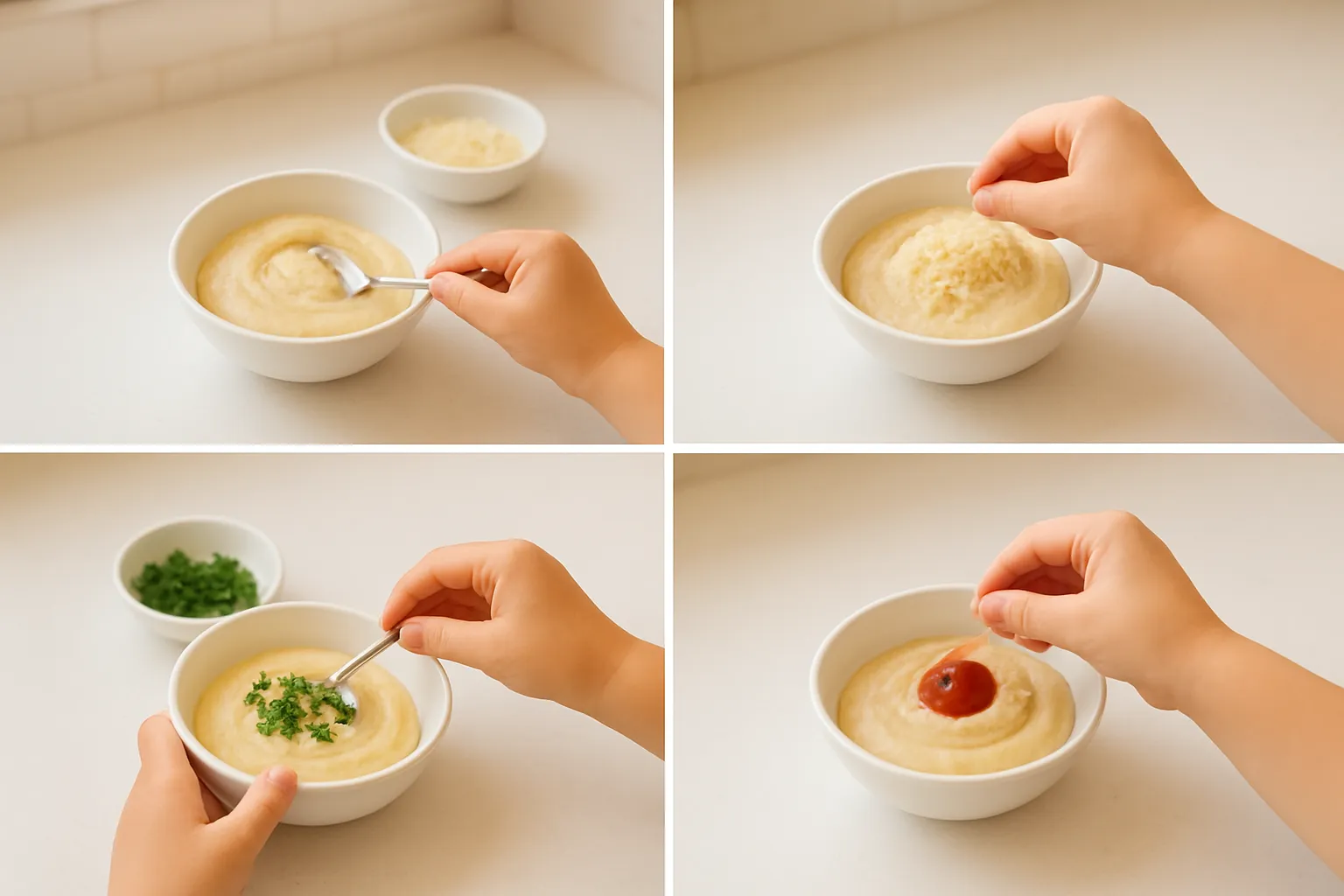
If your little one shies away from bold flavours, try these gentle swaps that still give food personality without heat.
Simple one-to-one swaps
- Instead of extra salt, add a squeeze of lemon or lime, a sprinkle of zest, or a splash of low-sodium stock. Brightness goes a long way.
- Swap sugar for cinnamon or vanilla on porridge, yoghurt or baked fruit. A tiny pinch of cinnamon is plenty.
- Replace chilli with sweet paprika or smoked paprika for colour and a hint of warmth without the burn. Use a teeny pinch at first.
- If black pepper is too sharp, leave it out or use a very small pinch of white pepper for milder heat. Many toddlers do fine without pepper at all.
Gentle spices and herbs that work well
- Cinnamon, nutmeg and a touch of allspice for sweet dishes.
- Garlic powder and onion powder for savoury bakes, meatballs and pasta sauces. They give big flavour with no texture change.
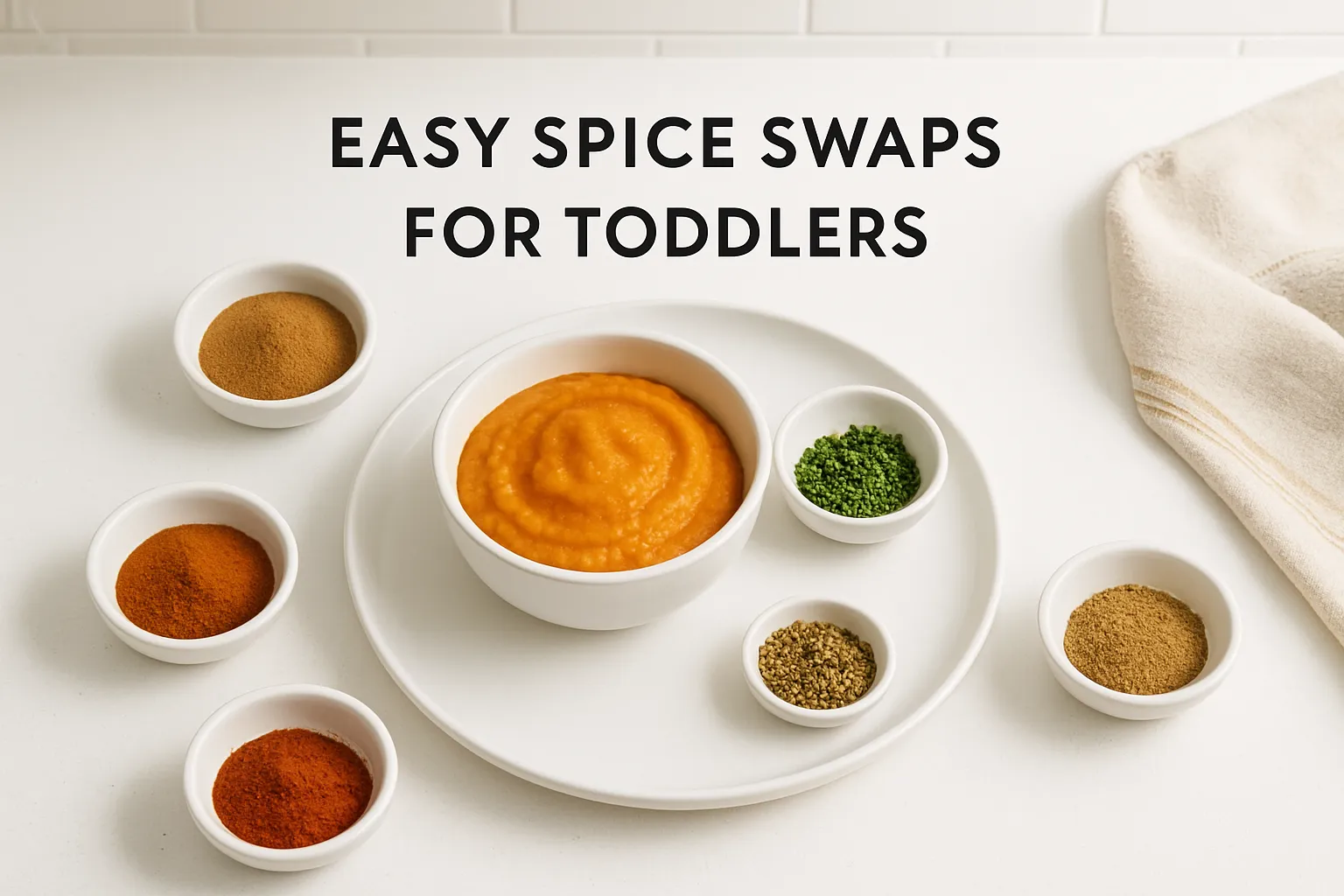
- Cumin and coriander in tiny amounts for mild earthy notes. Great in veg purees, mince or roast veg.
- Sweet paprika or smoked paprika for colour and a gentle smoky taste.
- Fresh herbs such as basil, parsley, dill and chives finely chopped and stirred in at the end keep flavours bright and familiar.
Easy kid-friendly spice mixes (make a small jar and keep it on hand)
- Mild taco mix: 1 tbsp ground cumin, 1 tbsp sweet paprika, 1 tsp dried oregano, 1 tsp garlic powder. Use 1/4 to 1/2 tsp per toddler portion.
- Gentle curry blend: 1 tbsp ground coriander, 1 tsp ground cumin, 1/2 tsp turmeric, 1/2 tsp sweet paprika, a pinch of cinnamon. Use 1/4 tsp to start in a batch of veggies or lentils. Add a splash of coconut milk to mellow it out.
- Italian herb mix: equal parts dried basil, oregano and thyme. Start with 1/4 tsp per serving.
How to introduce new spices
- One new thing at a time. Give a few meals before adding another new spice so you can tell what they like.
- Mix the new flavour into a favourite food. Stir cinnamon into porridge or add a pinch of cumin to a beloved soup.
- Start tiny. For toddlers, think pinch to 1/8 teaspoon per serve for stronger spices, moving up slowly as they accept it.
- Pair spices with fat for best taste. A little butter, olive oil or coconut milk helps carry flavours and makes them more appealing.
Quick flavour tricks that feel like magic
- Toast whole seeds briefly in a dry pan, grind them fine and use a tiny amount. Toasting boosts aroma without adding heat.
- Make an herby butter or yoghurt dip: soft butter or plain yoghurt mixed with chopped herbs and a squeeze of lemon is an instant winner.
- Roast garlic until soft and sweet, then mash into mash or spread on toast for rich, mellow garlic flavour.
- Finish warm dishes with fresh herbs or citrus zest, not hot spices, to keep flavours lively.
Safety and common-sense limits
- Avoid obvious chilli and hot sauces for young toddlers.
- Don’t overdo salt or processed spice mixes that contain salt.
- Grind any seeds or large spices so there’s no choking risk.
Give a few of these swaps a try over the next week and note what your kid gravitates to. Often one small change turns a plain bowl into something they’ll eagerly taste.
Browse Cuisines
From the Blog
First up, a few no-fuss spring winners that keep sticky fingers and big clean-ups to a minimum. Quick to prep and easy for little hands to manage, these are the sorts of things I reach for when we want something...
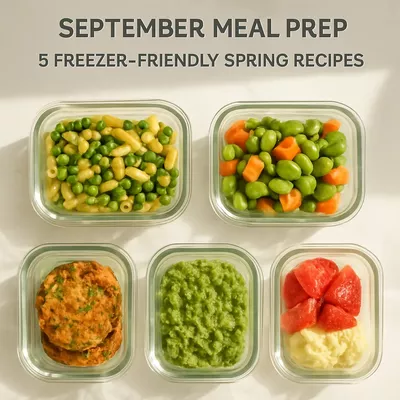
Nice - here’s how Steve keeps dinner simple without sacrificing flavour or sanity. A few good habits and the right packing tricks mean you can pull a proper family meal out of the freezer in minutes.
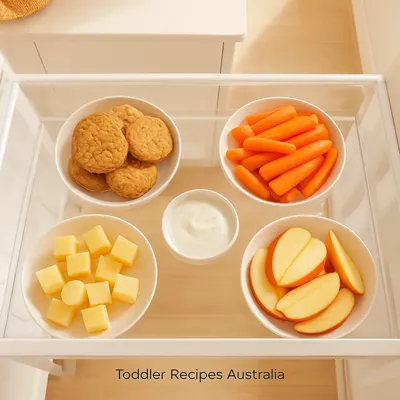
Righto, a couple of quick fridge fixes will make everything a whole lot easier. These are the simple, practical habits and setups that keep snacks safe, obvious and actually reachable for little hands.


 Never miss a recipe from us, subscribe to our newsletter