
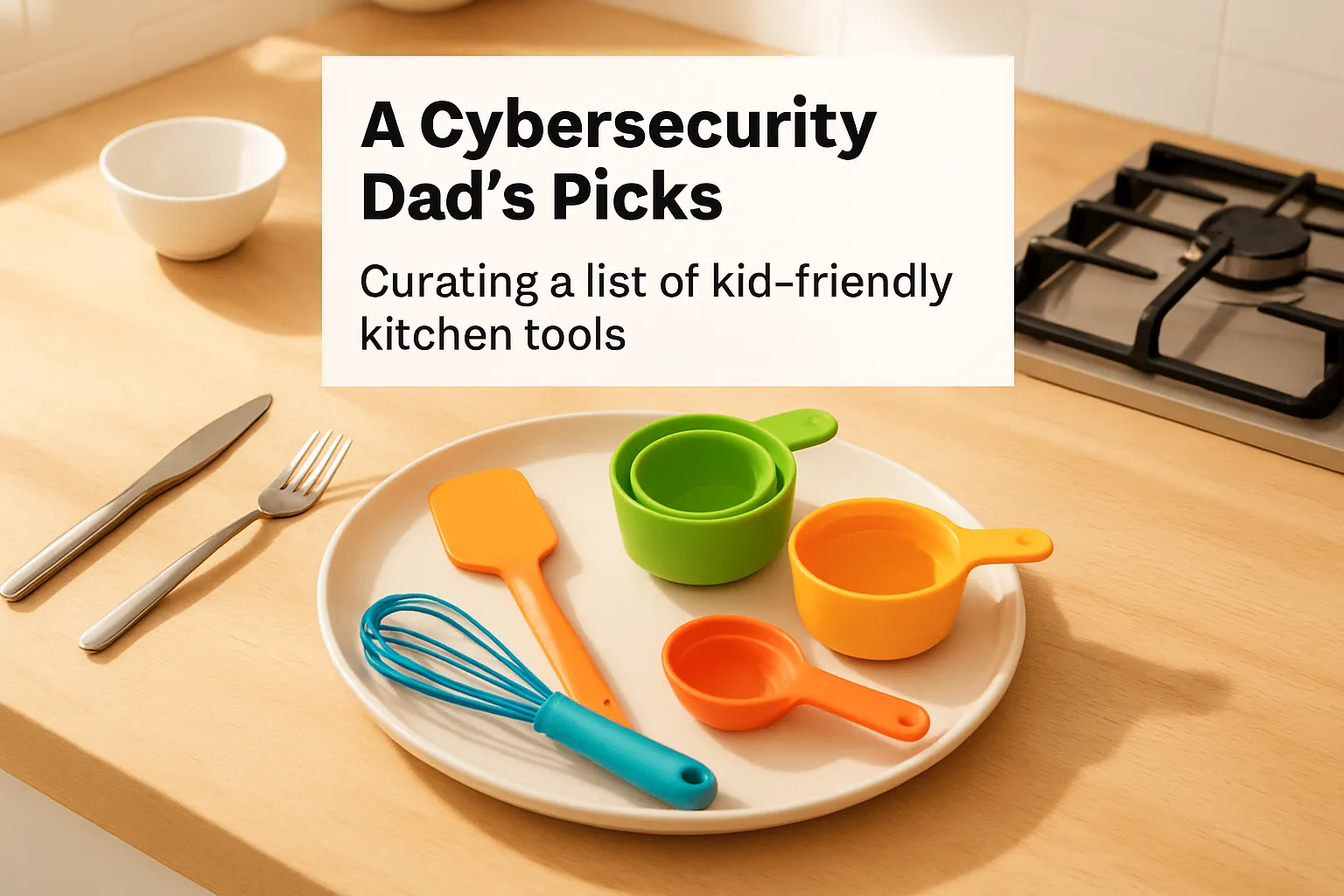
Curating a list of kid-friendly kitchen tools
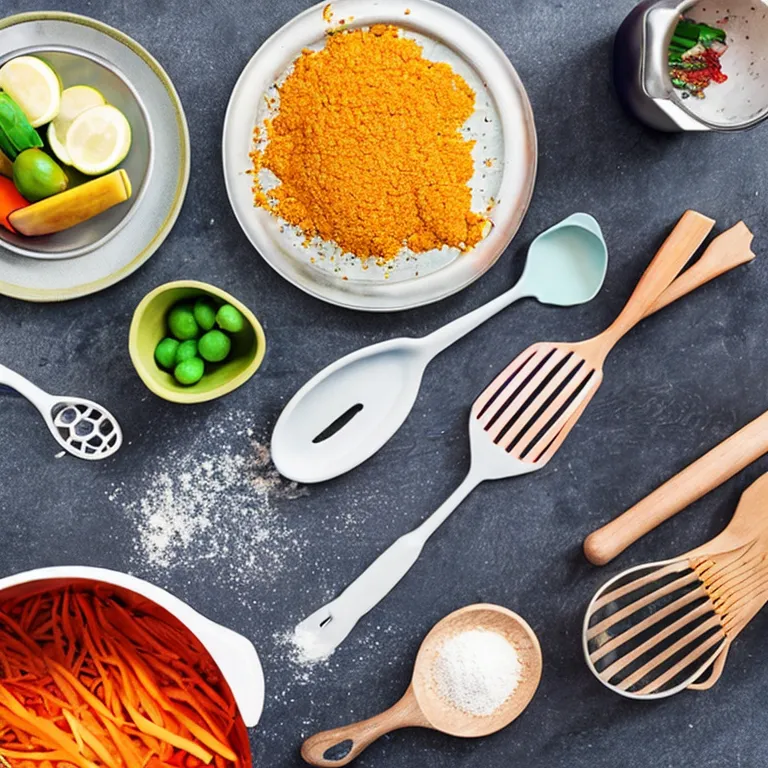
With the safety basics already covered, here are a few picks that keep pry-worthy gadgets out of the kitchen and make cooking with little ones simpler and quieter.
- Mechanical kitchen timer
- Why: No apps, no cloud. Kids love the click and the bell, and you get predictable timing without another device listening in.
-
Buying tip: Get a chunky wind-up model with a loud bell so curious toddlers can see and hear the countdown.
- Analog kitchen scale
- Why: Precise measuring without Bluetooth or accounts. Metal or glass faces are easier to wipe clean and don’t store data.
-
Buying tip: Look for tare function and clear markings. Avoid models that advertise syncing or app compatibility.
- Printed recipe cards or a simple recipe box
- Why: Offline recipes are the most private option. Laminated cards survive sticky fingers and can be stuck to the fridge.
-
Buying tip: Laminate favourite toddler recipes and keep a few in the kitchen for quick access.
- Manual food chopper or hand-crank processor
- Why: Quick, low-tech veggie and fruit prep that’s safe and fun to involve kids in. No firmware updates required.
-
Buying tip: Choose one with a safety-lock lid and non-slip base.
- Silicone spatulas, spoons and bibs
- Why: Easy to clean, strong, and no electronics. Silicone handles are soft for little hands and dishwasher safe.
-
Buying tip: Go for bright colours to make them more appealing to toddlers.
- Child-safe knife training set
- Why: Lets kids practise cutting soft foods without risk and without electronic distractions.
-
Buying tip: Look for serrated plastic or nylon blades that actually cut soft fruit but won’t slice skin easily.
- Sturdy stainless steel mixing bowls with locking lids
- Why: Durable, easy to sanitise, and the lids make them handy for storage rather than relying on app-controlled fridges or timers.
- Buying tip: Nesting bowls save bench space and are handy when you’ve got a helper underfoot.
If you do bring any smart gadget into the kitchen, keep it minimal and lock it down
- Pick appliances that work offline or have an obvious physical power switch.
- Change default passwords and update firmware as soon as you set them up.
- Put any connected devices on a guest network separate from your main home network.
- Turn off voice assistants or their microphones when cooking with kids nearby.
These picks keep things simple, safe and private, while still making meal prep with toddlers easier and more fun.
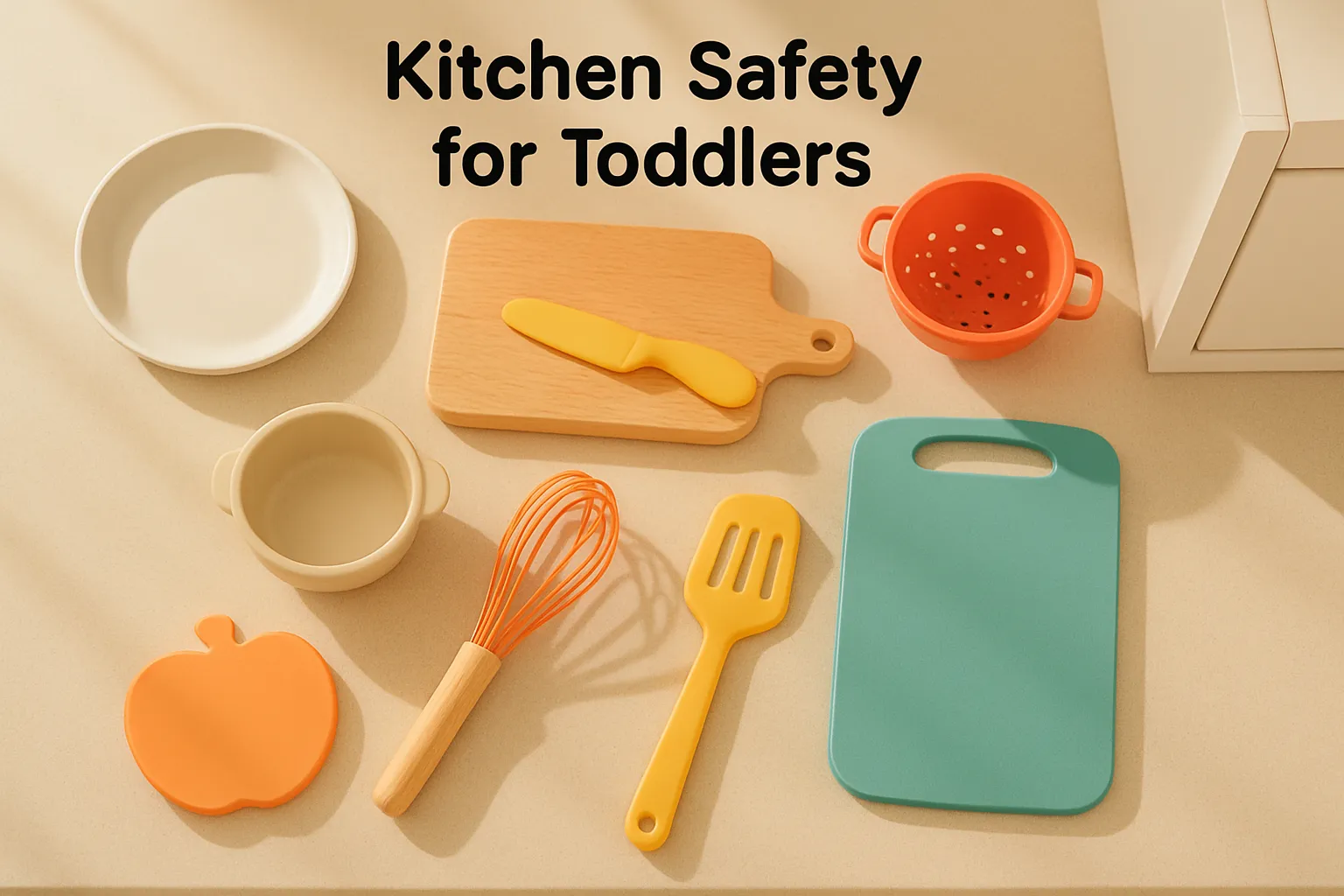
Kitchen Safety for Toddlers
Right, here are the practical things that actually make the kitchen safer for little explorers.
- Create a safe zone
- Give your toddler a consistent spot to be while you cook, like a sturdy learning tower or a low table with safe toys. If they know that area is their job, they are less likely to wander into danger.
-
Keep their space stocked with a small set of plastic bowls, wooden spoons and a damp cloth so they feel included without getting underfoot.
- Set up physical barriers
- Use a baby gate or close the kitchen door when you need to focus on something hot or sharp.
-
Fit oven anti-tip brackets and use oven and cabinet locks for heavy drawers or dangerous items.
- Stove and hot surfaces
- Turn saucepan handles to the back of the stove every time. If you have a front-control stove, consider a cooktop guard that stops little hands reaching across burners.
-
Keep hot drinks away from table and bench edges and use lidded mugs. No tablecloths or placemats that a toddler can pull down.
- Hot liquids and steam
- Move kettles and pots away from bench edges and never leave hot liquids unattended. Pour away from curious hands and faces.
-
When using the microwave, stir and test temperature before giving food to a toddler. Steam can be as dangerous as boiling water.
- Knives and sharp tools
- Store knives in a high locked drawer, a magnetic strip out of reach, or a top cupboard. Consider child-safe knives for supervised food play.
-
Teach one rule for sharp items: hands off unless invited. Reinforce it every time.
- Appliances and cords
- Unplug small appliances and tuck cords out of reach. Use socket covers and keep slow cookers and bread machines at the back of benches.
-
Keep mixers, blenders and thermomix lids on and switched off before removing anything, and never leave them running with curious hands nearby.
- Cleaning products and chemicals
-
Store all cleaning supplies, oven cleaners and detergents in a locked cupboard or high shelf. Use original containers and never mix products.
- Small parts and choking hazards
- Keep small items like nuts, grapes, whole cherry tomatoes and raw carrots cut up and supervised. Be mindful of foods that are easy to inhale and cut into age-appropriate pieces.
-
Check under benches and low drawers for loose bits like twist ties, elastic bands, or small lids.
- Floor and slip risks
- Wipe up spills straight away and use non-slip rugs or mats so toddlers don’t skid straight into hot surfaces.
-
Keep floors clear of toys and shopping bags.
- Teach simple kitchen rules
- Use short, consistent phrases: “Hot, not touch,” “Step back,” “Stay on your mat.” Practice them so your toddler learns what to do, not just what not to do.
-
Let them help with safe tasks like washing veg, stirring thick mixtures, or tearing lettuce. Inclusion under supervision helps reduce risky curiosity.
- Emergency preparedness
- Have a well-stocked first aid kit and know where it is. Learn child first aid and CPR through a certified course and save emergency numbers on your phone. In Australia call 000 for emergencies.
- For minor burns, cool the area under running water for 20 minutes and seek medical help for anything larger than a coin, blisters, or facial burns.
A few small changes put in place now will save a lot of worry later. Keep routines simple, supervise closely, and don’t be shy about setting firm boundaries while you cook.
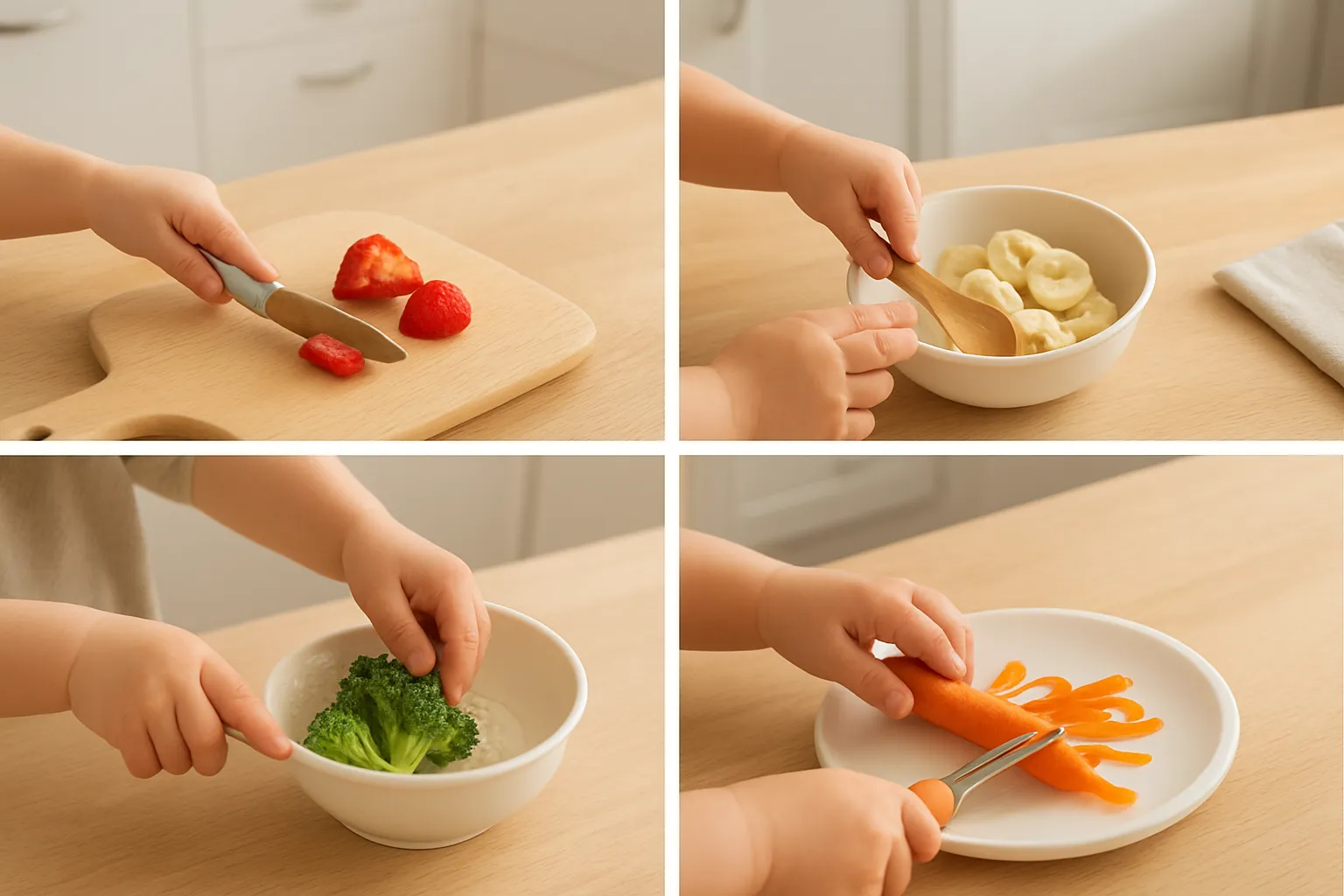
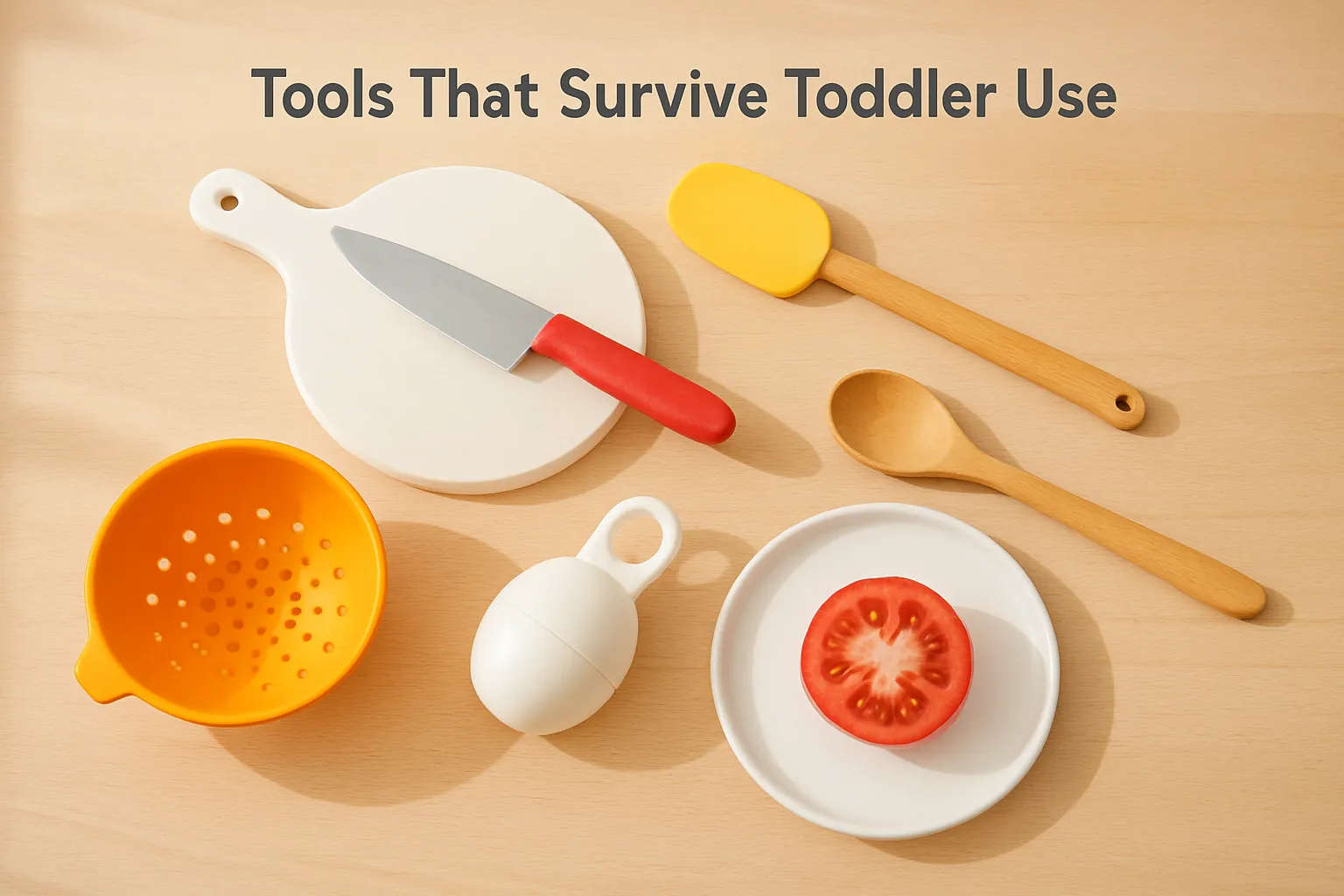
You want stuff that survives spills, drops and the occasional chew. Here’s what actually holds up and how to keep it that way.
Crash-proof kitchen basics
- Silicone utensils: Spoon, spatula and scraper in food-grade silicone bend, don’t crack, and come out of a bowl after a 1m drop with no drama. Look for one-piece tools rather than glued heads that pop off.
- Stainless steel spoons and tongs: Thick, rounded-edge stainless is dishwasher-safe and won’t warp. Avoid thin, flimsy metal that bends or leaves sharp edges.
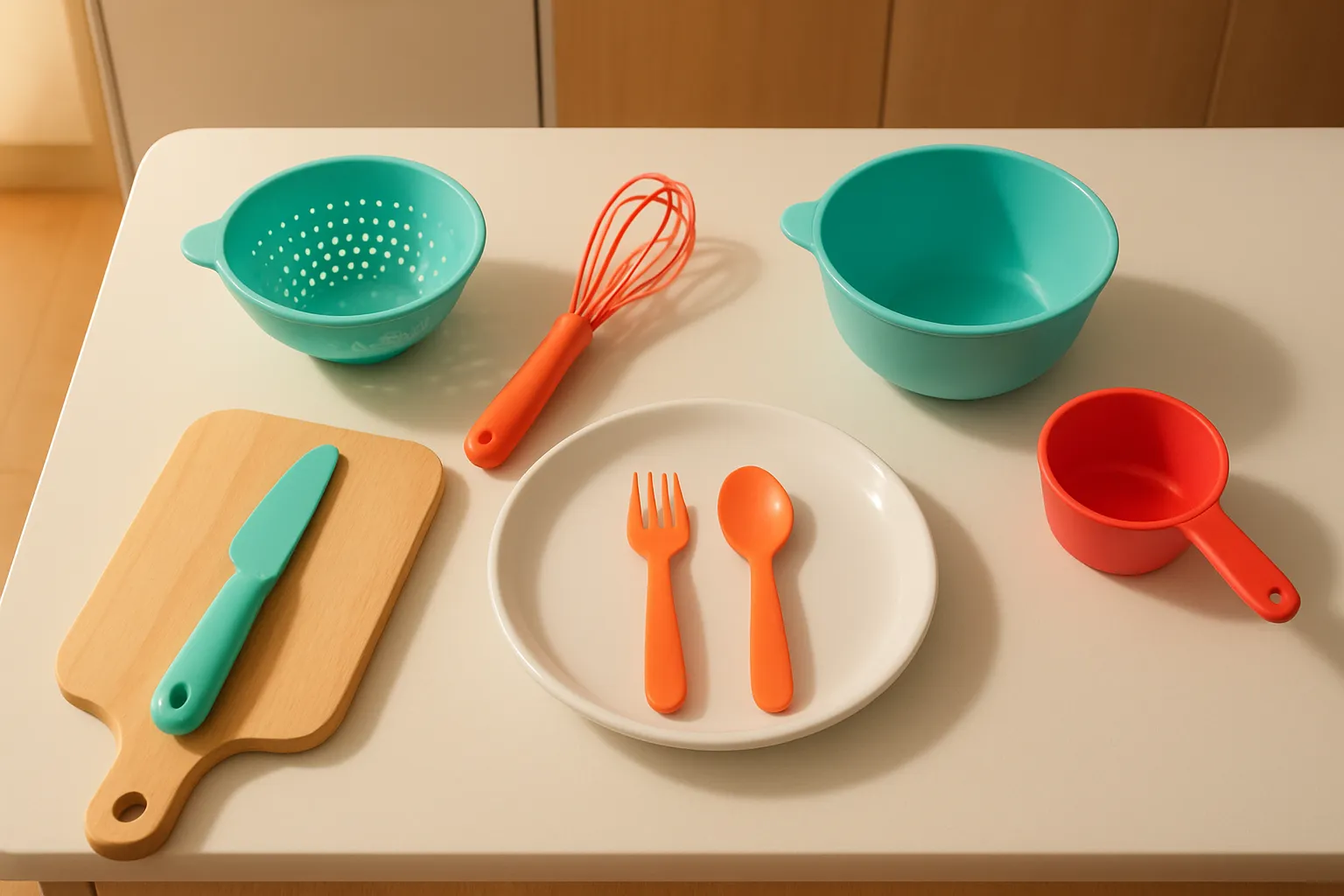
- Unbreakable cups and bowls: Tritan or BPA-free polypropylene is sturdy and clear-ish like glass without the heartbreak. Go for non-slip bases and wide rims toddlers can handle.
- Suction plates and bowls: A good suction base prevents the fling-and-bang routine. Replace the suction if it loses grip rather than binning the whole item.
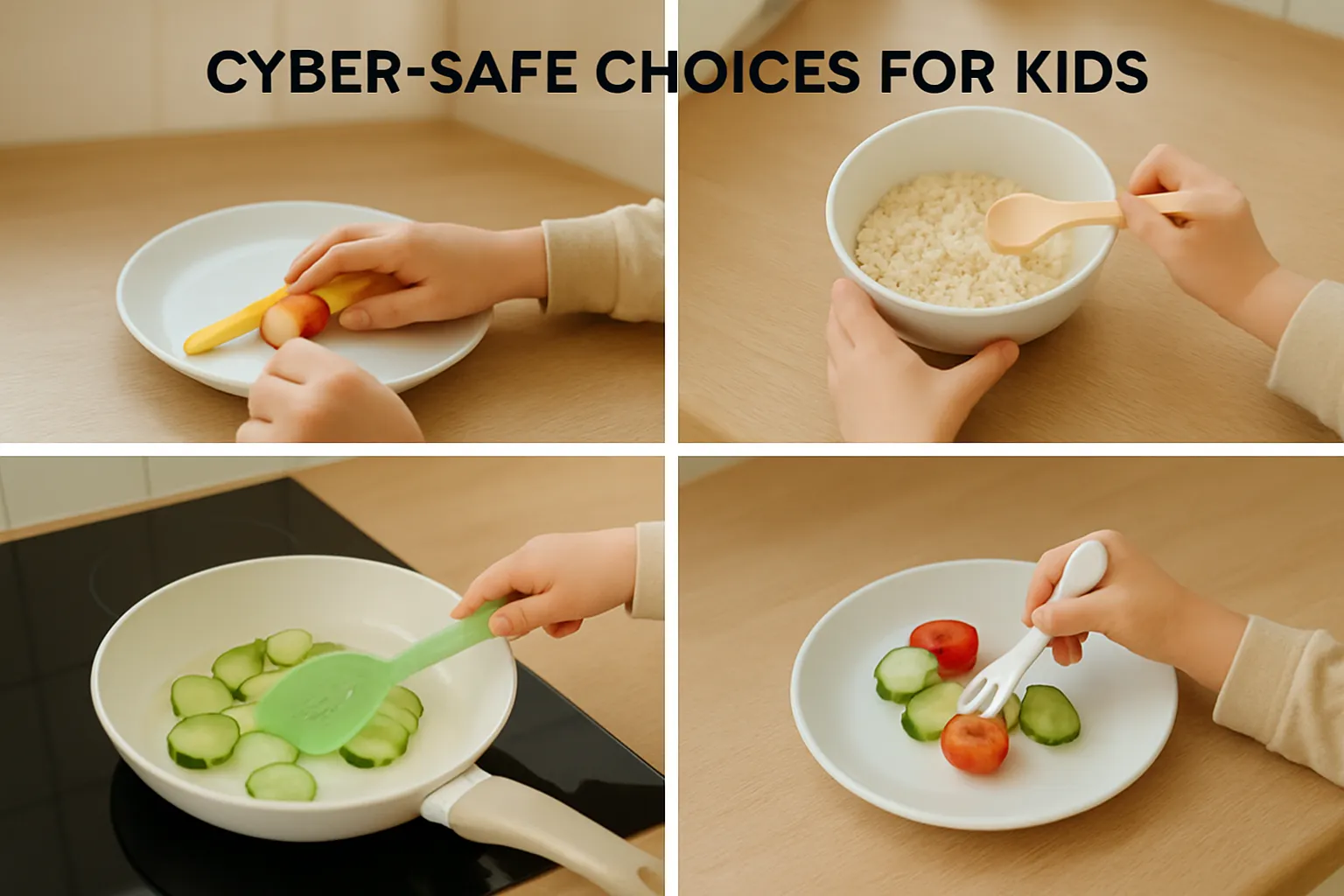
- Kid-safe knives: Blunt-tip serrated knives or nylon child chef knives cut soft fruit and cooked veg without clean cuts the way adult blades do. Teach safe use and store them separately.
- Silicone baking mats and flexible pans: Easy to clean and won’t dent. They stand up to toddler pokes and dropped treats.
- Sturdy mixing bowls with rubber bases: Metal bowls with a non-slip ring stay put while little hands stir.
- Wooden tools with care: Solid hardwood spoons and rolling pins are tough, but avoid painted or varnished wood that can peel. Oil them occasionally with food-grade mineral oil.
- Plastic measuring cups with handles: Thick, reinforced plastic lasts. Ones with hanging holes or a linking ring mean less chance of losing pieces.
- Rounded-edge kitchen scissors and small whisks: Useful for snipping herbs and helping with mixing. Pick rounded tips and solid construction.
What to avoid
- Thin, brittle plastics that crack or shatter. If it bends and doesn’t spring back, it won’t last.
- Painted or plated metal toys that chip and expose metal or paint flakes.
- Cheap glued handles or heads that can separate after a few washes.
- Items with lots of small removable parts that can be lost or become choking hazards.
Simple tests before you buy
- Drop test: Drop it on a hard floor from about table height. If it cracks or splinters, keep looking.
- Bend test: Give it a good twist or bend. If it deforms permanently, it won’t survive toddler play.
- Squeeze test: Squeeze silicone and plastic for brittleness or weak seams.
Care and repair tips that save money
- Oil wooden tools now and then to stop drying and cracking.
- Replace silicone lids or suction rings rather than the whole item if possible.
- Sand down any rough wooden edges and re-oil.
- Run a quick visual check after each use for cracks, loose parts or sharp edges.
- Most of these items are dishwasher-friendly, but hand-wash wooden stuff and anything with glued joints.
Quick buying checklist
- One-piece construction where possible
- Thick, food-grade materials (silicone, stainless, hardwood)
- Dishwasher-safe labels for busy days
- Replaceable parts for long-term use
- No small detachable bits
Pick tough, simple designs and you’ll end up with tools that still look useful by the time the kiddo moves to bigger kitchen jobs.
Smart kitchen gadgets are handy, but they can bring privacy and security baggage. Here are clear, easy things to do so your toddler-friendly cooking stays safe.
- Prefer local-first devices. Pick timers, scales and thermometers that work without sending data to the cloud. If it does need a cloud account, check you can switch off syncing and remote access.
- Avoid cameras and always-off microphones. If a gadget has a camera or mic, make sure there is a physical cover or a straightforward on/off switch. If you can’t switch them off easily, skip it.
- Change default passwords and keep them strong. Default admin passwords are an open invitation. Create unique passwords and use two-factor authentication where possible.
- Put smart kitchen gear on a separate Wi-Fi network. A guest or IoT network keeps toys and fridges away from your phones and banking devices.
- Turn off features you don’t need. Remote voice control, voice purchasing, automatic uploads and location tracking are convenience features you probably don’t need in a toddler kitchen. Turn them off.
- Check app permissions. If a recipe or timer app asks for camera, contacts or location, ask why. Deny permissions that are unnecessary for the app to work.
- Watch for ads and in-app purchases. Choose apps with no ads or hidden purchases, or lock them behind parent approval in the device settings.
- Keep firmware updated, but do it on your schedule. Updates fix security holes, so apply them, but check the patch notes or privacy policy first if you’re unsure about new cloud features.
- Unpair Bluetooth when you’re done. Pair only when in use and forget devices afterward so they can’t automatically reconnect when a curious toddler wanders past.
- Use family or kid profiles on tablets. Lock down app installs, screen time and purchases with a parent PIN on any device you use to show recipes or videos.
- Prefer physical backups for little cooks. Printed recipes, laminated cards and wind-up timers are simple, strong and private. They also keep screen time low.
- Read the privacy basics before you buy. Look for clear policies about data retention and delete options. If a product’s privacy info is vague, move on.
A few small settings and a couple of smart choices will keep tech helpful, not stressful. You don’t need to go mad on security to be safe, just make those sensible defaults family-friendly.
A few small tools make it easy to explore global flavours without overwhelming little palates. The trick is to give boldness in smell and colour while keeping textures and heat toddler-friendly.
Practical tools and how to use them
- Small spice grinder or electric coffee grinder. Toast a few cumin seeds or coriander seeds in a dry pan, cool, then grind finely. Freshly ground spices smell amazing and you need half the amount to get flavour.
- Mini mortar and pestle. Great for crushing fresh coriander stems, cracking cardamom pods, or mashing garlic and ginger into a paste. Let kids gently press and turn the pestle while you do the hot bits.
- Microplane or fine grater. Zesting lemon, lime or orange brightens dishes, and a little citrus zest goes a long way in curries, dressings and cakes.
- Citrus reamer or hand squeezer. Fresh juice is kinder on tiny tummies than bottled stuff. A splash of lime can wake up avocado or fish-free sushi rice.
- Small blender or stick blender. Perfect for hummus, smooth chutneys, mild curry pastes and fruit lassis. Make texture smooth so toddlers can manage it.
- Rice cooker with a steaming basket. Teach simple Asian recipes like sticky rice balls or steamed veg. The steam basket keeps things moist and easy to mash for little mouths.
- Silicone moulds and cookie cutters. Turn flatbreads, tortillas or roti into friendly shapes. Use rice or mashed potato in moulds to make onigiri shapes that are easier to hold.
- Soft rolling pin and small board. Encourage gentle dough play for flatbreads, mini naans or dumpling wrappers without the need for heavy equipment.
- Small mesh sieve. Push sauces through to remove any fibres or seeds for a smoother texture.
- Non-slip bowls and silicone spoons. Keeps the mess contained and gives toddlers safe tools to join in with tasting and stirring.
Kid-friendly flavour ideas and swaps
- Use mild spices first. Start with cinnamon, ginger, sweet paprika, cumin and coriander. Introduce one spice at a time in tiny amounts with a familiar food, like stirring mild cinnamon into porridge or a hint of cumin into mashed sweet potato.
- Coconut milk is your friend. It gives a creamy, slightly sweet base for gentle curries that kids usually love. Pair with soft vegetables and flakes of cooked chicken or tofu.
- Make dip-and-explore plates. Mild hummus, avocado mash with lime, and a simple tomato salsa (seeds and skins sieved if needed) let kids experiment with flavours and textures.
- Sweet savoury swaps. Use mashed banana or cooked apple to sweeten breakfast pancakes with a pinch of cardamom. Swap out chilli for smoked paprika or roasted capsicum puree for colour and warmth without heat.
- Blend and hide. Pureeing a small amount of roasted eggplant or cooked lentils into a sauce boosts flavour and nutrition while keeping it smooth.
- Fresh herbs at the end. Add chopped basil, parsley or coriander after cooking to keep the bright aroma. Let older toddlers tear basil leaves as a little kitchen job.
Safety and allergy tips
- Always supervise near knives, hot pans and blenders. Let toddlers do the safe bits like tearing herbs, squeezing citrus or stirring cooled mixtures.
- Be cautious with whole nuts for under threes. Use smooth nut butters thinned with water or milk if introducing nuts, and check for family allergy history.
- Introduce one new spice or ingredient at a time and watch for reactions. Keep chilli and hot sauces out of reach and use smoked or sweet paprika instead for smoky notes.
Quick activity ideas to try this week
- Make a taco tray: warm soft tortillas, grated cheese, mashed avocado, mild tomato salsa and shredded cooked chicken. Let toddlers build their own mini tacos.
- Little sushi boxes: cooled seasoned rice shaped in silicone moulds, strips of avocado and cooked carrot, a dollop of mild soy-yoghurt dip.
- Coconut chickpea mash: canned chickpeas blended with coconut milk and a touch of cumin, served with steamed veg soldiers.
These small tools plus gentle flavour moves make it fun and manageable to explore food from other places. It keeps things safe, sensory and full of discovery without turning mealtimes into a stress test.

Browse Cuisines
From the Blog
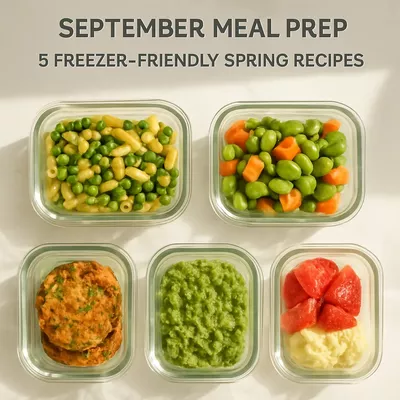
First up, a few no-fuss spring winners that keep sticky fingers and big clean-ups to a minimum. Quick to prep and easy for little hands to manage, these are the sorts of things I reach for when we want something...
Nice - here’s how Steve keeps dinner simple without sacrificing flavour or sanity. A few good habits and the right packing tricks mean you can pull a proper family meal out of the freezer in minutes.
Righto, a couple of quick fridge fixes will make everything a whole lot easier. These are the simple, practical habits and setups that keep snacks safe, obvious and actually reachable for little hands.


 Never miss a recipe from us, subscribe to our newsletter