
What is the right size to cut up food for my toddler
.webp)
Quick little intro: a few simple rules you can use tonight at dinner to make food safe and easy for little mouths.
Basic rules of thumb
- Size matters more than fancy shapes. Aim for pieces small enough to chew comfortably yet big enough for a toddler to pick up. Think roughly 1 cm cubes for very new chewers, 1 to 1.5 cm for most toddlers, and up to about 2 cm for confident 3 year olds.
- Avoid round, slippery pieces. Cut grapes, cherry tomatoes and large berries lengthways so they cannot roll down the throat.
- Softer is safer. Cook hard veg until tender, then cut into small cubes or strips. Raw crunchy items should be grated or steamed until soft.
- Long things are risky. Cut sausages, hot dogs and carrot sticks into thin lengthwise strips then across into short bits rather than round slices.
Quick examples you can copy
- Grapes/cherry tomatoes: halve lengthways, then quarter if they are big.
- Hot dogs/sausages: slice lengthways into quarters, then cross-cut into 1-2 cm bits.
- Banana: 1 cm thick slices or half-moons so they are easy to gum.
- Avocado: pea to thumbnail-sized cubes, soft and squishy, easy for little jaws.
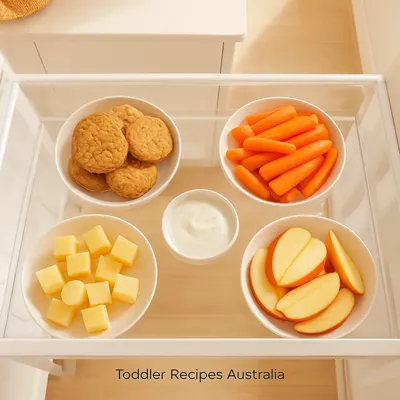
- Cheese: 1 cm cubes or thin strips for nibbling.
- Carrot/raw apple: grate or very thin slices, or steam until soft and dice small.
- Cooked meat: shred or finely diced into pieces no larger than 1-1.5 cm.
- Pasta: short shapes are fine whole, long pasta cut into 2-3 cm lengths.
- Berries and stone fruit: halve or quarter depending on size.
Safety and sanity tips
- Keep them seated, supervised and encourage small bites. If they’re still stuffing big mouthfuls, cut smaller next time.
- A sharp knife and steady hand make neater, safer cuts than a blunt blade that squashes food.
- Let toddlers handle appropriately sized pieces themselves - it helps their chewing skills and confidence.
- When trying new textures, err on the smaller/softer side until you know how they manage it.
No need to overthink it: start small, watch how they chew, and relax the cuts as their skills grow.
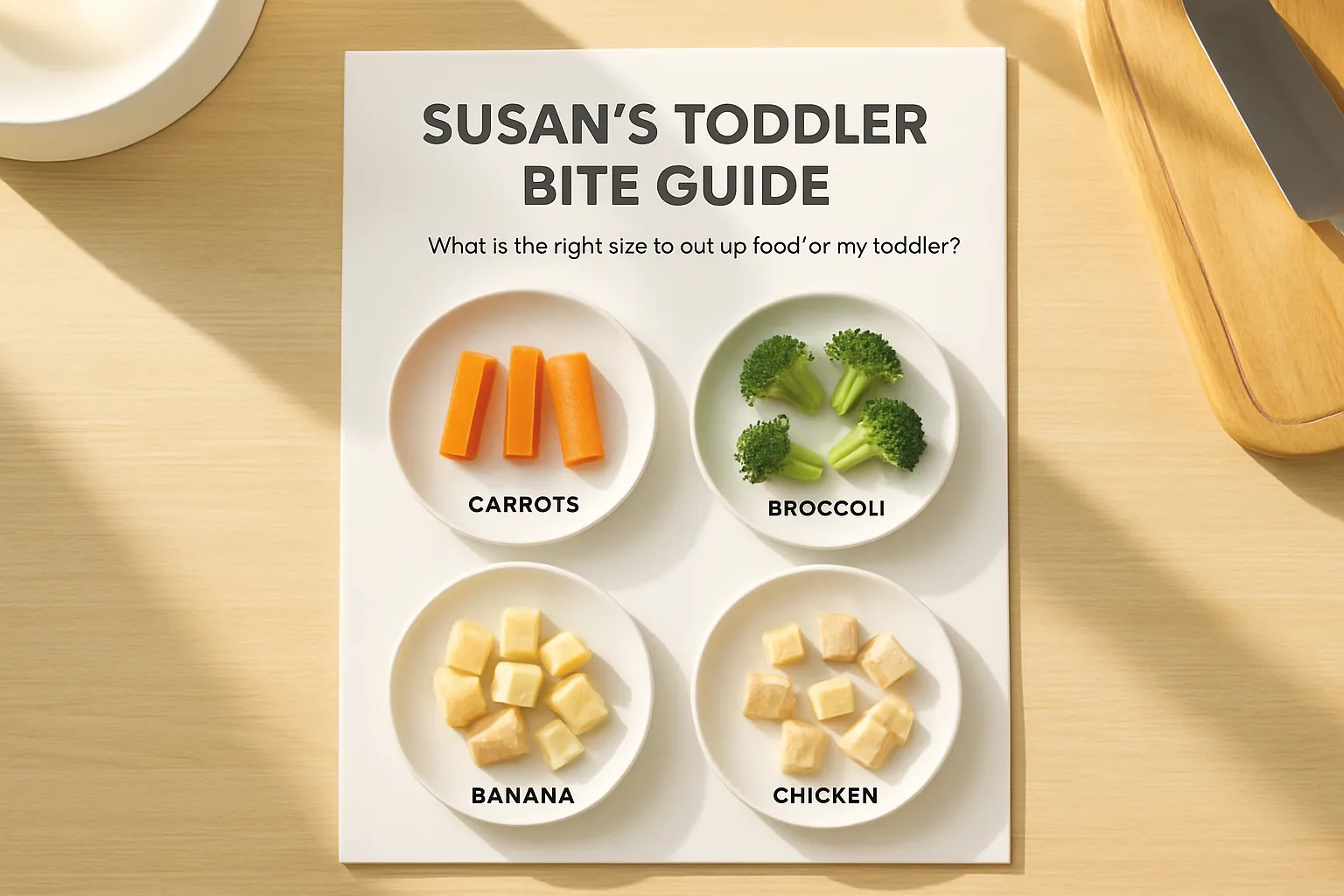
For peanut-free settings, swap in these safe options and cut them like this.
Grapes and cherry tomatoes
- Quarter them lengthways, not just halved. Aim for long, narrow pieces about 1 to 1.5 cm wide so they cannot block a throat.
Hot dogs, sausages and frankfurts
- Cut lengthways into quarters, then crosswise into short 1 to 1.5 cm chunks. This breaks the round shape that causes slips.
Carrot, cucumber and raw apple
- For raw carrot, grate or steam first. Serve as thin matchsticks about 3 cm long and 0.5 cm thick, or as 1 to 1.5 cm coins if very soft. Cucumber and apple are safer peeled and cut into thin strips or small cubes.
Banana and avocado
- Slice banana into rounds about 1 cm thick or quarter lengthways for firmer bits. Avocado is best mashed or cut into thin strips that tease apart easily.
Cheese and deli meats
- Cube cheese into 1 cm pieces or cut into thin fingers. Deli meats should be rolled and sliced into small pieces, or cut into 1 cm strips then chopped.
Bread, toast and sandwiches
- Remove crusts if the child tends to mash them. Cut sandwiches into fingers about 3 to 4 cm long and 1 cm wide. Spread fillings thinly to avoid big sticky clumps.
Cooked veg and fruit
- Steam until soft, then chop into small, soft cubes about 1 to 2 cm square. Soft is the key here so pieces squish with gentle pressure.
Spreads and dippers (sunflower seed butter, hummus, cream cheese)
- Many centres ban whole peanuts but allow seed butters. If using them, spread thinly on toast or fruit slices rather than giving blobs on a spoon. Thin spreads reduce stickiness and choking risk.
High-risk items to avoid or alter
- Whole nuts, popcorn, whole raw carrots, whole grapes and whole cherry tomatoes. Cut, cook or remove these entirely.
Quick rule of thumb
- Aim for pieces about the size of your little finger nail or roughly 1 to 1.5 cm for most finger foods. When in doubt, cut smaller or cook softer.
And check with your childcare or school about their peanut policy before packing anything labelled nut free, because some places still ban seed butters and similar products.
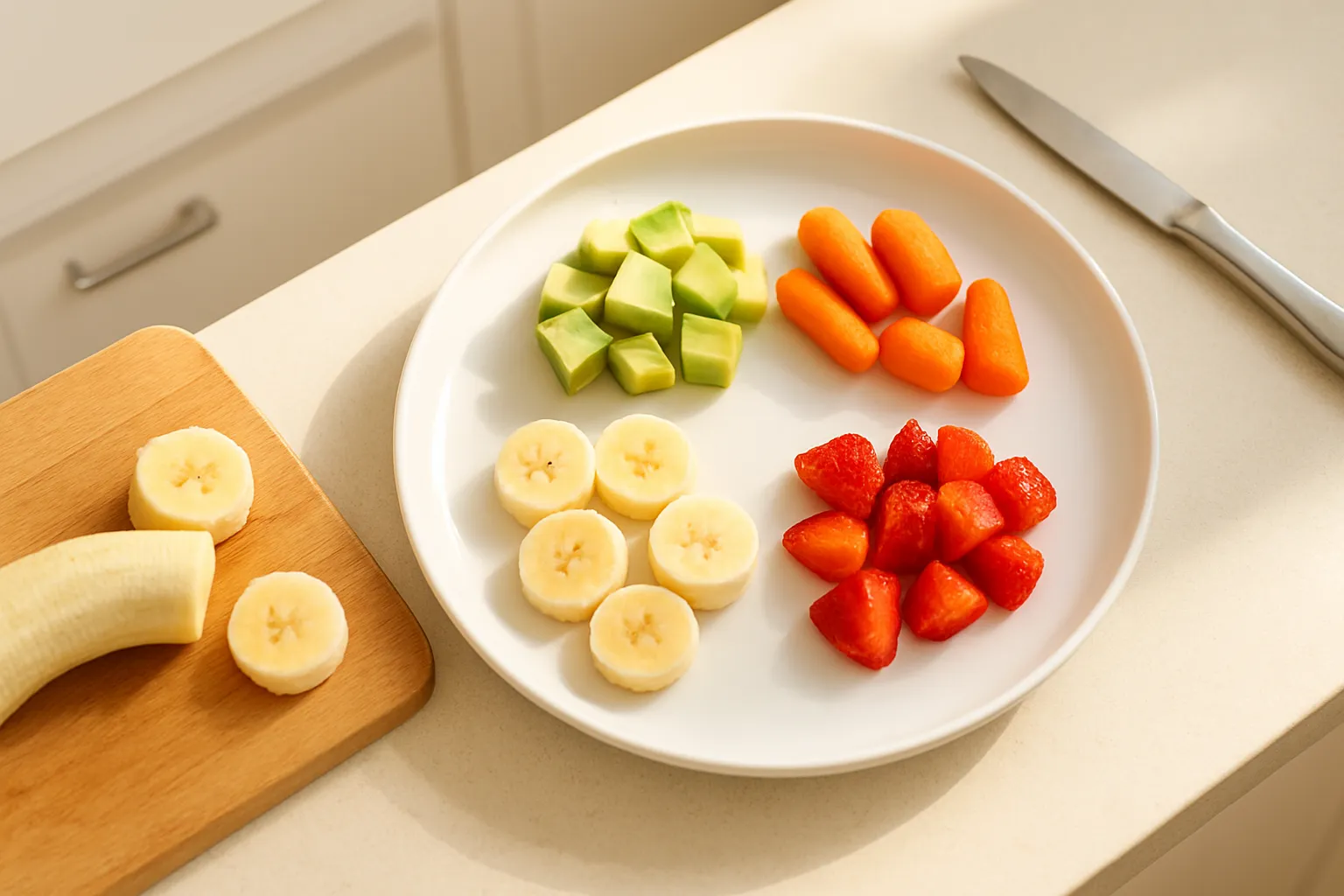
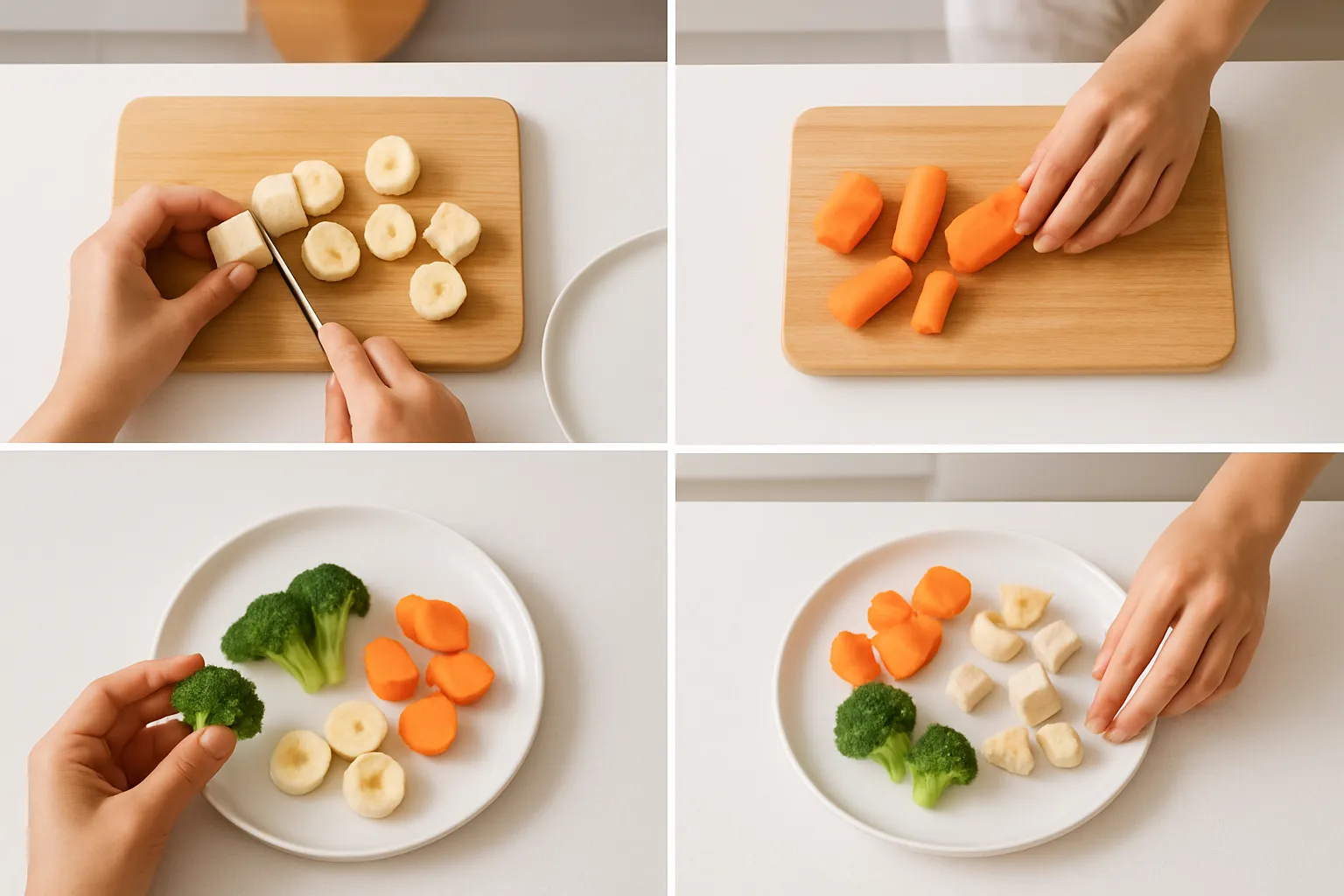
Picky eaters often take to small, familiar shapes more than big hunks of unfamiliar food. Here are quick, practical cutting tricks that make new things less scary and are fast on school mornings.
Quick shapes to try
- Coins: thin rounds of cucumber, cooked beetroot, steamed apple or soft pear. Easy to pick up and less intimidating than big wedges.
- Matchsticks: grate or cut apple, cooked carrot or cheese into thin sticks. Great for dipping and practising pincer grip.
- Tiny dice: a small dice (about thumbnail size) works well mixed into rice, pasta or sauces so flavours are familiar. Use the food processor on pulse for speed.
- Ribbons: peel zucchini, carrot or cucumber into long ribbons with a veggie peeler. Soft, silky texture that hides in salads and pasta.
- Florets: trim broccoli and cauliflower into little treelets, steam until tender and serve warm rather than raw.
- Quartered rounds: always cut grapes and cherry tomatoes lengthwise then into smaller pieces. Never serve them whole.
- Sausage/hot‑dog trick: slice lengthwise then chop across into manageable pieces so they are not round and slippery.
- Fingers/fries: oven-baked sweet potato or pumpkin wedges sliced like chips are usually a win with dip.
- Roll-ups and pinwheels: thinly slice bread, spread filling, roll and slice into pinwheels - super handheld and fun.
- Grated and shredded: grate carrot, zucchini or cheese into sauces, pancakes or meatballs so veg hides in a familiar texture.
Presentation and acceptance hacks
- Same shape rule: make new things into the same shape your child already likes, for example turning broccoli into “trees” if they love tiny trees.
- One-bite size: serve tiny portions so trying something new feels low-risk.
- Pair with a fave: put a new cut beside a well-loved bite so they are more likely to taste it.
- Dips help: a small dab of yoghurt, hummus or mild cheese often encourages trying.
- Keep textures steady: if they hate mushy, avoid overcooking one item while steaming something else to death. Consistency builds trust.
Speedy kitchen hacks
- Use a peeler for ribbons, a box grater for quick matchsticks, and kitchen scissors for herbs and soft greens.
- Pulse in a food processor for fast tiny dice or grated veg for patties.
- Steam frozen veg for two minutes and then chop; saves prep and is softer for sensitive mouths.
- Cookie cutters make sandwiches and pancakes instantly more appealing.
Safety tips in two quick lines
- Always supervise mealtimes and avoid whole round pieces.
- Soften hard veg, quarter grapes and tomatoes lengthwise, and remove any hard cores or seeds before serving.
Try swapping just one shape per meal and watch which style your little one prefers. Small changes, same flavours, and consistent shapes often win over fussiness.
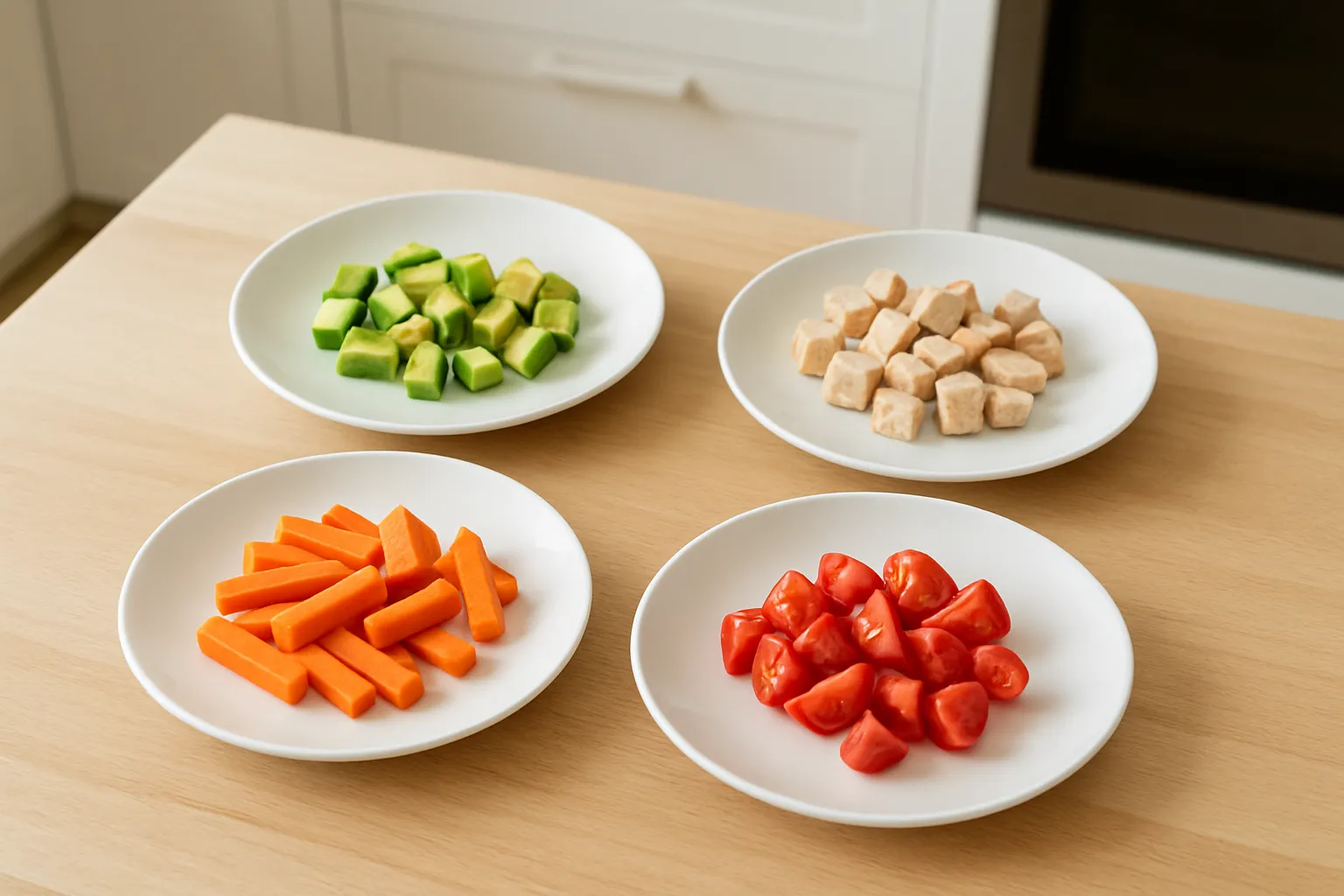
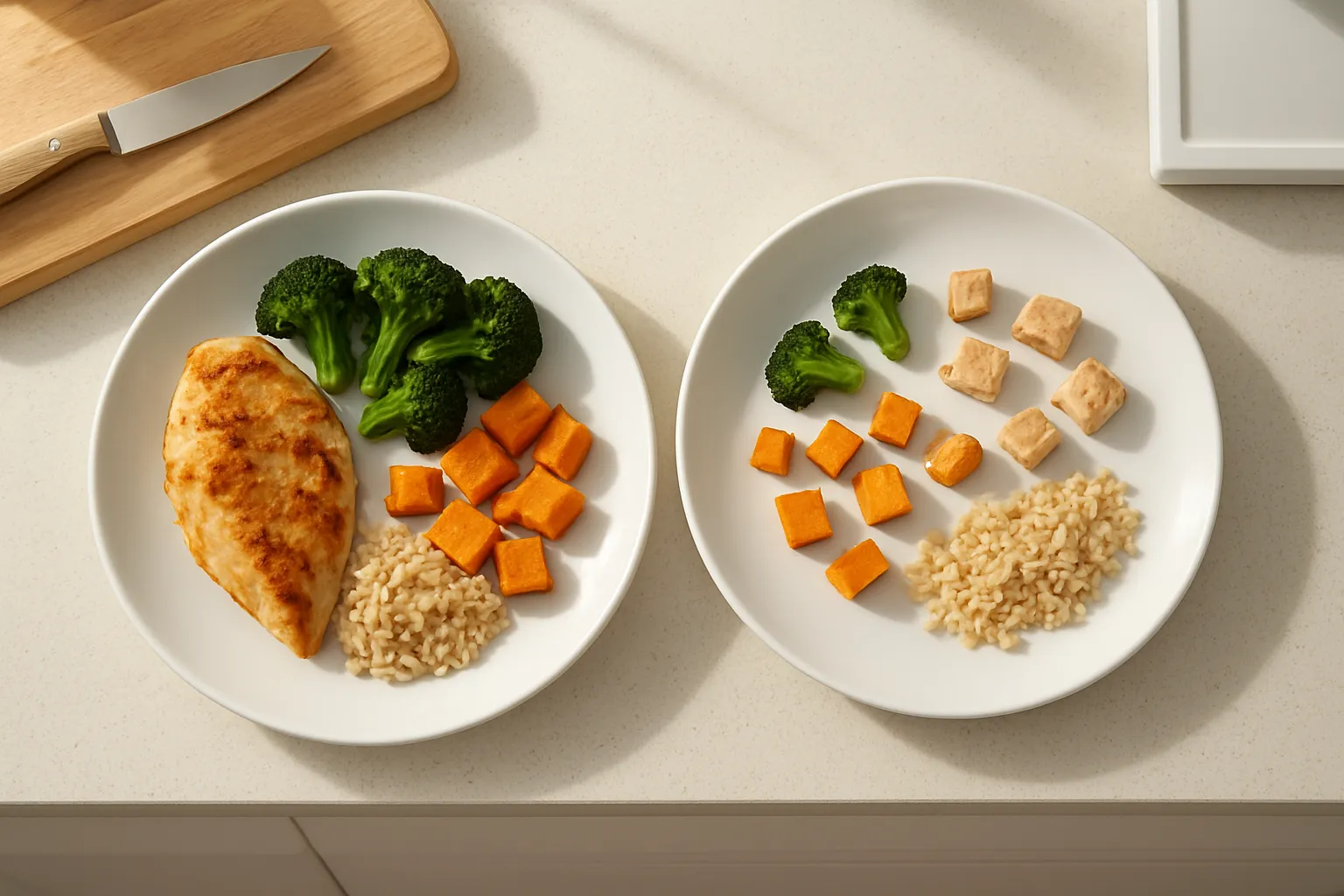
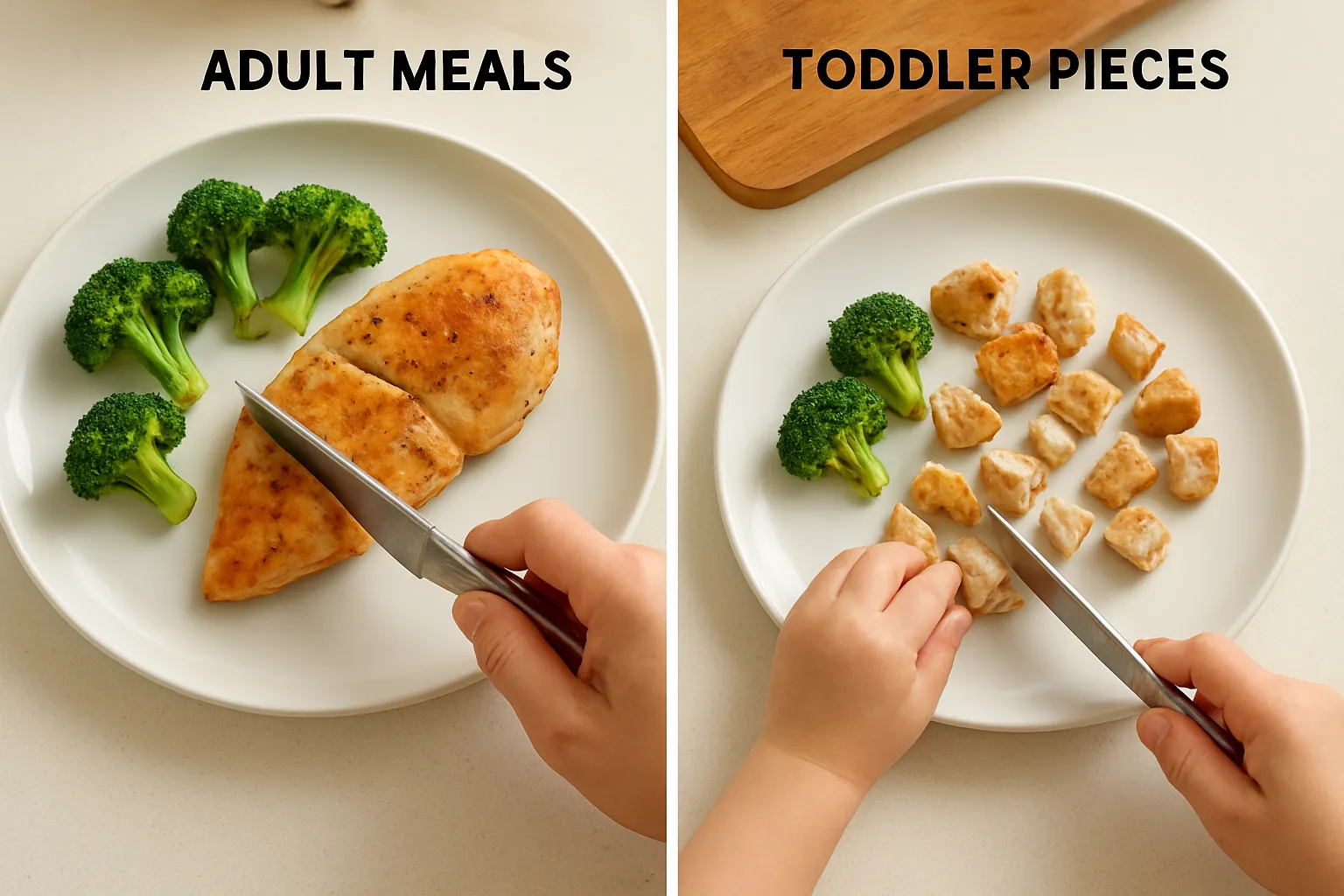
Want everyone eating the same meal without a separate kid plate? Small, smart cuts are the answer. Here’s how to turn adult-sized portions into toddler-friendly pieces that are safe and easy to chew.
Quick size guide by age (rough targets)
- 9-12 months: tiny, soft pieces about 5-8 mm. Shreds and very small cubes work best.
- 12-24 months: bite-sized pieces around 1 cm. Think tiny cubes, short strips or small florets.
- 2-3 years: slightly bigger, about 1.5 cm pieces. Still avoid whole rounds like grapes or big chunks.
How to adapt common family meals
- Roast chicken: pull meat off the bone, shred for younger toddlers or chop into 1 cm pieces for 1-2 year olds. Keep skin off and remove any small bones you missed.
- Steak and roast beef: slice thinly across the grain, then chop into short strips or small cubes. For little ones, make strips 1 cm wide and no more than 1-1.5 cm long so they can gum it safely.
- Sausages and hot dogs: never give whole rounds to young kids. Cut lengthwise first, then crosswise into small pieces about 1 cm. For babies, quarter lengthwise and then chop tiny.
- Meatballs: flatten slightly so they are not perfectly round, then quarter or cut into 1 cm pieces. Softer, mashed meatballs are fine for younger toddlers.
- Fish: flake cooked fish and check carefully for bones. Break into small, flaky pieces about 1 cm so they fall apart easily.
- Pasta: short shapes are easiest. Cut long pasta into 2-3 cm lengths. For penne or rigatoni, quarter if your child is still learning to chew.
- Pizza: trim hard crusts, then cut into small triangles or squares about 2-3 cm. Pull apart any large toppings so each bite is manageable.
- Stir-fries and curries: chop veggies and meat into small, even pieces so your toddler can pick up or scoop without struggling. Make sure tougher veg are well cooked and soft.
- Vegetables: steam or roast until soft. Carrots should be thin coins or matchsticks about 5 mm for littlies, florets kept small. Avoid hard raw sticks unless you’re supervising closely and the child is used to them.
- Fruit: always quarter grapes lengthwise and then cut again so they are not round. Cut cherry tomatoes lengthwise into quarters. Soft fruits can be offered in small wedges or cubes.
- Eggs: scrambled eggs are great. Chop omelettes into small strips and then dice if needed. Hard boiled eggs can be quartered and then chopped for younger kids.
- Cheese: small cubes about 5-8 mm for babies, up to 1 cm for older toddlers. Shredded cheese is handy on top of dishes.
Practical cutting tricks
- Change the shape to reduce choking risk. Long thin strips or flattened pieces are easier to manage than perfect rounds.
- Use the slice-then-stack method: stack folded leaves or soft slices, slice thin, then cut across into little pieces.
- For sticky foods like rice or risotto, keep portions small and slightly drier for little hands. Cool slightly so it clumps less.
- Cool to a safe temperature, then test the bite yourself before serving.
- Pack a toddler portion in a separate bowl if adults want saltier or spicier food. Or keep the family meal mild and let adults add seasoning after serving.
Safety reminders
- Always supervise meals. Even perfectly cut food can be a risk if left alone.
- Avoid whole grapes, whole cherry tomatoes, whole nuts, hard candy and large chunks of raw apple for under-fives.
- Adjust size based on your child’s chewing skills, not just age. Some kids need tinier pieces longer, and that is fine.
Little changes, big difference. Cut smart, cook soft and you’ll have everyone eating the same dinner with minimal fuss.
Keep things simple, safe and sensible. These are the little tricks I reach for on busy mornings and at dinner time.
Tools and set-up
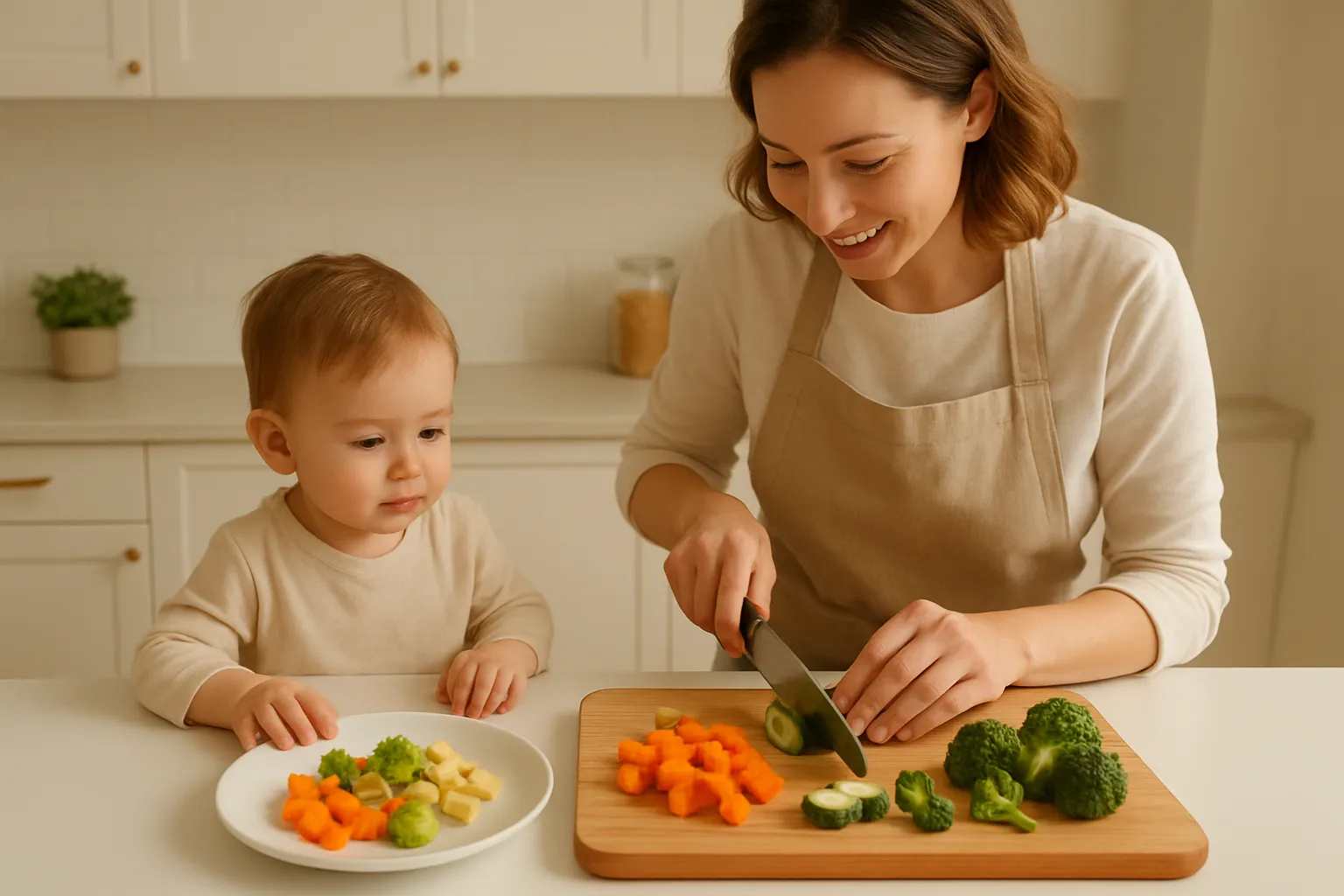
- Sharp small knife or paring knife for most jobs. A blunt knife slips and is actually more dangerous.
- Serrated knife for tomatoes and soft fruits. Kitchen scissors for herbs, pizza and sausages.
- A stable cutting board, damp tea towel underneath to stop it sliding.
- Good lighting and a clear bench so you can focus.
- Have a small container for scraps so you’re not juggling rubbish while cutting.
Cutting rules that work
- Avoid round pieces. Cut grapes, cherry tomatoes and sausages lengthways then into smaller pieces so there’s no chance of a round chunk blocking an airway.
- Matchsticks and thin strips are great for older toddlers who can chew. Small dice are better for younger ones or when introducing a new food.
- Soft-cooked veg can be served slightly larger; a fork should go through easily. For raw crunchy veg, slice thinner or cook until tender.
- For hot dogs and sausages slice lengthways then across so pieces lay flat and are harder to swallow whole.
- Cheese: sticks or small cubes. Spreadable cheese on toast is another low-risk option.
- Fruit with skins and seeds: remove pits and cores, quarter then chop. For apples and pears, slice thinly or cook to soften.
- Meat and chicken: shred finely or dice small. Flake fish and check for bones with your fingertips.
- Eggs: chop into quarters or small cubes; mashed yolk mixed with avocado is great for tiny mouths.
Quick tests before serving
- The fork test: press a fork into the piece. If it squashes easily and the fork goes through with light pressure, it’s soft enough.
- The bite test: an adult should try a piece the same size as you plan to serve. If it requires a lot of chewing, cut it smaller or cook a bit longer.
- Temperature check: always serve lukewarm. Cool to the touch before handing over.
Batch prep and storage
- Cut once and use all week. Store pre-cut veg, fruit and proteins in clear containers in the fridge so you can grab-and-go.
- Freeze portions in silicone moulds or small bags for casseroles, muffins or snack cubes. Defrost overnight in the fridge.
- Label containers with date and contents. Use cooked proteins within a couple of days.
Presentation and picky eaters
- Mix textures on the plate: a soft piece plus a crunchy finger or a small dip often encourages tasting.
- Use fun shapes sparingly. Kids notice texture first. Thin strips, small cubes or shredded options are usually the winner.
- Keep bites consistent. If one carrot stick is tiny and another huge, they may refuse the whole plate.
Safety and mealtime habits
- Always sit down to eat and supervise. No walking, running or lying down while eating.
- Remove hazards before serving: seeds, hard pits, stringy bits and bones.
- Teach slow eating by modelling chewing and taking small bites. Praise attempts rather than focusing on perfection.
Final little hacks
- Keep a pair of kid-safe scissors in the drawer for fast snips.
- Use a small cookie cutter for sandwiches to get consistent shapes for bigger kids.
- Pre-cook and freeze little meatballs or veggie patties that you can slice or mash when needed.
These tips stop me rushing at the end of the day and make snack time less stressful. Small changes up front save a lot of hovering later.
Browse Cuisines
From the Blog
First up, a few no-fuss spring winners that keep sticky fingers and big clean-ups to a minimum. Quick to prep and easy for little hands to manage, these are the sorts of things I reach for when we want something...
Nice - here’s how Steve keeps dinner simple without sacrificing flavour or sanity. A few good habits and the right packing tricks mean you can pull a proper family meal out of the freezer in minutes.
Righto, a couple of quick fridge fixes will make everything a whole lot easier. These are the simple, practical habits and setups that keep snacks safe, obvious and actually reachable for little hands.


 Never miss a recipe from us, subscribe to our newsletter