
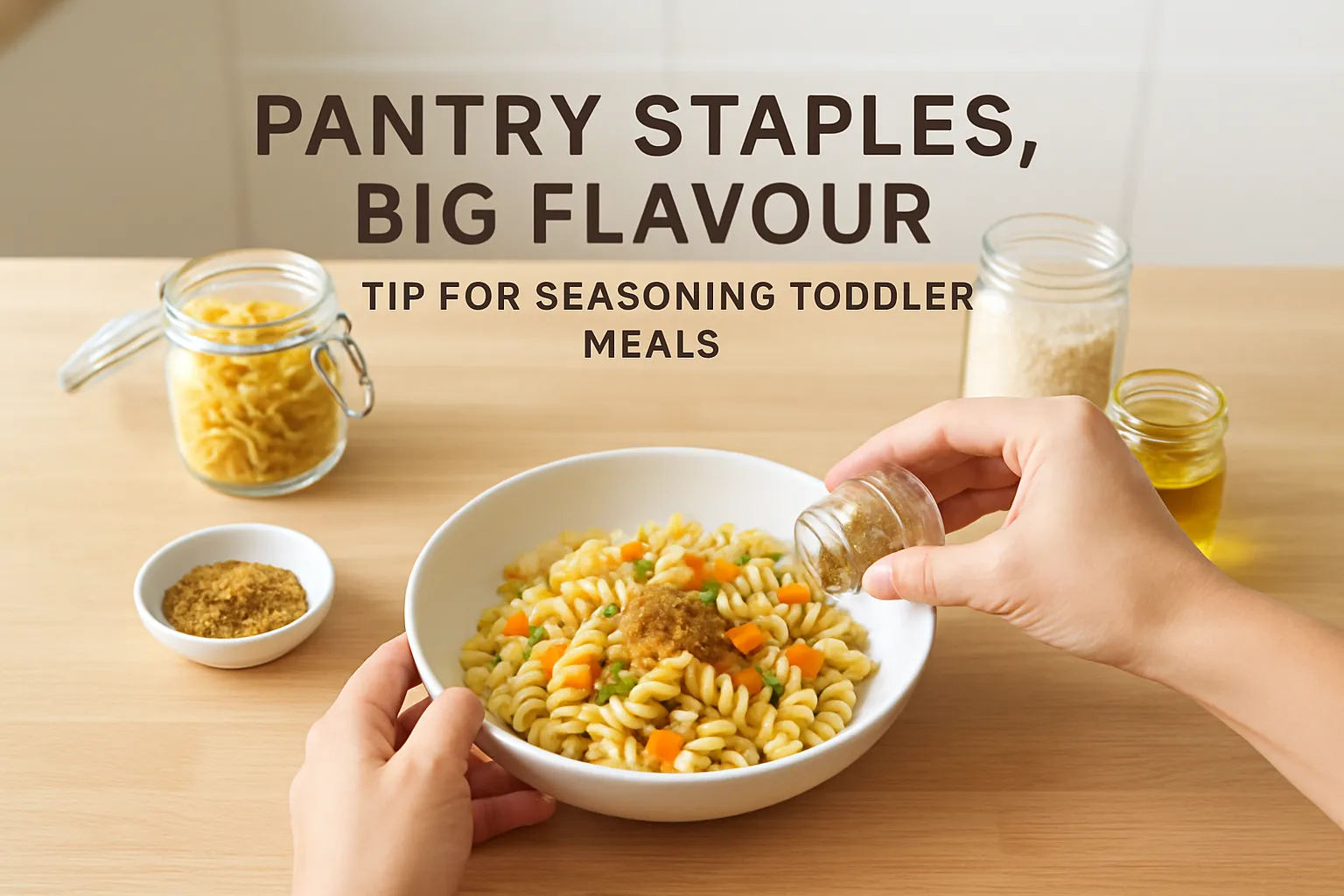
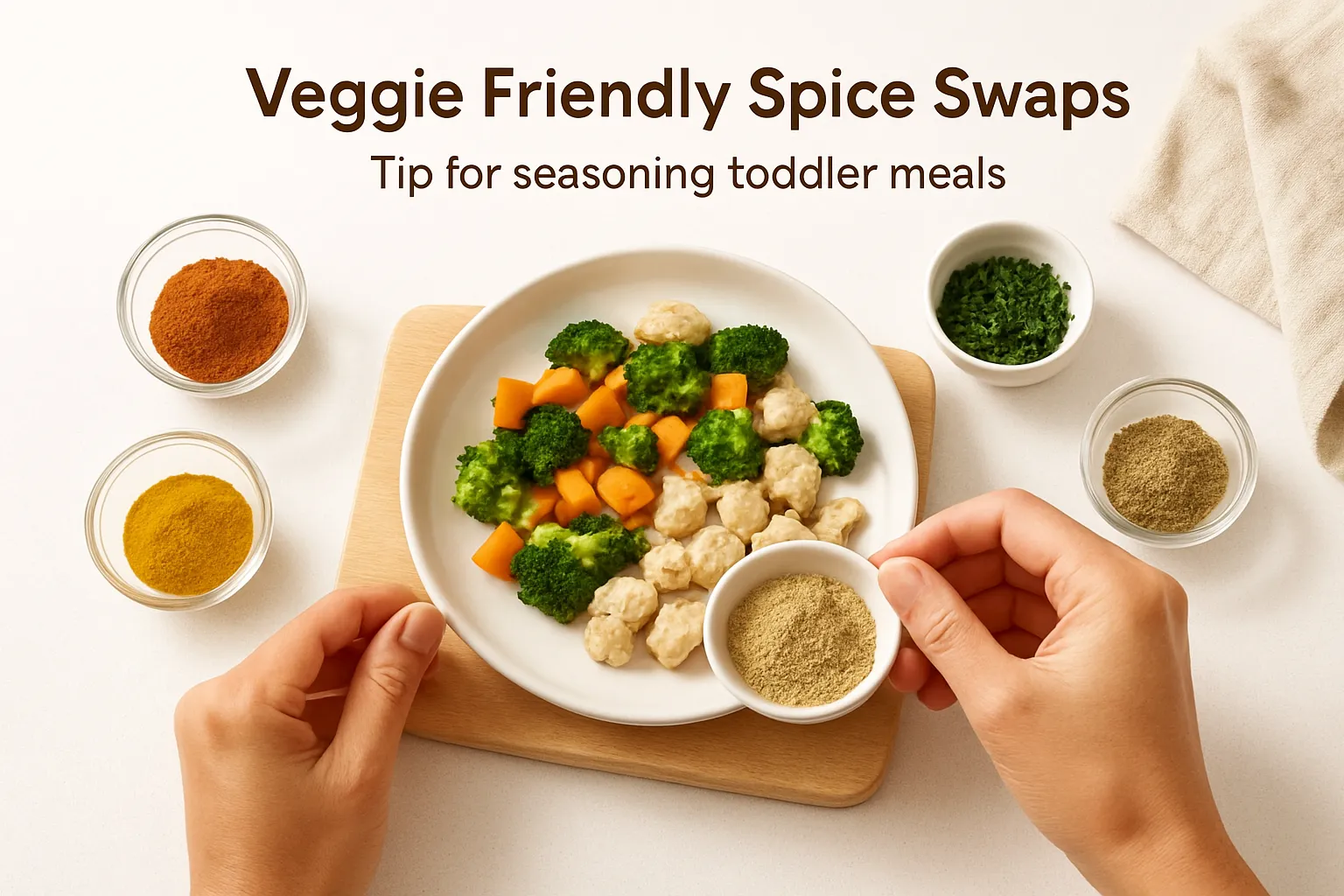
Tip for seasoning toddler meals
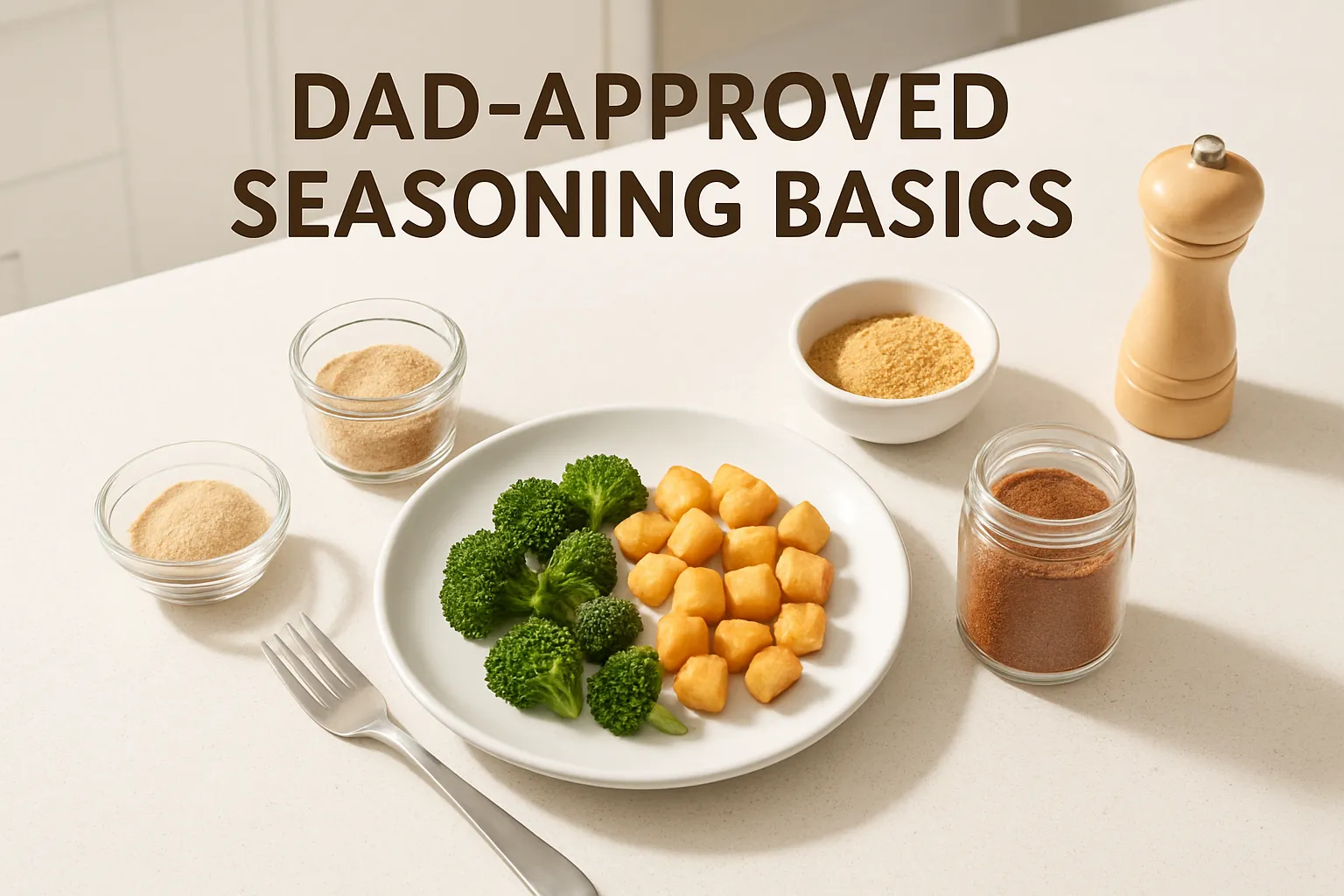
Righto, a few no-fuss rules that a dad will actually follow on a busy night. These basics get flavour without drama.
- Start small and taste as you go. Add a pinch, stir, cook a minute, taste. You can always add more but you can’t take it away.
- Keep salt minimal. Use tiny amounts during cooking and save any extra at the table for adults. Swap salty ingredients for things that boost flavour instead of sodium.
- Use aromatics first. Onion, garlic and ginger cooked until soft are the quickest way to make food smell and taste grown-up without heat or spice.
- Fresh herbs are forgiving. Throw chopped parsley, coriander or basil at the end of cooking for bright, recognisable flavour kids often like.
- Easy spice combos that work:
- Mild comfort: garlic powder, smoked paprika, a little black pepper.
- Sunny citrus: ground cumin, coriander, a squeeze of lemon or lime at the end.
- Italian-style: dried oregano, basil and a pinch of fennel or thyme for pasta or tomato dishes.
- No chilli, no sugar. Skip chilli and anything labeled as spicy. Don’t add sweeteners to “improve” bland dishes.
- Texture matters as much as flavour. Toasted seeds, a light sprinkle of grated cheese, or a tiny knob of butter can lift a meal.
- Make a simple jar mix. Combine equal parts garlic powder, paprika and dried parsley, then use a half-teaspoon per family meal for consistent results.
- Finish with acid or fat. A splash of lemon, a little olive oil, or a knob of butter at the end wakes everything up and kids notice the difference.
- Keep it quick. Pre-chop onions and garlic, and keep one go-to herb in the fridge so flavouring becomes habit rather than a recipe step you skip.
Stick with these basics and you’ll have more meals that get eaten, while keeping things simple enough to actually do on a school-night.
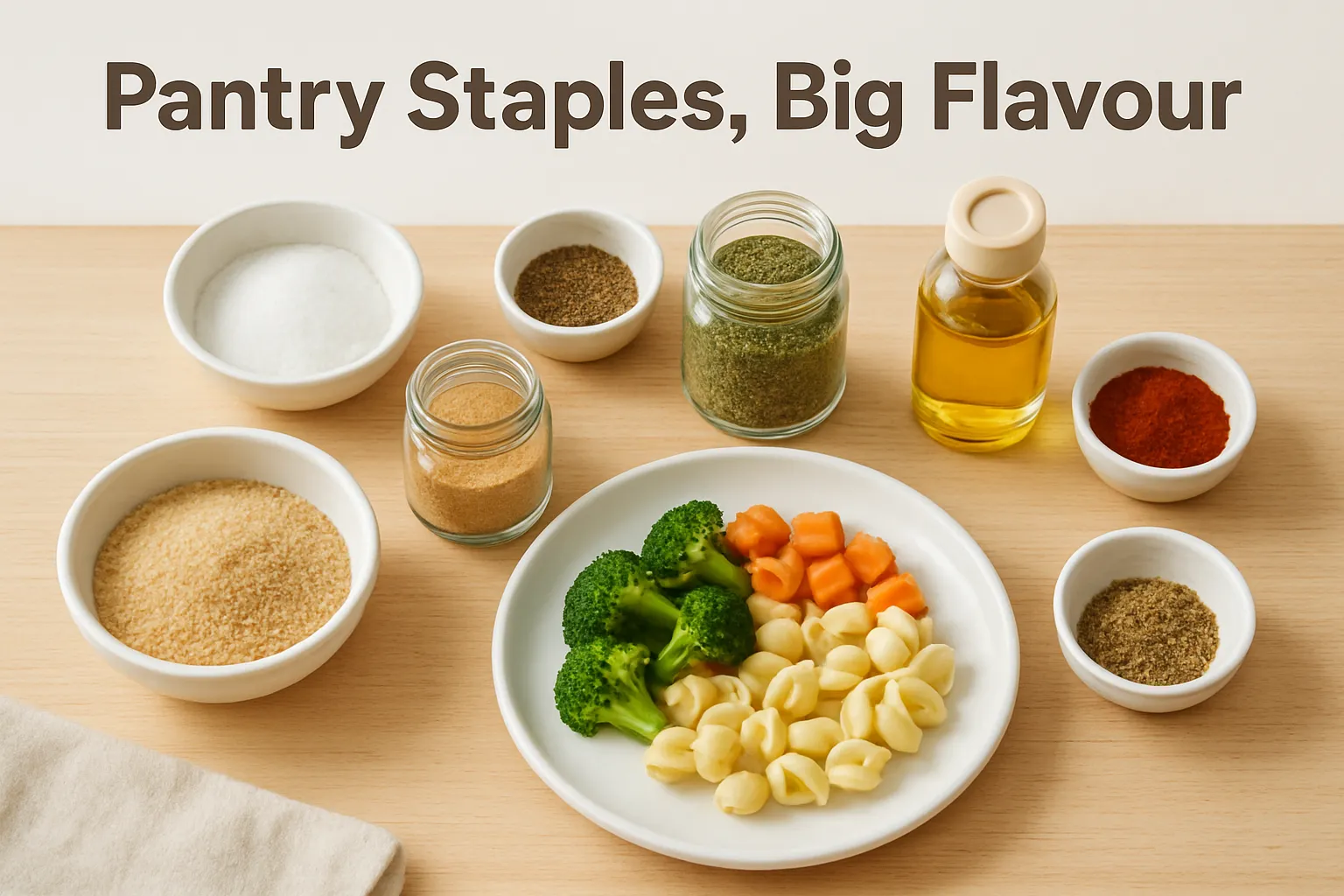
Righto, here are the pantry heroes that give big flavour with minimal fuss. Keep a few of these on the shelf and you’ll turn plain dinners into something toddlers actually want to try.
- Canned tomatoes and tomato paste
- Why: Instant body and sweetness for sauces, stews and bakes.
- How to use: Fry a little garlic or garlic powder, add tomato paste to caramelise for a minute, then stir in canned tomatoes and a pinch of dried oregano. For picky eaters, blend smooth and add a splash of milk or a knob of butter to mellow acidity.
-
Tip: Freeze tomato paste in tablespoon portions in an ice cube tray, pop into a bag and use as needed.
- Nut butters and tahini
- Why: Add creaminess and a gentle, familiar flavour.
- How to use: Stir peanut or almond butter through noodles with a splash of soy or lemon for an easy satay-style dish. Tahini mixed with yoghurt and lemon makes a quick dip for veg and roast sweet potato.
-
Allergy note: Keep nut-free options on hand for daycare or kinder days.
- Miso paste and stock concentrates
- Why: Deep umami without heavy seasoning. Miso is great for soups, and low-salt stock concentrate adds background flavour.
-
How to use: Dissolve a teaspoon of mild white miso in warm water or milk for a savoury base, or soften veggies in stock for richer mash. Add miso at the end of cooking to keep probiotic benefits intact.
- Nutritional yeast
- Why: A cheesy, nutty boost that kids often love.
-
How to use: Sprinkle onto mashed potato, pasta, or mix into béchamel to give a subtle cheese flavour without dairy overload.
- Dried herbs and spice basics
- Why: A small selection goes a long way.
- Keep: dried oregano, basil, thyme, bay leaves, mild smoked paprika and maybe a mild curry powder.
-
How to use: Add dried herbs early so they bloom in the sauce. For paprika, use a little on roasted veg for a smoky hit. Start small with powdered spices and taste as you go.
- Garlic and onion powders
- Why: Gentle, sweet base flavours that blend smoothly into purees and sauces.
-
How to use: Use when fresh aromatics are too strong or when you need a smooth texture. A small pinch can replace a clove of garlic in toddler portions.
- Citrus and vinegars
- Why: Brightness equals perceived flavour, often making food more appealing.
-
How to use: A squeeze of lemon or a splash of apple cider vinegar at the end of cooking lifts stews and veg. Use sparingly and taste.
- Sun-dried tomatoes, olives and capers (in moderation)
- Why: Concentrated savoury bites to add interest.
- How to use: Chop finely and stir into meatballs, pasta sauces or mixed through mashed veg. Rinse capers and olives to reduce salt.
Simple combo ideas to have memorised
- Quick pasta: tomato paste + canned tomatoes + oregano + pinch garlic powder, blend if needed.
- Creamy veg dip: tahini + yoghurt + lemon + a little water to thin.
- Cheesy mash: mashed potato + butter + nutritional yeast + a splash of milk.
- Mild satay: peanut butter + warm water + soy + a touch of brown sugar and lime.
Storage and spoilage tips
- Keep spices in a cool, dark spot and replace ground spices every 6 to 12 months for best flavour.
- Transfer opened jars of wet staples into small airtight containers and refrigerate. Freeze small portions to avoid waste.
That little stock of staples will save dinner stress and make even simple meals sing. Give one combo a go tonight and tweak to your kiddo’s taste.
Start with flavour layers rather than salt. Small, well-timed boosts make food sing for tiny palates.
-
Acid lifts everything. A squeeze of lemon or lime right at the end brightens stews, mashed veg and milky sauces. A splash of apple or rice vinegar in coleslaws and dressings wakes up flavours without salt.
-
Roast and caramelise. Oven-roasted carrots, tomatoes and onions develop sweet, deep flavours that replace the need for seasoning. Throw a big tray of veg in the oven, mash a few for purees and blend the rest into a base for soups or pasta sauces.
-
Use natural umami without the salt. Dried mushrooms soaked in hot water make a lovely, savory liquid for soups and risottos. A spoonful of tomato paste added early in cooking concentrates tomato flavour; it’s powerful so a little goes a long way. Nutritional yeast gives a cheesy, nutty hit with very little sodium.
-
Layer aromatics. Cook onions, garlic and ginger gently at the start to build a flavour base. Toasting whole spices like cumin seeds or coriander seeds in a dry pan for 20 to 30 seconds before adding them releases aroma and depth without heat or salt.
-
Finish with fresh herbs and zest. Parsley, basil, coriander and dill added at the end bring freshness that distracts from blandness. Citrus zest has aromatic oils that pop, even if you skip the juice.
-
Add creaminess and fat for mouthfeel. A knob of butter, a swirl of olive oil or a spoon of full-fat yoghurt makes purees and soups feel satisfying. Dairy also softens strong flavours for little ones.
-
Sweetness balances bitterness. A grated apple in a carrot mash, a spoonful of mashed sweet potato in a tomato sauce, or a dash of maple or date paste can round out flavours and make veg more appealing.
-
Low-salt swaps and caution. Use low-salt stocks or make your own from roasted veg and herbs. Be careful with miso, soy and anchovy products; they’re strong and salty, so only tiny amounts diluted well are suitable for older toddlers and family meals where you can control portions.
Quick ideas to try:
- Carrot and orange mash: roast carrots, mash with a little butter and orange zest.
- Red lentil and tomato dhal: cook lentils with cumin, turmeric and a spoon of tomato paste, finish with coconut milk and lemon.
- Mushroom broth risotto: rehydrate dried mushrooms, use the soaking liquid as part of the stock, stir in nutritional yeast and a squeeze of lemon before serving.
- Cucumber-yoghurt dip: grated cucumber, plain yoghurt, lemon zest and dill for veg sticks or sandwiches.
Taste as you go and add finishing touches at the end. Little choices like a quick zest, a fresh herb sprinkle or a drizzle of oil can replace a pinch of salt and make meals much more delicious for tiny eaters.
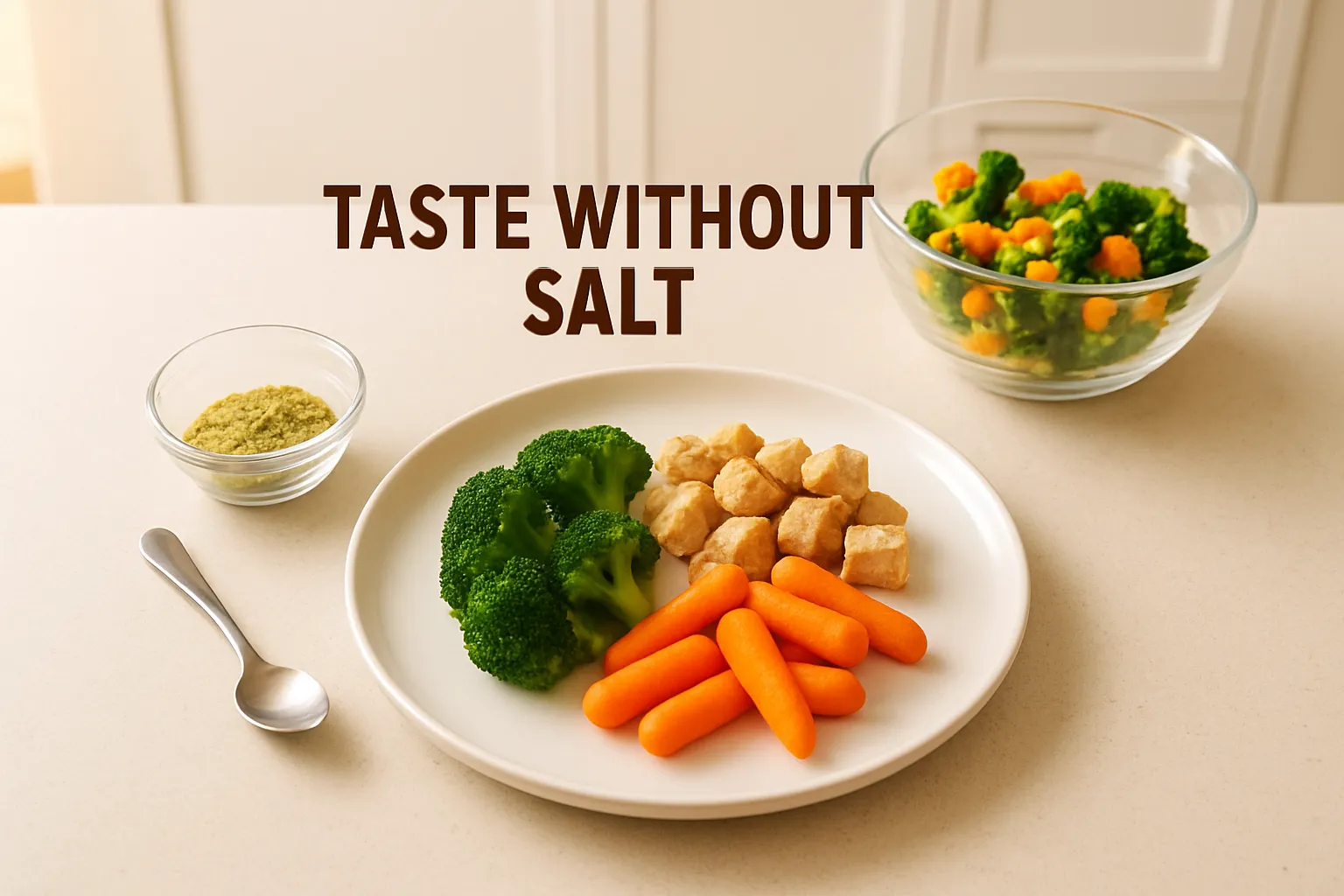
If steamed broccoli or plain pumpkin is getting the cold shoulder, these little swaps bring veg to life without salt or heat.
Quick swaps by veg
- Carrots: Toss roasted or steamed carrot batons with a tiny knob of butter and a pinch of cinnamon, or grate in a little orange zest and a smear of olive oil. Sweet and familiar.
- Sweet potato and pumpkin: Mix 1/2 tsp mild paprika with 1/4 tsp cinnamon, a drizzle of olive oil, roast until golden. Or try a small dusting of ground cumin for a warming, earthy note.
- Peas and corn: Fresh mint or basil torn over after cooking, or a squeeze of lemon and a tiny knob of butter. Kids love the fresh, bright taste.
- Broccoli and cauliflower: Roast with a splash of olive oil, a pinch of garlic powder and lemon zest. For a different twist, a very small pinch of turmeric and cumin gives colour and warmth without spice.
- Zucchini/courgette: Pan-fry with a little olive oil, finish with torn basil or oregano and a sprinkle of grated Parmesan.
- Green beans: Quick steam then toss with lemon zest and toasted sesame seeds or slivered almonds if no allergies. A light drizzle of tahini mixed with lemon makes a yummy dip.
- Potatoes: Roast wedges with rosemary and garlic powder, or sprinkle paprika and a little grated cheese once hot from the oven.
- Spinach and leafy greens: A tiny grate of nutmeg in creamy dishes or stirred into a cheesy sauce helps mellow the “green” flavour.
- Mushrooms: Sauté with thyme and a touch of butter; the thyme keeps things savoury without adding salt.
Easy, toddler-safe spice mixes
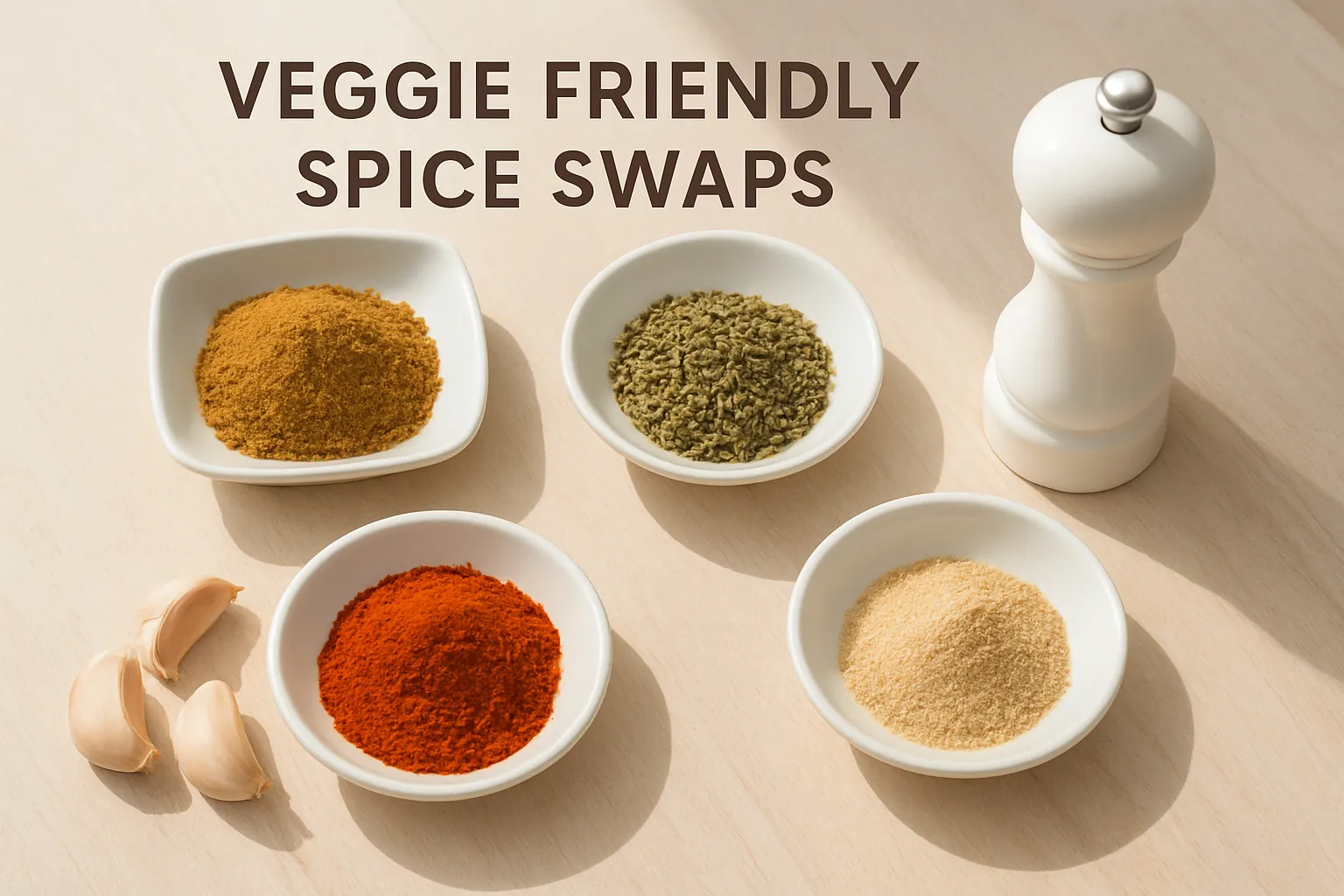
- Mild Veg Mix: 1 tsp sweet paprika, 1/2 tsp garlic powder, 1/2 tsp dried oregano. Great on roasted veg or potatoes.
- Sweet Veg Mix: 1 tsp cinnamon, 1/4 tsp ground ginger, pinch of nutmeg. Lovely on carrots, pumpkin or sweet potato.
- Gentle Warm Mix: 1/2 tsp cumin, 1/4 tsp turmeric, pinch coriander. Try on roasted root veg or mixed into a chickpea mash.
How to introduce new flavours
- Start tiny. A smidge of a new spice on just a few pieces of veg the first time lets kids adjust.
- Pair with something they already like. Mix new spices into a familiar sauce, butter, or yoghurt dip.
- Fresh herbs go on at the end for brightness; dried herbs work well during cooking.
- Use a little fat to carry flavour. A healthy drizzle of olive oil, butter or a spoonful of yoghurt helps spices bloom.
- Avoid chilli and big heat. Keep pepper to a minimum while tastes are developing.
- If you have allergy concerns, swap seeds and nuts for seeds that are safe, or skip them entirely.
Let them help. Giving a toddler a tiny spoon to sprinkle the mix makes them more likely to try what they helped make. Keep experimenting - a few small changes can turn a fussy meal into something they’ll happily eat.
Quick Weeknight Meal Boosts
When time’s tight, these little tricks add heaps of flavour without faffing around. Try one or two and watch the kids actually finish their plates.
-
Finish with a squeeze and some zest. A tiny squeeze of lemon or a quick grate of lemon or orange zest lifts sauces, veg and fish. Add just a little at the end so it brightens rather than bites.
-
Stir in a knob of butter or a teaspoon of ghee. Gives a rounded, creamy mouthfeel that helps picky eaters accept new flavours. Use unsalted if you’re watching sodium.
-
Fold through plain full‑fat yoghurt for creaminess and mild tang. Great in curries, pasta sauces and mashed veg. It cools hot dishes and makes textures smoother for little mouths.
-
Keep a jar of garlic-infused olive oil or roasted garlic paste in the fridge. One teaspoon stirred into a pot gives that roasted garlic loveliness without raw sharpness.
-
Grate veg into everything. Carrot, zucchini and beetroot blend into bolognese, fritters and patties and add natural sweetness and bulk. No one needs to know.
-
A teaspoon of tomato paste fried briefly with onion adds instant umami depth. It’s magic in soups, stews and mince. Cook it for a minute so it loses any tinny taste.
-
Finely chop or blitz mushrooms and brown them. They bring savoury richness that makes sauces and rissottos more interesting to tiny eaters.
-
Keep a small saucer of grated cheese handy. A sprinkle of Parmesan or mild cheddar on top brightens bowls and helps littlies accept veg or grains.
-
Quick herb hit: tear basil, chop parsley or coriander and add at the end. Fresh herbs feel special to kids and give a lift without spice.
-
Mushroom or tomato soaking water makes a fast flavour boost. Soak dried porcini for 10 minutes, reserve the liquid and add a little to soups and risottos for depth.
-
Tiny dollop of miso or tahini for umami and nuttiness. Use very small amounts and check salt content. Tahini also adds creaminess to dressings and dips.
-
Toasted seeds or crushed nuts as a finish. Sprinkle a few toasted pumpkin seeds or a tiny pinch of crushed almonds for crunch and interest. Be mindful of allergy rules in your household.
A couple of these quick tricks per meal and weeknight dinners go from bland to “ooh what’s that?” without extra cooking time.
Browse Cuisines
From the Blog
First up, a few no-fuss spring winners that keep sticky fingers and big clean-ups to a minimum. Quick to prep and easy for little hands to manage, these are the sorts of things I reach for when we want something...
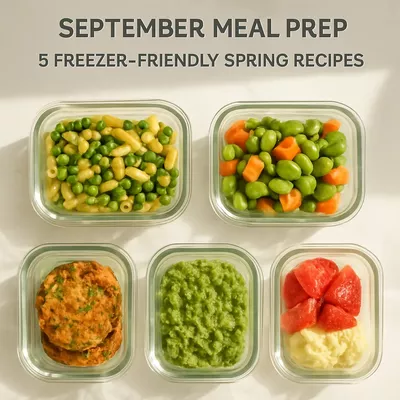
Nice - here’s how Steve keeps dinner simple without sacrificing flavour or sanity. A few good habits and the right packing tricks mean you can pull a proper family meal out of the freezer in minutes.
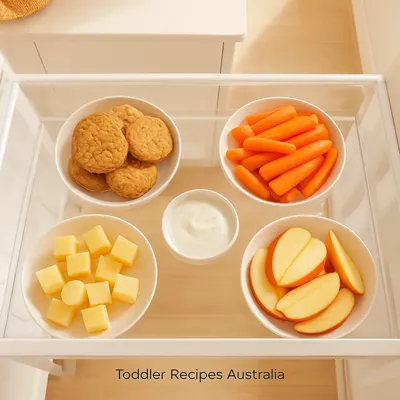
Righto, a couple of quick fridge fixes will make everything a whole lot easier. These are the simple, practical habits and setups that keep snacks safe, obvious and actually reachable for little hands.


 Never miss a recipe from us, subscribe to our newsletter