
How to encourage toddlers to help in the kitchen
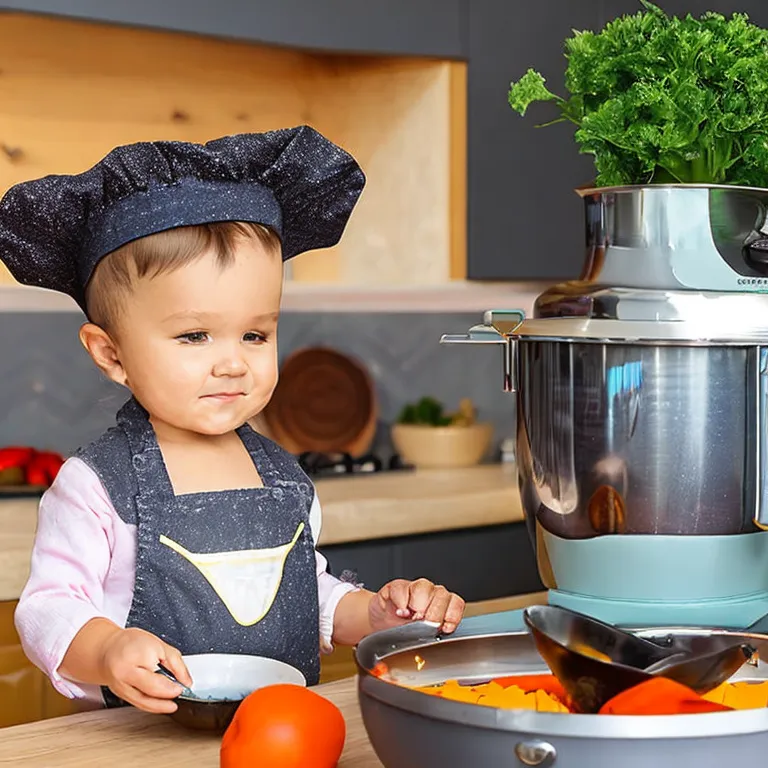
Righto, a couple of quick sentences to set the scene before the list: these are the little tricks Olivia swears by when curious toddlers are milling around and you actually want them involved. They’re simple, quick to set up and mostly magic for getting kids excited.
- Give them a proper role
- Hand over a tiny job with a big name. “Official Stirrer” or “Citrus Squeezer” makes a toddler puff up with pride and stick around.
-
Keep jobs one-step and predictable so they can do them from start to finish.
- Use short, clear choices
-
Instead of asking “Do you want to help?” try “Would you like to stir or sprinkle?” Offering two options helps them feel in control and avoids the usual meltdown.
- Kid-sized tools and a helper kit
- Small rolling pins, plastic measuring cups, a blunt butter knife and a child-friendly whisk make a massive difference.
-
Put them in a little basket with an apron and a named spoon so grabbing a job feels like getting a special outfit on.
- Pre-measure for quick wins
-
Spoon ingredients into small bowls before you start. Toddlers love pouring, tipping and matching colours, and pre-measured bowls stop spills and arguments.
- Make it a game
- Timed missions, “find the red veg” hunts, or counting how many peas go into the bowl turns chores into play.
-
Use silly rules sometimes, like whispering “secret chef words” or singing the directions, to keep it fun.
- Little tasks that teach skills
- Peeling lettuce with fingers, tearing basil, pushing buttons on the blender for a second with help, or sprinkling cheese all teach practical skills and motor control.
-
Start with safe, low-risk tasks first and graduate as they get steadier.
- Visual job cards
-
Picture cards showing steps help non-readers stay on track. Stick them on the bench with blu-tack and swap them out to mix things up.
- The magic of taste testing
-
Let them sample and describe textures and flavours. Saying “Is it crunchy, soft or juicy?” builds language and keeps interest high.
- Praise the process not just the result
-
Specific praise works best: “You folded that pancake so carefully” beats “Good job” every time. It tells them what they did well and encourages repeat behaviour.
- Keep spills normal and tidy up together
-
A small hand towel, a spray bottle with water for wiping and a quick clean-up song makes messes part of the routine rather than a disaster.
- Rotate the starring job
-
Give each child a turn at a “big” task so everyone feels important. Rotate jobs week to week to keep novelty.
- Celebrate tiny achievements
- A high-five, a sticker, or a “taste tester” certificate turns one successful task into pride for days.
These tricks are all about making involvement easy, fun and obvious. When the job looks achievable and feels special, little ones are much more likely to jump in rather than hang around getting underfoot.
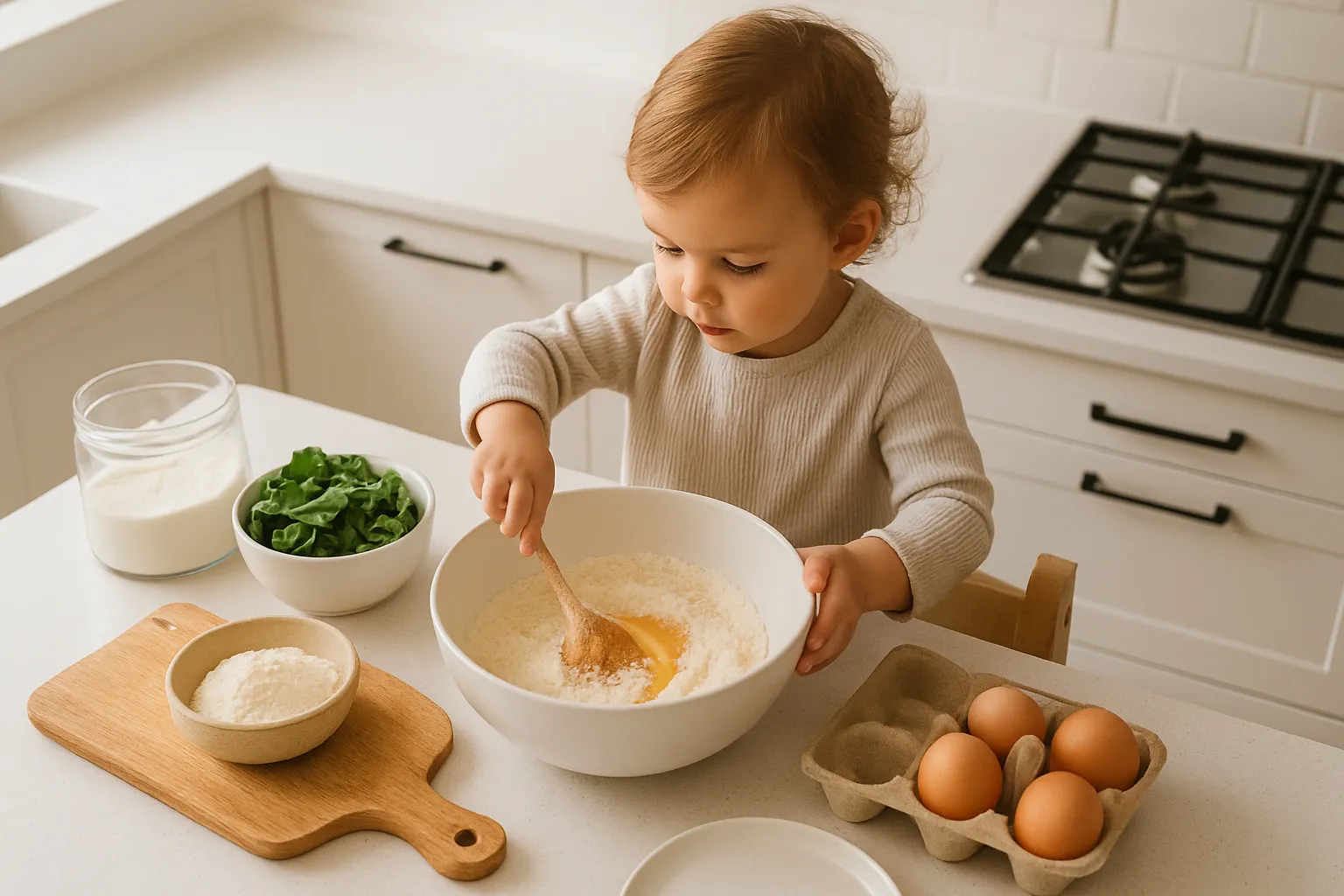
Break jobs into tiny, do-able steps. Toddlers get overwhelmed by big tasks, so give them just one small job at a time and show it once. Keep instructions to two short sentences, and demonstrate slowly while they watch.
Practical setup
- Give them a dedicated spot, a low stool or bench, and a small bowl or tray to keep their bits contained.
- Pre-measure things into little cups so they can tip, pour or spoon without needing heavy lifting.
- Use child-sized tools: small wooden spoons, plastic measuring cups, a blunt spreader, a kid-safe grater. They feel confident using gear that actually fits their hands.
- Put a non-slip mat under bowls and use lightweight containers so things don’t slide all over.
Task ideas by skill level
- 12-18 months: washing soft fruit, tearing lettuce leaves, dropping chopped fruit into a bowl, patting dough, stirring with help. These are great for sensory play and hand-eye coordination.
- 18-24 months: spooning dry ingredients into a bowl, pressing down cookie dough with a palm, placing pre-cut toppings on toast, matching lids to containers.
- 2-3 years: pouring from a small jug into a measuring cup, cracking very soft-boiled eggs with help, spreading soft butter or hummus, counting spoons of ingredients while you bake.
- 3+ years: simple peeling (bananas, mandarins), using a child-safe knife for soft fruit, measuring with cups, following a 3-step recipe with picture prompts.
How to break a recipe down Take something simple, like making a sandwich, and map out tiny steps: choose bread, spread butter, add filling, close and cut. Let them do one or two steps each time. For baking, you can let them do the stirring, tipping in pre-measured cups, and pressing shapes into dough.
Give choice and small responsibilities Kids love ownership. Offer two clear choices, for example “cheese or ham?” or “red bowl or blue bowl?” Hand over one responsibility, like “you’re the stirrer today” or “you’re in charge of counting the spoons.” That sense of role keeps them engaged.
Use visuals and repetition Photo cards stuck on the fridge or a simple checklist with pictures makes things predictable. Repeat the same mini-tasks across meals so skills build fast. Repetition equals confidence.
Keep it quick and manageable Toddlers’ attention spans are short, so pick tasks that take 2-5 minutes. If their focus drifts, let them finish at another time or switch to a tidy-up job like scraping crumbs into the bin.
Make cleanup part of the task Teach simple tidy-up steps as part of the job, like scraping onto a tray, wiping the bench, or stacking bowls. Keep a damp cloth handy and show them one swipe at a time.
Praise effort, not perfection Say what they did well, for example “great stir” or “you piled the raisins neatly.” Little, specific praise encourages them to try more and builds independence.
Rotate tasks and adapt Keep a short list of go-to jobs and swap them around so it feels fresh. On busy nights, pick one small, safe task so the kitchen stays calm and the child still gets to help.
A few quick starters to try tonight
- Washing grapes in a colander.
- Tearing spinach leaves for a salad bowl.
- Scooping rice from the cooker into a small bowl.
- Sprinkling cheese over a pizza base.
- Picking out and counting peas for a pot.
Keep it fun, keep it short, and set them up for wins. Small wins every night add up fast.
Build-your-own tacos
- What to do: Lay out small soft tortillas, a few protein options (shredded chicken, beans, mince), grated cheese, chopped tomato, lettuce, avocado slices and a mild salsa. Let kids assemble their own.
- What they learn: sorting, fine motor skills, making choices and understanding cause and effect when flavours are combined.
- Age tips: from about 2 years they can spoon and place fillings; 4 years and up can help tear lettuce and mash avocado.
- Bonding idea: make it a mini challenge - everyone builds one weird combo, then everyone tastes and names it. Giggles guaranteed.
Pizza faces on English muffins
- What to do: Give each child a halved English muffin or pitta, pass bowls of tomato paste, grated cheese and lots of veggie toppings to make “faces.”
- What they learn: colours, counting toppings, hand-eye coordination.
- Age tips: small kids can spread paste with a spoon; older toddlers can cut soft toppings with a plastic knife.
- Bonding idea: have each person tell a short story about their pizza character before it goes in the oven.
Rainbow grain bowls
- What to do: Cook a base of rice, quinoa or couscous. Provide colourful veg and proteins in separate bowls and let kids create a rainbow plate.
- What they learn: colour recognition, patterns (make stripes or sections), simple nutrition ideas.
- Age tips: pre-cut veg for little hands; allow older toddlers to mix sauces and dressings.
- Bonding idea: each person picks a colour and explains why they chose it that day.
Skewers and “build-your-own” kebabs
- What to do: Use blunt-ended skewers or toothpicks for smaller hands. Offer cooked chicken, cheese cubes, cherry tomatoes, cucumber slices and fruit.
- What they learn: sequencing, counting, pincer grip practice.
- Age tips: supervise for choking risk; younger toddlers can thread larger pieces or push on skewers under close watch.
- Bonding idea: take turns making a pattern for each other to copy.
Smoothie bar
- What to do: Put out chopped fruit, spinach or kale, yoghurt or milk, maybe a spoonful of oats. Kids choose mix-ins and press the button to blend together.
- What they learn: taste combinations, measurement basics and following a simple recipe.
- Age tips: children 2 and up can add ingredients; let a grown-up handle the blender.
- Bonding idea: create a family “secret ingredient” day where everyone adds one surprising element.
Mini frittatas in a muffin tin
- What to do: Whisk eggs with a little milk, add grated veg and cheese, pour into a greased muffin tin and bake.
- What they learn: cracking eggs with help, whisking, pouring and understanding how raw turns cooked.
- Age tips: toddlers can sprinkle ingredients and push them into tins; older ones can crack one egg at a time with supervision.
- Bonding idea: make a batch and pack extras for a picnic the next day.
Rice paper rolls or sandwich wraps
- What to do: Lay out softened rice paper or flat wraps and fillings like shredded carrot, cucumber, cooked chicken or tofu, herbs and rice noodles. Demonstrate rolling, then let them try.
- What they learn: sequencing steps, gentle rolling motions, choosing flavours.
- Age tips: rice paper can be tricky for littlies; try wraps or soft tortillas for younger hands.
- Bonding idea: pair up and make rolls for each other with a little note tucked inside.
Pancake decorating station
- What to do: Make a big batch of small pancakes. Offer yoghurt, fruit slices, nut butter and a drizzle of honey for decorating faces, shapes or landscapes.
- What they learn: symmetry, creativity, using utensils like spreaders.
- Age tips: very young ones can place fruit pieces; older toddlers can practice spreading and more detailed decorating.
- Bonding idea: have a weekly Pancake Gallery morning where everyone explains their creation.
Snack and lunch “build boards”
- What to do: Create a platter with crackers, cheese, dips, cut fruit and veg, cold meats or plant-based options. Kids choose combinations and assemble mini meals.
- What they learn: independent meal planning, portion sense, trying new foods in small bites.
- Age tips: keep choking hazards in mind and always supervise.
- Bonding idea: make it a calm, screen-free sit-down and talk about one thing that made everyone smile that day.
Quick prompts to boost learning and connection
- Ask what colour their food is and how it feels in their mouth. Naming sensations helps vocabulary and mindful eating.
- Count items as you add them. Make it a rhyme or a silly chant to keep it fun.
- Give small choices rather than open-ended ones. “Do you want cucumber or carrot on your taco?” helps independence without overwhelm.
- Praise effort not just results. Celebrate a kid trying a new dip or carefully placing toppings.
Little wins matter. These meals are more about the making and chatter than perfect plates, so keep it relaxed, hand over small roles and enjoy the mess and the stories that come with it.
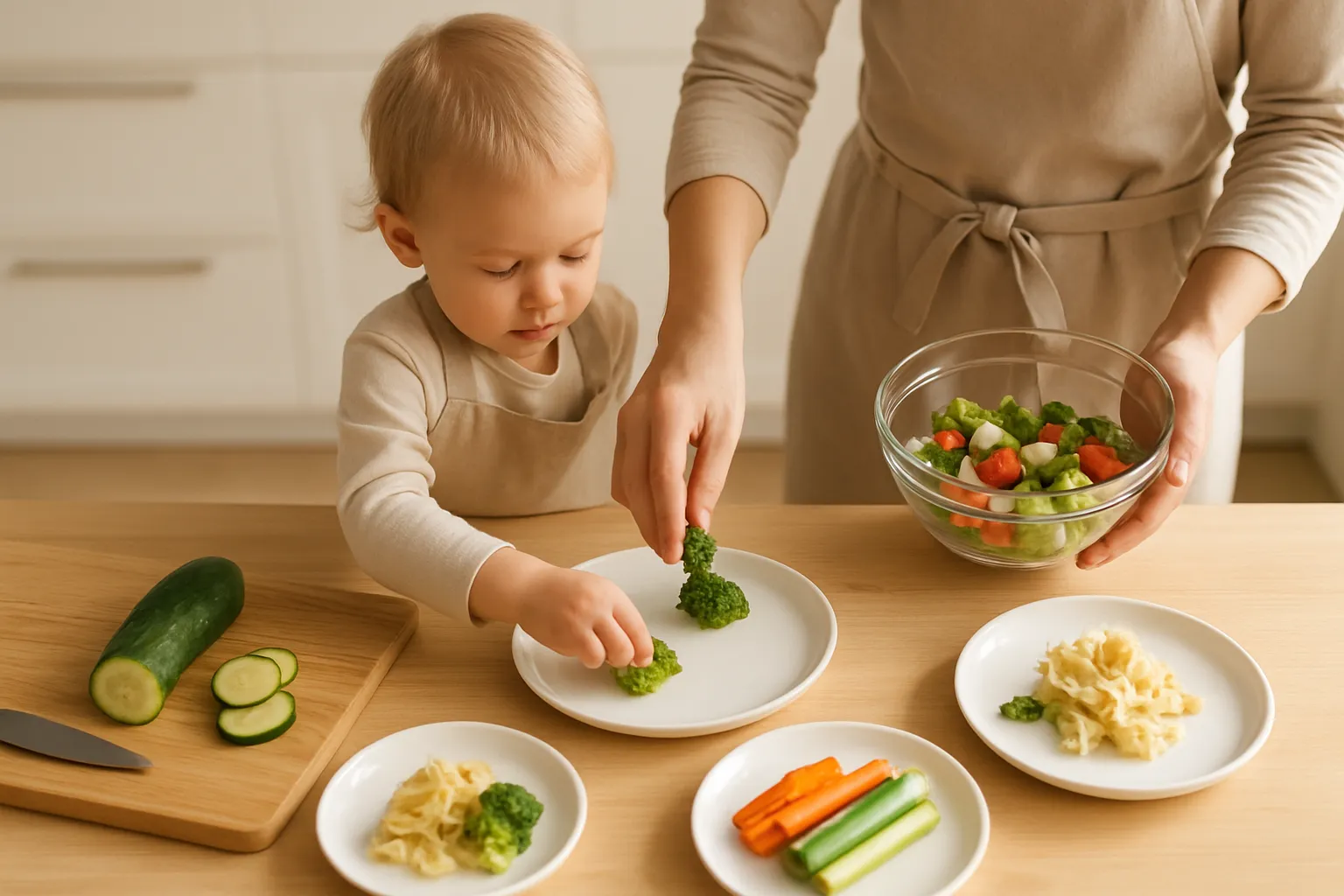
Keep the kitchen safe without making it scary. Small changes and a few clear rules let toddlers help and you breathe easier.
Make the space kid-friendly
- Create two zones: a helping zone where they can stir, sprinkle and wash, and a hot zone around stove, oven and kettle. Teach them to stay in the helping zone unless they have permission to come closer.
- Use a sturdy step stool with a wide base and grip surface so they can reach benches safely. Anchor it or choose one with rubber feet.
- Put heavy or breakable items and sharp tools out of reach. Store knives, peelers and baking trays in high drawers or locked cupboards.
Everyday supervision basics
- Toddlers always need to be within arm’s reach when in the kitchen. You can be supervising and chatting while still keeping them safe.
- Give short, simple rules: “hands down when the stove is on,” “stay on the mat,” “ask first before touching.” Repeat them calmly and consistently.
- Set clear, predictable routines at cooking time so they know what to expect. Predictability lowers risky curiosity.
Safer tools and equipment
- Use child-safe utensils: plastic or nylon knives for spreading, small wooden spoons for stirring, silicone spatulas and kid-sized rolling pins.
- Turn pot and pan handles to the back of the stove and use back burners when possible.
- Keep hot drinks, kettles and slow cookers well away from edges. Use a kettle with an automatic shutoff if you can.
- Unplug and put away appliances when not in use. Keep cords coiled and out of reach.
Heat and burn prevention
- Never leave hot oil, pans or boiling pots unattended. For toddlers, offer mixing or decorating jobs away from the stovetop.
- Train them early to understand the word hot. Use role play with safe items so the concept sticks.
- If a small burn happens, cool it under running cool water for at least 20 minutes, then cover with a sterile dressing. For anything larger than very small blistering burns, or if you’re unsure, seek medical help or call 000.
Cuts and first aid
- Supervise all cutting tasks. For little hands use tearable foods like lettuce, or let them press cookie cutters and poke holes with a straw.
- Keep a basic first-aid kit in or near the kitchen. For a cut, apply gentle pressure to stop bleeding, clean with water, and cover with a plaster. If bleeding won’t stop, a deep cut, or there’s bone exposure, get urgent care.
Food safety basics
- Make hand washing fun: sing a 20-second song while rubbing soap and water, and repeat before and after handling food.
- Keep raw meat, eggs and seafood separate from ready-to-eat food. Use different chopping boards or wash boards between uses.
- Check temperatures for cooked meats and reheat leftovers thoroughly. Throw out perishable leftovers left at room temperature for longer than two hours.
Floor safety and spills
- Wipe spills straight away. Wet floors mean slips, and toddlers are extra wobbly in socks.
- Use non-slip mats near sinks and prep areas. Keep rugs secure or avoid loose mats altogether.
Teach through small tasks
- Give them safe jobs that keep them away from danger: washing veg, tearing lettuce, stirring cool mixes, sprinkling cheese, pressing dough, or sorting colours of chopped fruit into bowls.
- Praise calm behaviour and following rules. Positive reinforcement encourages safe habits.
Emergency prep
- Keep emergency numbers clearly visible and your phone handy. In Australia call 000 for emergencies.
- Practice a simple “what to do” plan so the toddler learns who to find if you need help, for example “find Dad, or get to the front door.”
Safety can be relaxed and practical. With a few adjustments, sensible rules and constant supervision, cooking with toddlers stays fun and mostly mess.
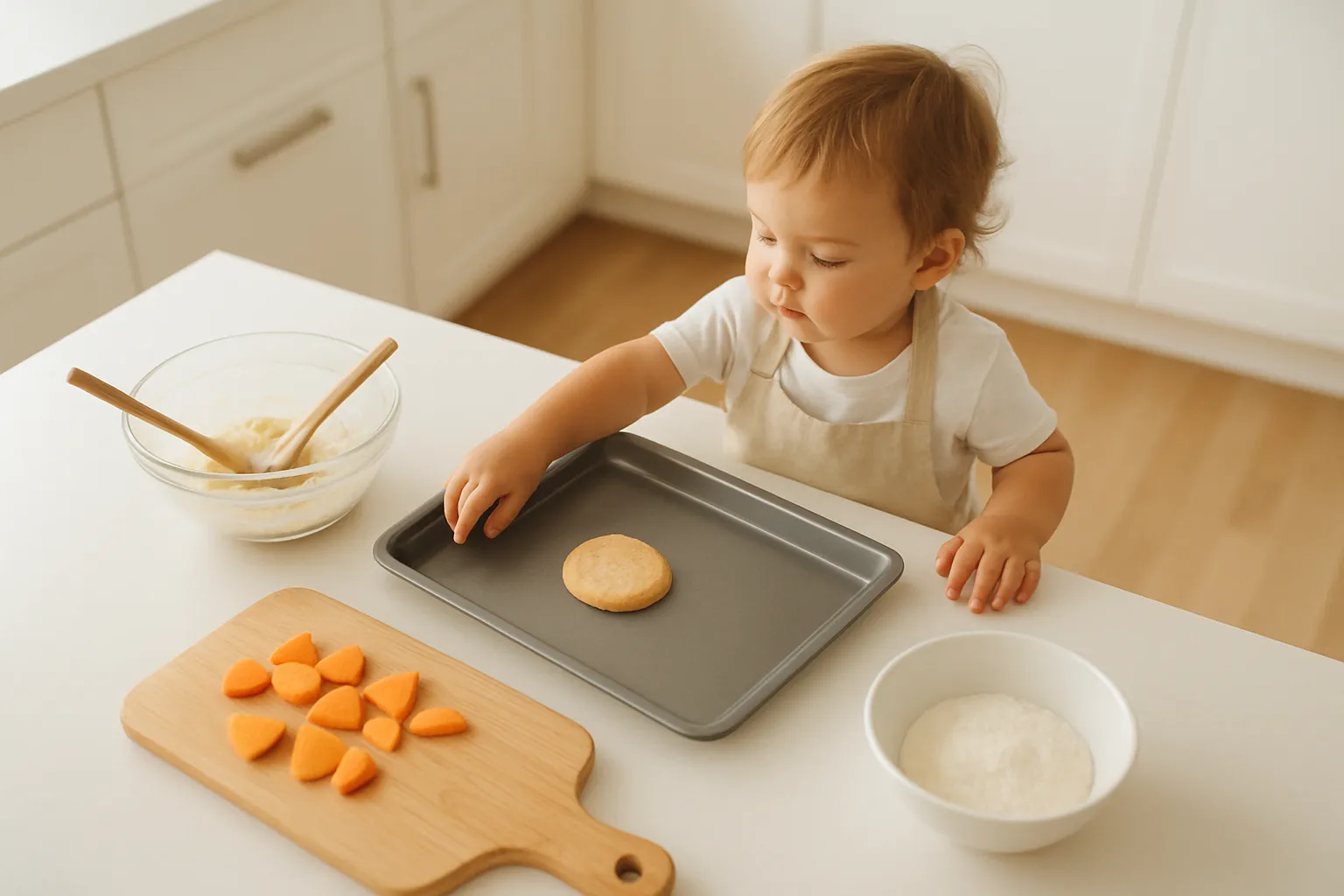
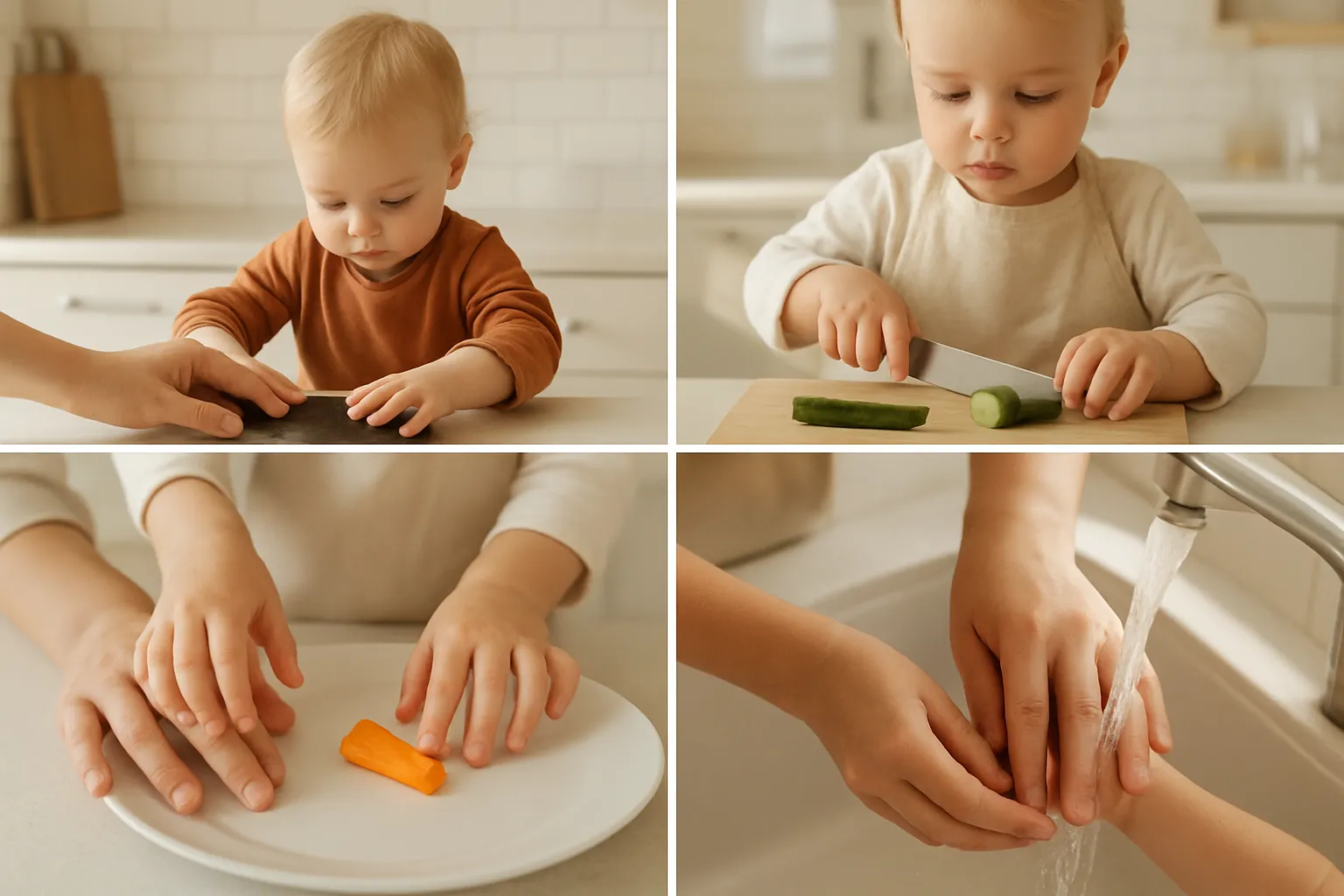
When one parent is away on shift, small predictable rituals make a big difference. Here are practical ways to keep the kitchen a steady, happy place for kids even when your household routine flips.
-
Set a visible rota. Pin a simple weekly chart on the fridge with photos of who is home each day, meal plans and the kid jobs for each evening. Toddlers love stickers, so let them add a star when they help. That tiny bit of control helps them feel safe when adults come and go.
-
Create quick handover rituals. Before the FIFO parent leaves, have a two-minute kitchen ritual: pack a favourite snack together, pick a job for the child to do tonight, and leave a short note or sticker. When they return, a matching welcome-back ritual helps mark the change of role. It could be unpacking an apple together or doing a five-minute tidy side-by-side.
-
Make shift-friendly meal plans. On shift days, keep dinners simple and predictable: one-pan meals, pasta with pre-chopped veg, or a slow-cooker dinner that just needs reheating. Pre-chop and label containers so the person at home or the child helper can safely add things. Put cutlery, bowls and aprons in an easy spot so small helpers can be independent.
-
Assign bite-sized tasks that fit the rhythm. Toddlers can set napkins, wash soft fruit, tear lettuce, or pop bowls into the sink. On days when the FIFO parent is home, give them more hands-on jobs like stirring a batter or laying dough on a tray. When they are away, stick to low-risk tasks that build confidence.
-
Use a shared note or chat for kitchen updates. A quick message about what’s already in the fridge, what needs finishing and where the baking tray is saves confusion. Add photos of leftovers so the home adult knows what can be turned into a quick meal.
-
Keep safety rules consistent. Make sure the same kitchen rules apply whether the FIFO parent is home or not. Put oven mitts and child-safe scissors in a known spot, and go over “hot” and “cold” rules with the child regularly so everyone is on the same page.
-
Make the return a cooking moment. The first evening back is prime time for bonding. Let the returning parent lead a short, low-pressure activity with the child, like decorating toast faces, tearing salad, or stirring a no-bake dessert. That shared, intentional time resets the household rhythm faster than a long chat ever will.
-
Prep a “shift emergency” box. Fill a container with single-serve snacks, simple recipe cards, extra aprons and a wet-wipe pack. Keep it accessible for days when plans change suddenly. If someone else is stepping in, the box removes the need for a lengthy explanation.
-
Build rituals around predictability, not perfection. Some nights will be messy. Keep the focus on small wins: table set, a job done, a high-five. Consistent little rituals create security, and toddlers respond more to what happens every day than to grand plans.
These small systems keep the kitchen calm when your household moves between different rhythms. They help toddlers feel involved and give both parents simple, repeatable ways to connect through food, no matter who is on shift.
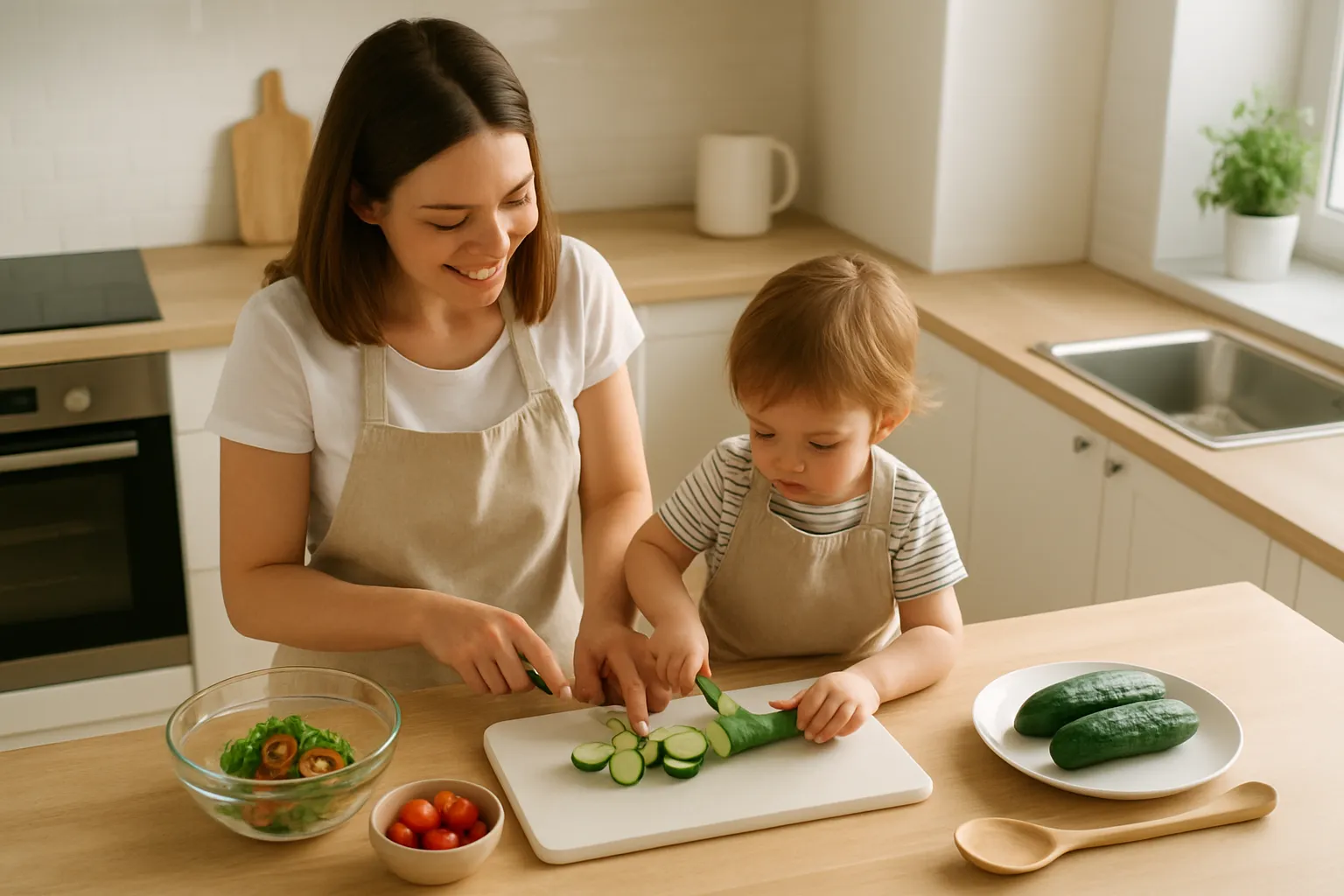
Browse Cuisines
From the Blog
First up, a few no-fuss spring winners that keep sticky fingers and big clean-ups to a minimum. Quick to prep and easy for little hands to manage, these are the sorts of things I reach for when we want something...
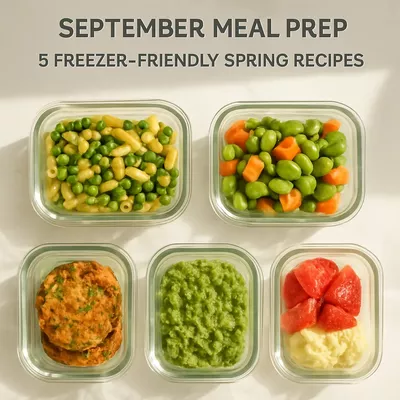
Nice - here’s how Steve keeps dinner simple without sacrificing flavour or sanity. A few good habits and the right packing tricks mean you can pull a proper family meal out of the freezer in minutes.
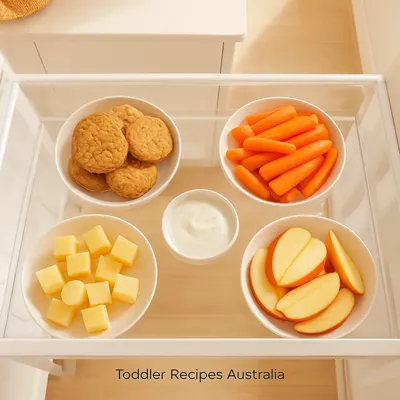
Righto, a couple of quick fridge fixes will make everything a whole lot easier. These are the simple, practical habits and setups that keep snacks safe, obvious and actually reachable for little hands.


 Never miss a recipe from us, subscribe to our newsletter