
Cold night meal prep for August: batch-and-freeze spoonable dinners toddlers can reheat
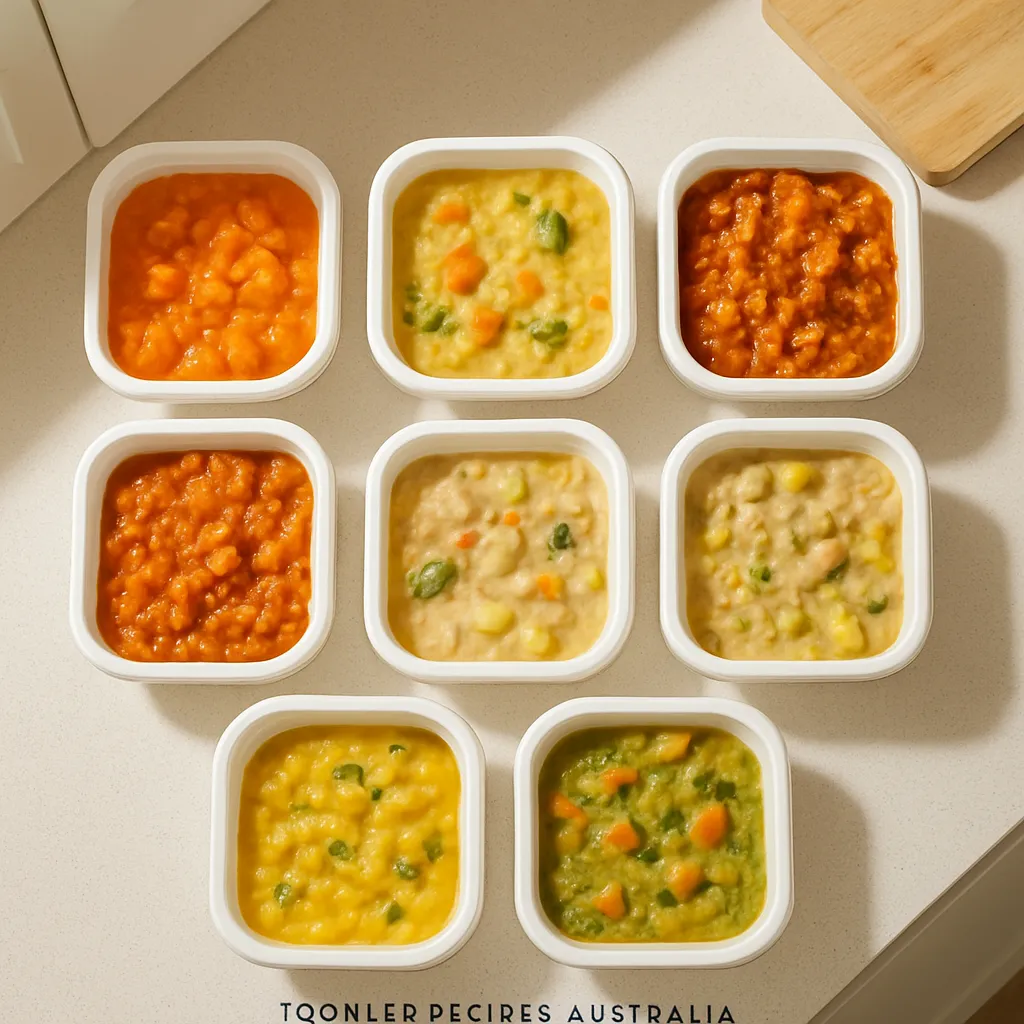
If you’re trying to keep dinner boring-free for a fussy eater, these are the freezer winners that actually get eaten. Quick to make, easy to portion and forgiving if you need to stretch a meal across a few nights.
- Hidden-veg bolognese
- Why kids like it: classic tomato sauce, soft mince and no weird bits.
- Make it: brown beef or turkey mince, add finely grated carrot and zucchini, lots of tomato and a splash of stock. Simmer until glossy.
- Freeze: cool, spoon into 1-cup portions or into silicone muffin trays for toddler-sized portions, then bag.
-
Reheat: thaw overnight or warm straight from frozen in a saucepan with a splash of water. Serve with tiny pasta shapes or mashed potato.
- Cheesy veg mac
- Why kids like it: creamy, cheesy comfort food that hides veg.
- Make it: small pasta shapes, blended cauliflower or pumpkin folded into a mild cheese sauce, add peas for colour if tolerated.
- Freeze: portion into small airtight containers. Label with date.
-
Reheat: gentle microwave or stovetop with a splash of milk, stir well and check temperature.
- Mild chicken and pumpkin risotto
- Why kids like it: soft rice, sweet pumpkin and familiar chicken.
- Make it: short-grain rice cooked with stock and mashed pumpkin, shredded cooked chicken stirred through at the end.
- Freeze: flatten into freezer bags or spoon into muffin tins for single serves.
-
Reheat: slowly on the stove with extra stock or water, stir until creamy again.
- Sweet potato and red lentil dahl
- Why kids like it: naturally sweet, smooth texture and mild spices.
- Make it: red lentils break down into a spoonable paste, add sweet potato and a gentle curry powder.
- Freeze: good in small tubs or ice-cube trays for tiny tastes.
-
Reheat: simmer with a splash of water and serve with yoghurt or soft flatbread.
- Little meatballs in tomato sauce
- Why kids like it: fun to eat, easy to spoon, great for picky mouths.
- Make it: mix mince with grated veg, form small meatballs and bake, then simmer in a simple tomato sauce.
- Freeze: freeze meatballs and sauce together or separately for faster reheats.
-
Reheat: thaw and warm through in the sauce, add a bit of water if needed.
- Creamy corn chowder
- Why kids like it: sweet corn kernels and silky soup texture.
- Make it: potato, corn, a mild stock and a splash of milk or cream. Blend some for smoothness but leave some kernels for texture.
- Freeze: portion into leakproof containers, leave room for expansion.
-
Reheat: stove with a little extra milk or water, check temperature carefully.
- Pumpkin and carrot soup
- Why kids like it: sweet, smooth and easy to eat with a spoon.
- Make it: roast veg for more flavour, blend until silky, add a smidge of butter for richness.
- Freeze: in small portions or ice-cube trays for quick add-ins.
-
Reheat: thaw overnight or heat gently from frozen, whisking to loosen.
- Lentil and veg sloppy-joe style
- Why kids like it: saucy, spoonable mince substitute that works on toast or with rice.
- Make it: brown lentils with onion, grated carrot, mild spices and tomato. Really saucy texture helps picky kids accept veg.
- Freeze: once cooled, into meal-sized tubs.
- Reheat: warm on the stove and add a little water if too thick.
Portioning tips that actually help
- Freeze toddler portions in silicone muffin trays or 1-cup containers so you only thaw what you need.
- Flatten soups or stews in freezer bags for quick defrosting in a warm water bath.
- Label with date and contents. Most spoonable meals are best used within three months for top flavour.
- When reheating from frozen, always stir and test temperature so there are no hot spots.
There you go: simple, comfy meals that freeze well and survive picky phases. Keep a few of these on hand and dinner stress drops right away.
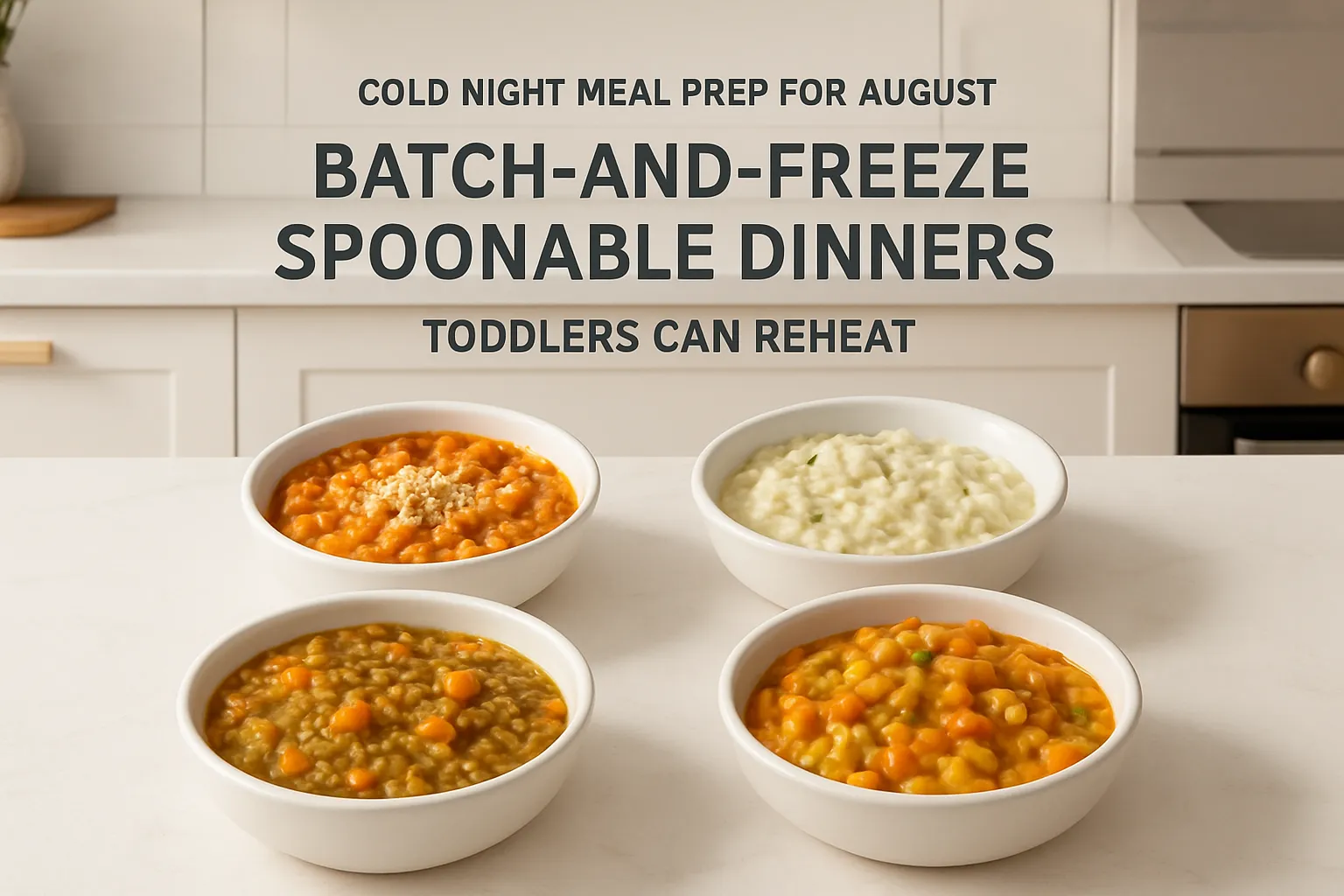
If peanuts are off the table, here are foolproof spoonable dinners that please toddlers and the rest of the crew. Quick notes on each, plus how to freeze and reheat so nothing gets wasted.
- Mild pumpkin and red lentil curry
- Why kids like it: naturally sweet, creamy, soft texture.
- Key ingredients: pumpkin, red lentils, mild curry powder, coconut milk, grated carrot.
- Make-ahead tip: blend a little if your toddler prefers smoother textures. Cool before portioning into small tubs.
-
Reheat: thaw overnight or warm from frozen in a saucepan with a splash of water. Add yoghurt for tang before serving.
- Chicken, sweet potato and apple stew
- Why kids like it: familiar flavours, lightly sweet from apple.
- Key ingredients: diced chicken thighs, sweet potato, apple, peas, low-salt chicken stock.
- Make-ahead tip: cook until everything is very soft so tiny teeth manage it easily.
-
Reheat: gentle simmer in a pot, stir well and check temperature.
- Beef and veg ragu
- Why kids like it: tomato-savoury comfort that goes on pasta, rice or mash.
- Key ingredients: minced beef, grated carrot, zucchini, passata, a splash of Worcestershire sauce.
- Make-ahead tip: cool quickly and divide into family-sized and toddler-sized portions.
-
Reheat: thaw in fridge overnight then warm through; if too thick, add a little stock.
- Creamy cauliflower and potato chowder
- Why kids like it: mild, creamy and mashable.
- Key ingredients: cauliflower, potato, onion, milk or light cream, a pinch of smoked paprika for adults later.
- Make-ahead tip: blend half for a smooth base with some chunks for texture.
-
Reheat: warm gently, stir often to prevent sticking.
- Tomato and white bean soup with hidden greens
- Why kids like it: smooth tomato taste with creaminess from beans.
- Key ingredients: passata, cannellini beans, spinach or kale, a little olive oil.
- Make-ahead tip: blitz the soup if needed and freeze in muffin trays for tiny portions.
-
Reheat: heat on the stove, add a swirl of olive oil or cream for extra richness.
- Tuna, potato and corn mash
- Why kids like it: soft, familiar, and easy to spoon or scoop with a spoon.
- Key ingredients: canned tuna in springwater, mashed potato, corn kernels, a squeeze of lemon.
- Make-ahead tip: mix well and dollop into freezer-safe containers; thaws very quickly.
-
Reheat: microwave or warm on the stove with a splash of milk to loosen.
- Lentil and vegetable bolognese (vegetarian)
- Why kids like it: the texture is just like mince bolognese but with extra fibre.
- Key ingredients: brown or green lentils, grated carrot, tomato puree, onion, herbs.
- Make-ahead tip: cool then portion into small tubs for quick weeknight dinners.
- Reheat: simmer until piping hot; serve over soft pasta or polenta.
Quick safety and success tips
- Always read labels and avoid sauces or stock concentrates that list peanuts or peanut oil.
- Cool food quickly before freezing to keep texture and stop overcooking.
- Label each tub with contents and date so you use the oldest first.
- For fussy eaters, freeze a smooth and a chunky batch of the same meal. That way you can mix and match textures as their appetite changes.
These are the pantry-friendly, peanut-free recipes that tend to vanish fastest. Small tweaks at serving time make them toddler-ready and still tasty for grown-ups.
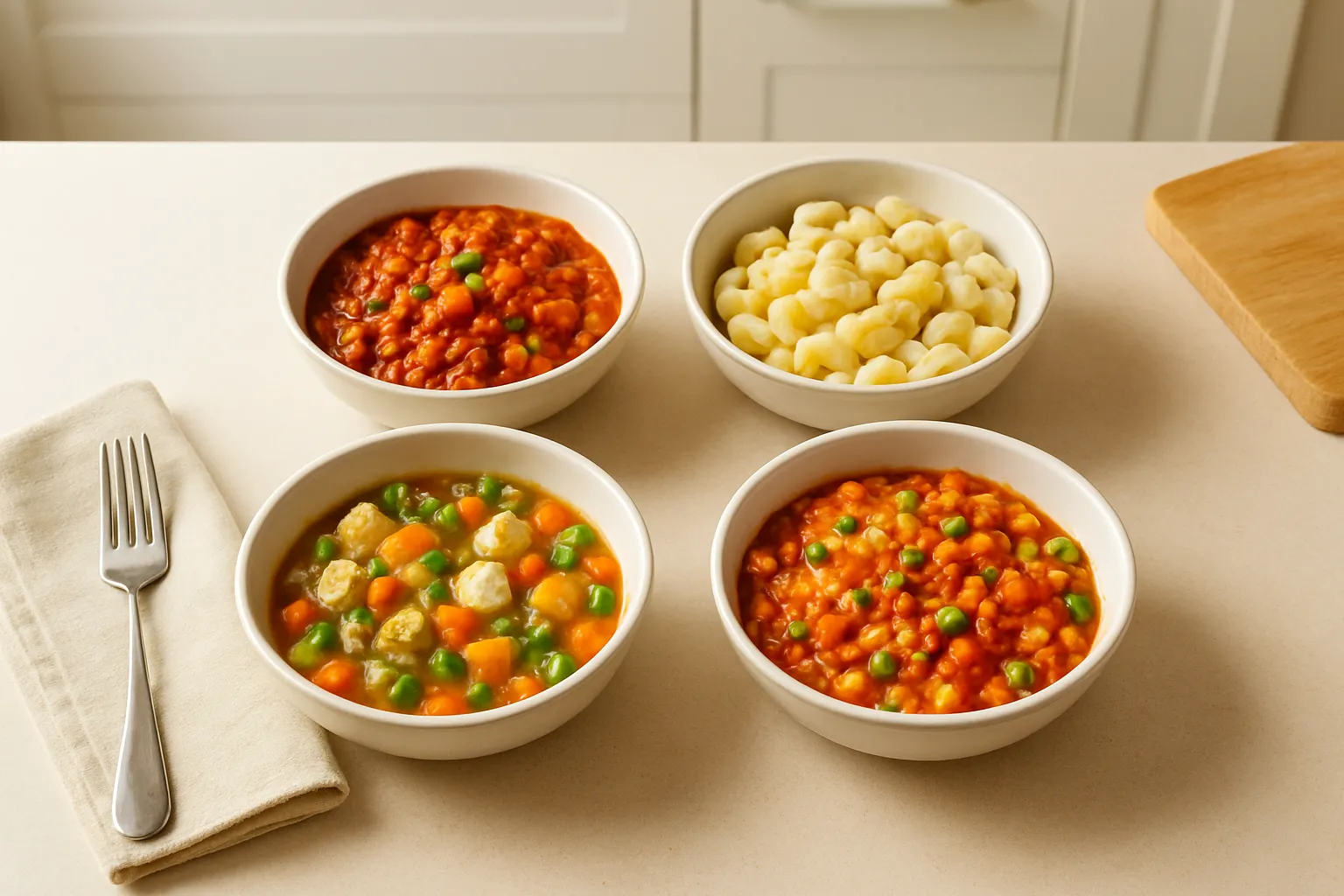
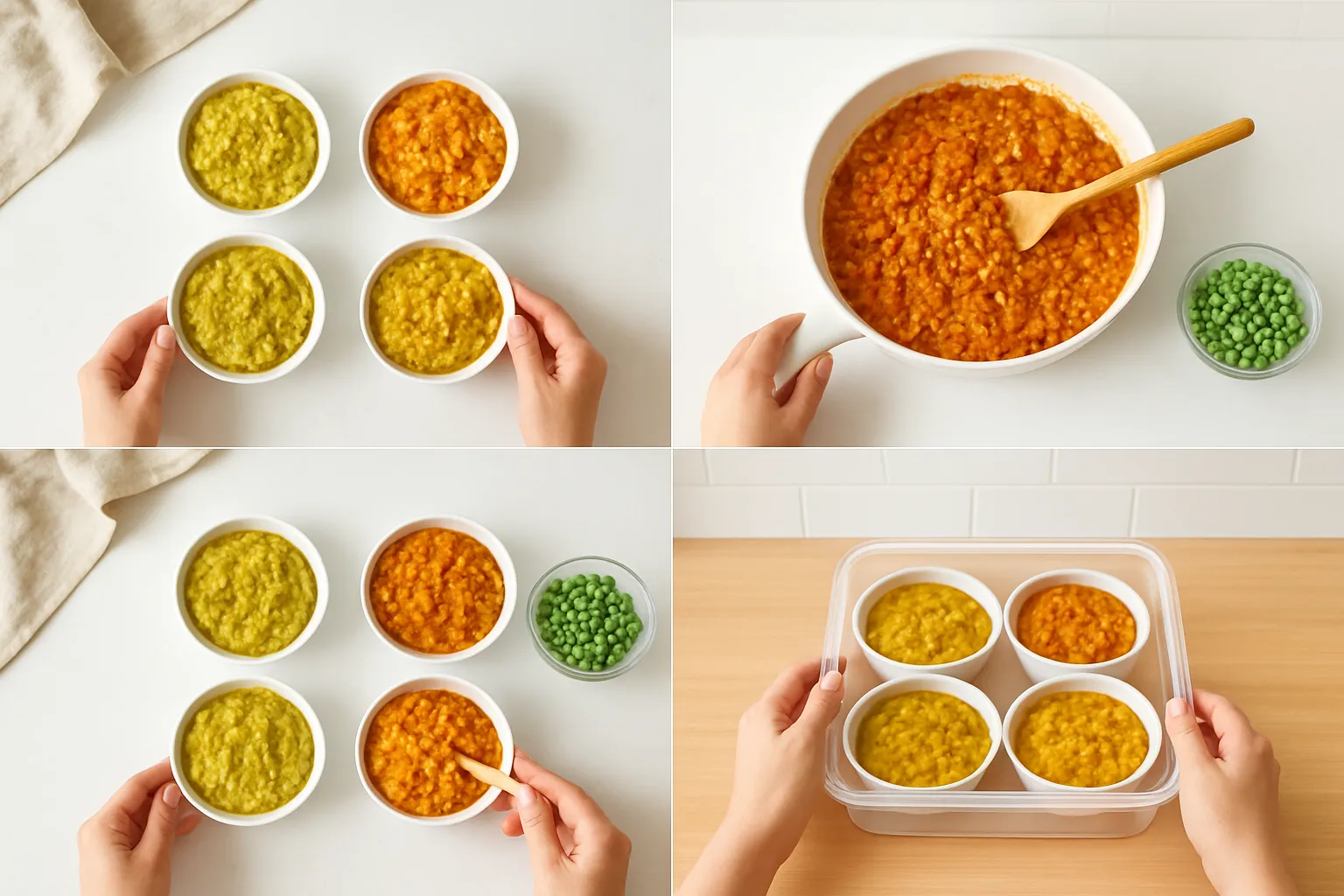
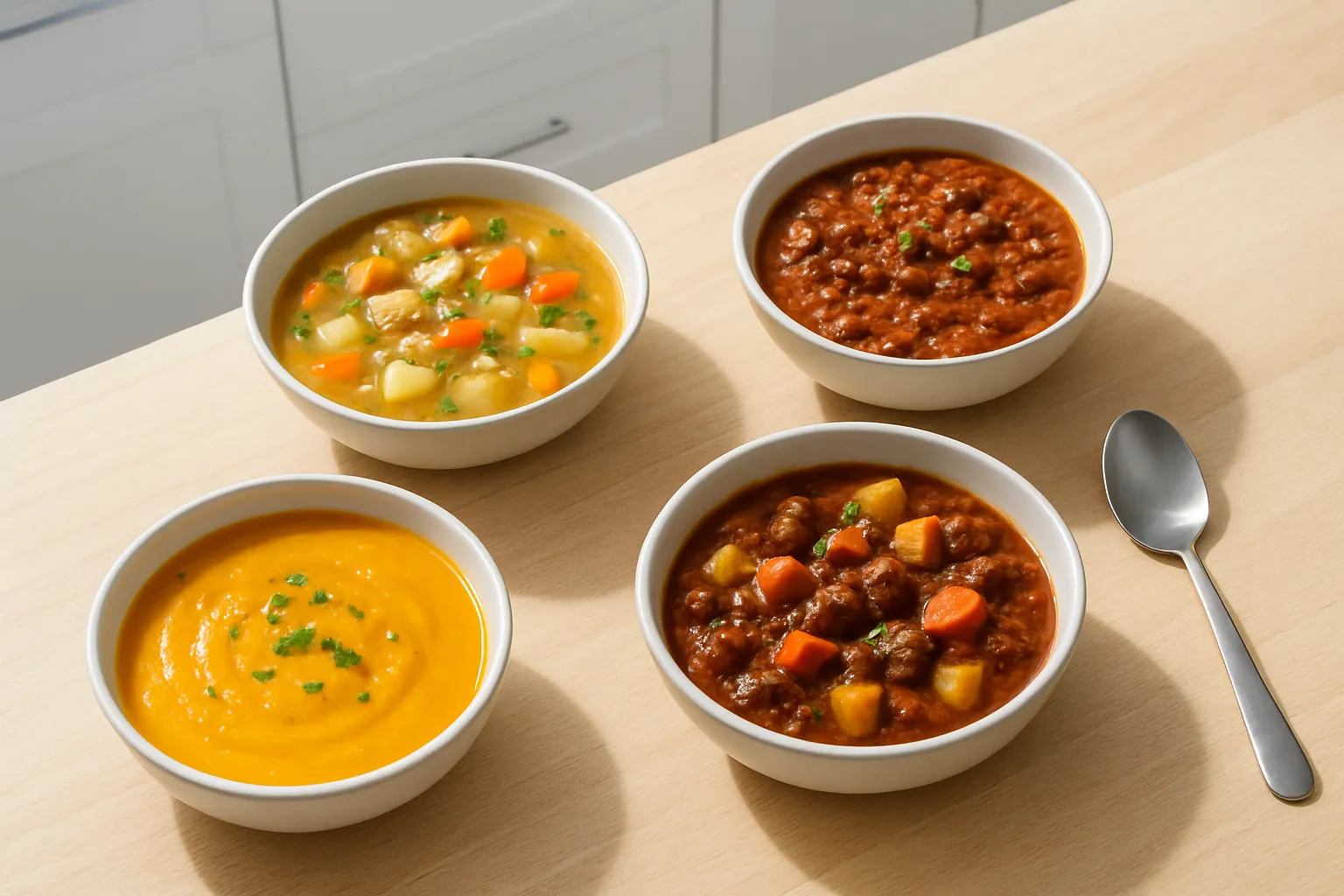
Spoonable dinners are the secret weapon on a cold night. They warm you up, travel well from freezer to highchair, and are forgiving when you need to stretch a busy evening.
Practical safety and texture rules first
- Keep salt minimal. Use herbs and gentle spice for flavour instead.
- Remove all bones and check for stray pepper seeds or tough bits before freezing.
- For very young toddlers, blend to a smooth consistency. For older toddlers, leave soft chunks.
- Dairy like cream or yogurt separates if frozen. Add them when reheating.
- Under-cook pasta, rice or barley slightly so they do not turn to mush after freezing and reheating.
Batch-friendly soups and stews to freeze (quick recipes and tips)
1) Chicken, pumpkin and red lentil soup
- Makes about 6 toddler portions.
- Ingredients: 500 g boneless chicken thighs, 500 g pumpkin, 1 carrot, 1 small onion, 1 cup red lentils, 1 L low-salt chicken stock, tiny pinch of dried thyme.
- Method: Sweat onion and carrot in a little oil, add chopped pumpkin, lentils, stock and chicken pieces. Simmer 20-25 minutes until everything is soft. Remove chicken, shred, then return. Blend some or all depending on texture you want.
- Freeze: Portion into 150 mL containers or silicone muffin trays. Keeps 3 months.
- Reheat: Thaw overnight or use microwave defrost, reheat until steaming and stir well. Add a splash of milk or yogurt just before serving for creaminess.
2) Slow-cooked beef and root veg stew
- Makes 8 toddler servings.
- Ingredients: 700 g beef chuck, 2 carrots, 1 sweet potato, 1 small onion, 1 cup pearl barley (optional), 1 bay leaf, low-salt beef stock.
- Method: Brown beef, then add veg, barley and stock and simmer low for 2-3 hours or slow cook until meat is falling apart. Remove bay leaf, roughly mash some veg to thicken.
- Freeze: Cool well and portion. If you want firmer veg after reheating freeze with sweet potato instead of white potato or mash potato separately and add when reheating.
- Reheat: Thaw and simmer gently. Taste and add a little extra stock if it has thickened too much.
3) Mild curried lentil and sweet potato
- Great vegetarian base, freezes superbly.
- Ingredients: 2 cups red lentils, 2 medium sweet potatoes, 1 onion, 1 tsp mild curry powder, 800 mL low-salt veg stock, 1/2 cup coconut milk (add at reheat).
- Method: Cook everything until sweet potato and lentils are soft. Mash or blend slightly for spoonable texture.
- Freeze: Portion; lentil soups thicken in the freezer so leave a little extra liquid when cooking.
- Reheat: Add coconut milk or extra stock to loosen. Serve with a soft piece of bread.
4) Creamy carrot and cauliflower soup
- Smooth and colourful for fussy eaters.
- Ingredients: 4 carrots, 1 small cauliflower, 1 potato, 1 onion, 1 L veg stock, pinch cumin.
- Method: Simmer until tender, blend until smooth. Stir in a small knob of butter or splash of milk when serving.
- Freeze: Freeze in small portions for lunches or nights you need a quick heat-and-serve.
- Tip: Freeze some portions blended and some with a few soft cauliflower florets for variety.
5) Tiny minestrone (without the pasta)
- Veg-heavy, protein from beans.
- Ingredients: carrot, zucchini, tomatoes, 1 can cannellini beans, herbs, low-salt veg stock.
- Method: Simmer until veg are soft. If adding pasta, cook and hold out until reheating, or undercook it.
- Freeze: Best frozen without pasta so texture stays pleasant.
- Reheat: Add freshly cooked small pasta or tiny gnocchi to the pot when reheating.
6) Fish and potato chowder base
- Freeze the creamy stock base and add fresh fish when reheating for best texture.
- Ingredients for base: onion, leek, potato, corn (optional), low-salt fish stock or veg stock, splash of milk to serve.
- Method: Cook base until potato is soft. When reheating, add chopped, de-boned white fish and simmer gently until fish flakes. Avoid freezing fish inside for best results.
- Tip: If you do freeze fish in the stew, expect a softer texture. For toddlers that is often fine, just check for bones.
Smart portioning and freezing hacks
- Use silicone muffin trays or ice-block trays for tiny tastes and lunches. Once frozen, pop cubes into labelled freezer bags.
- For full toddler meals, 100-150 mL per serving is a handy guide. Older toddlers may want 200 mL.
- Flatten liquid pouches or freezer bags so they stack neatly and defrost quickly.
- Label every bag with name and date. First in, first out.
Thawing and reheating plain-speak
- Best method: thaw in fridge overnight then reheat on the stove until simmering, stirring often.
- Microwaving: OK in a microwave-safe container. Stir every 30-45 seconds to avoid hot spots, and test temperature before serving.
- Add fragile bits like cream, yoghurt, soft herbs, cooked pasta or fish at the reheating stage not before freezing.
- Test the food temperature on the inside of your wrist before putting it in the child’s mouth. It should be warm, not hot.
Little tweaks for extra toddler appeal
- Dice veg very small or mash them into the soup for easy scooping.
- Stir in a spoonful of mashed avocado or butter at serving for extra calories and smoothness.
- Sprinkle a little fresh parsley or grated cheese after reheating rather than during freezing for fresher flavour.
These spoonables will see you through chilli nights and tired evenings. If you want printable shopping lists for any of these recipes or portion labels you can stick on the freezer, say the word and I’ll lay them out.
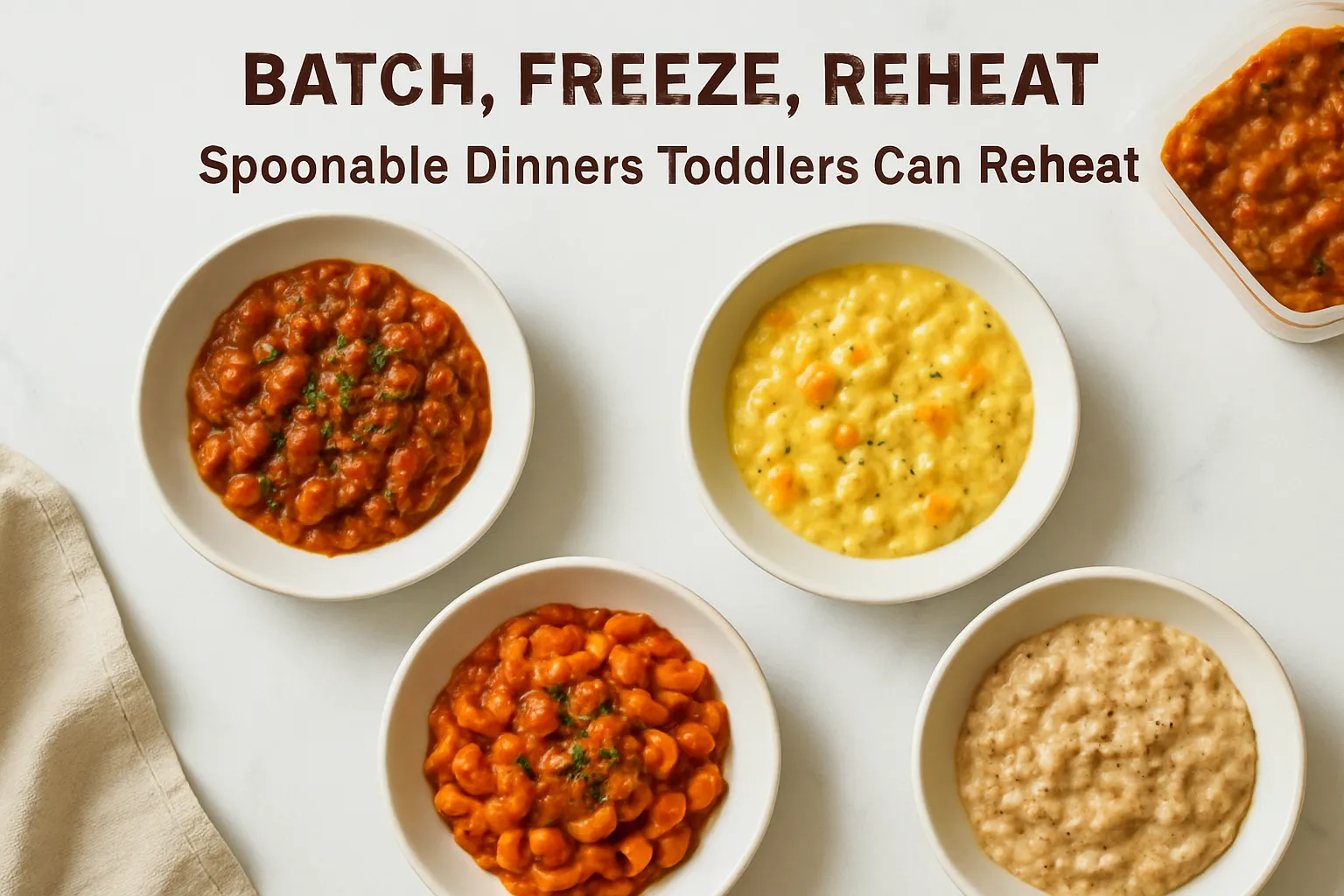
A few tricks will make the whole batch, freeze and reheat routine far less fiddly and far more reliable.
Before you freeze
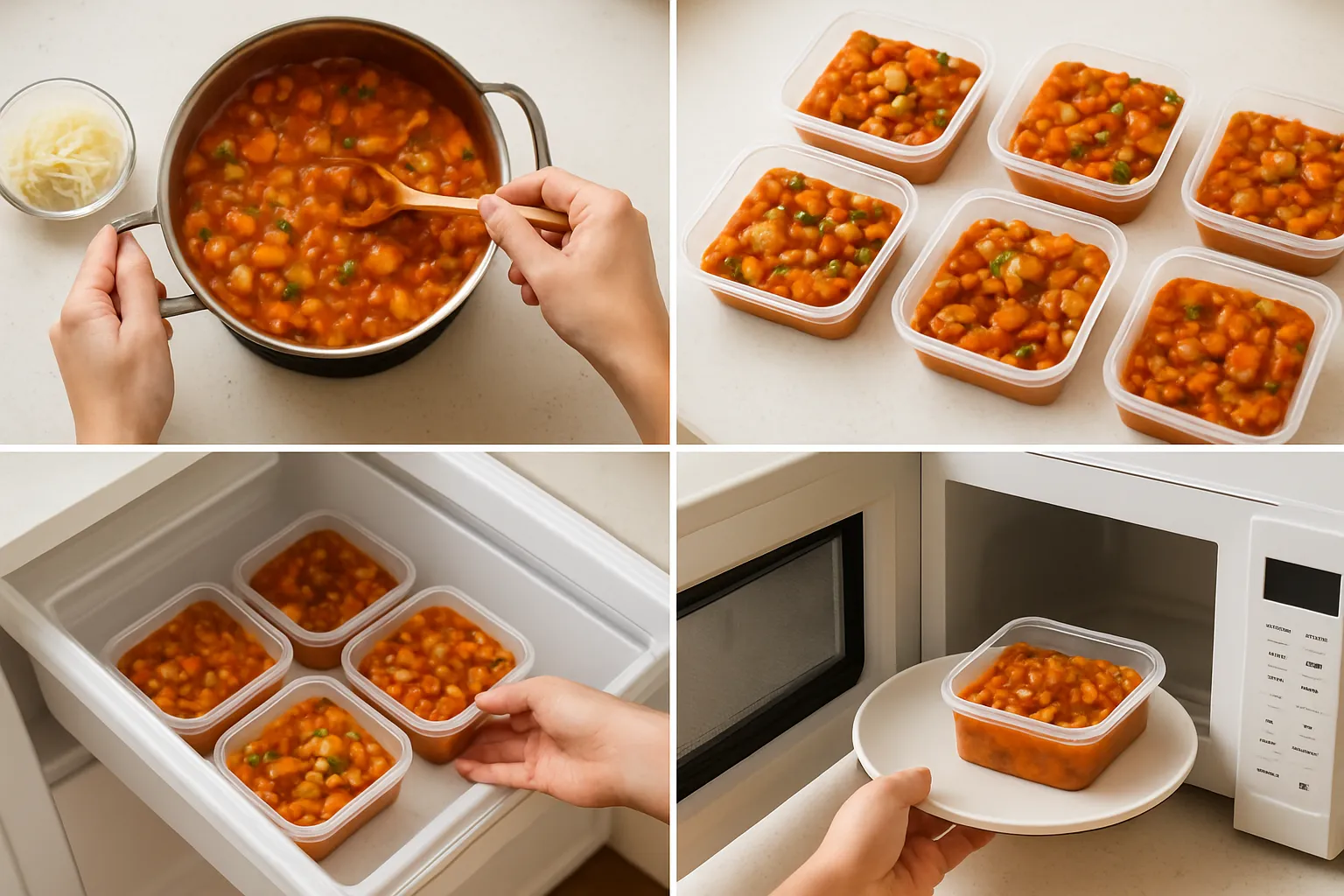
- Cool food fast. Spread soups or stews in a shallow dish so they cool through quickly before you pop them in the freezer. Leaving hot food in a big pot is where bacteria love to hang out.
- Leave a little headroom. Liquids expand as they freeze, so never pack jars or tubs right to the rim.
- Lower salt and add fresh at the end. Flavours concentrate in the freezer, so ease up on salt and bright herbs until reheating.
- Under-cook pasta, rice and soft veg slightly. They go mushy if you overcook before freezing. Or freeze the sauce and cook the grains fresh.
Portioning
- Small portions save waste and make reheating faster. For toddlers, aim for roughly 100 to 150 ml per meal depending on appetite, and 150 to 250 ml for older toddlers.
- Silicone muffin trays and ice cube trays are brilliant for toddler-sized portions and purees. Once frozen, pop the cubes into a labelled bag.
- Use flat freezer bags for soups and stews. Freeze flat on a tray, then stack in a folder-like way to save space and speed up thawing.
Containers and labelling
- Use freezer-safe containers or thick zip-lock bags. Glass is great for reheating but leave room for expansion. Thin plastic can crack.
- Label with the name, date and any reheating notes. A sharpie on tape works wonders when you are sleep-deprived.
Thawing
- Overnight in the fridge is best. Pull out the night before and it will be ready for a gentle reheat.
- For faster defrosting, keep the food sealed and submerge the bag in cold tap water. Change the water every 30 minutes until mostly thawed.
- Microwaving from frozen is fine for small portions if you stir regularly and check the centre is hot. For larger batches, defrost then reheat.
Reheating methods and tips
- Stove top: pour into a saucepan, add a splash of stock or milk if it’s thick, and gently simmer, stirring often. Time: 5 to 10 minutes from thawed, 10 to 15 minutes from frozen while stirring.
- Microwave: heat in short bursts, stirring between bursts to avoid hot spots. Cover loosely to keep moisture in.
- Oven: pour into an oven-safe dish, cover, and heat at about 160 to 170 C until piping hot. Will take longer but is handy for casseroles.
- Check temperature. Aim for steaming hot through the centre then cool to a toddler-friendly temp. Stir well and test on your wrist or the back of your hand before serving.
- Never re-freeze food that’s been fully defrosted and reheated.
Fixing texture and flavour after freezing
- If dairy has separated, whisk or blend it back in while reheating, or add a fresh splash of milk or yoghurt at the end.
- Fresh herbs, lemon juice or a small knob of butter added at the end lift the flavour instantly.
- If too thick after thawing, loosen with a little stock or water and reheat gently.
Food safety and storage times
- Use frozen soups and stews within about 2 to 3 months for best flavour. They’re safe longer but quality drops.
- Cool and refrigerate within two hours of cooking if you are not freezing straight away.
- If something smells off after thawing, bin it. No prizes for taking risks.
Little planning goes a long way. Batch once, freeze in sensible toddler portions, and you’ll have proper warm meals ready with minimal fuss on those cold evenings.
Think small for the kids and pack the grown-up punch at the last minute. A few quick tricks let you freeze toddler-sized spoonables that reheat into meals everyone actually wants to eat.
Portions and packing
- Toddler serve size: aim for about 60-120 mL per meal (roughly 1/4 to 1/2 cup). That’s enough to be filling but not overwhelming. Label the container with date and portion size.
- Use small silicone muffin trays, 150 mL ramekins or baby food jars for single toddler serves. They freeze and reheat evenly and stack well.
- Keep adult portions separate when possible. If you must freeze together, batch in larger tubs but portion off a small toddler tub first before adding extra adult-only ingredients.
Seasoning strategy
- Cook the base mild and low-salt. Add bold flavours to the adult portion at reheat. This keeps sodium and spice down for little ones while letting adults enjoy depth.
- Have a “finish station” when reheating: small bowls of extras like lemon wedges, chopped herbs, chilli flakes, olive oil, or grated cheese that adults can add themselves.
- Quick grown-up boosters: finish soups with a splash of vinegar or sherry, add a drizzle of good olive oil, or grate aged parmesan. Stews get a splash of wine or Worcestershire, curries a spoonful of fish sauce and lime, bolognese a couple of anchovy fillets or extra chilli.
Texture and safety
- Avoid whole nuts, big fruit chunks or hard seeds in toddler tubs. Chop, mash or leave these out and let adults add them later.
- No honey in meals meant for under 12 months.
- For purees and thicker spoonables, leave a little texture for older toddlers but keep everything soft and easy to swallow.
Quick adult-only add-ins (under a minute)
- Soup: swirl in olive oil or chilli oil, grate parmesan, squeeze lemon.
- Stew: stir in a spoon of red wine or Worcestershire, add chopped parsley.
- Curry: a spoon of extra curry paste, finish with lime and coriander.
- Bolognese: browned mushrooms or extra anchovy paste, sprinkle of chilli flakes. Keep these out of the toddler bowl and add after you’ve taken their serve.
Reheating tips to preserve flavour
- Defrost overnight in the fridge when you can. For quick reheats, pop frozen portions straight into a small pot with a splash of stock or water and gently heat, stirring to separate and warm through evenly.
- Microwave in short bursts, stirring between each, so the toddler portion gets warm without hot spots. Cool to lukewarm for little ones.
- If you reheat adult and toddler portions together, remove the toddler bowl first and let the adult pot bubble up a minute longer to let flavours develop.
Label smartly
- Write the date and “toddler” or “adult” on lids. If you add a small adult-only packet of finishing bits, label that too so it doesn’t get accidentally mixed into the kid’s portion.
Examples of how to split a batch
- Tomato-based soup: freeze plain tomato soup in toddler pots. Adults add basil oil and shaved parmesan when reheating.
- Beef stew: ladle toddler-sized jars before adding extra salt and a glug of red wine to the main pot.
- Mild coconut curry: freeze toddler serves milder. Adults stir in extra paste, chilli and a squeeze of lime at the end.
A little prep when you freeze pays off every cold night. Make the base suitable for little mouths, portion into small tubs, and keep a few fast, flavour-packed finishing moves on hand for the grown-ups. Simple, quick and no one has to eat bland soup.
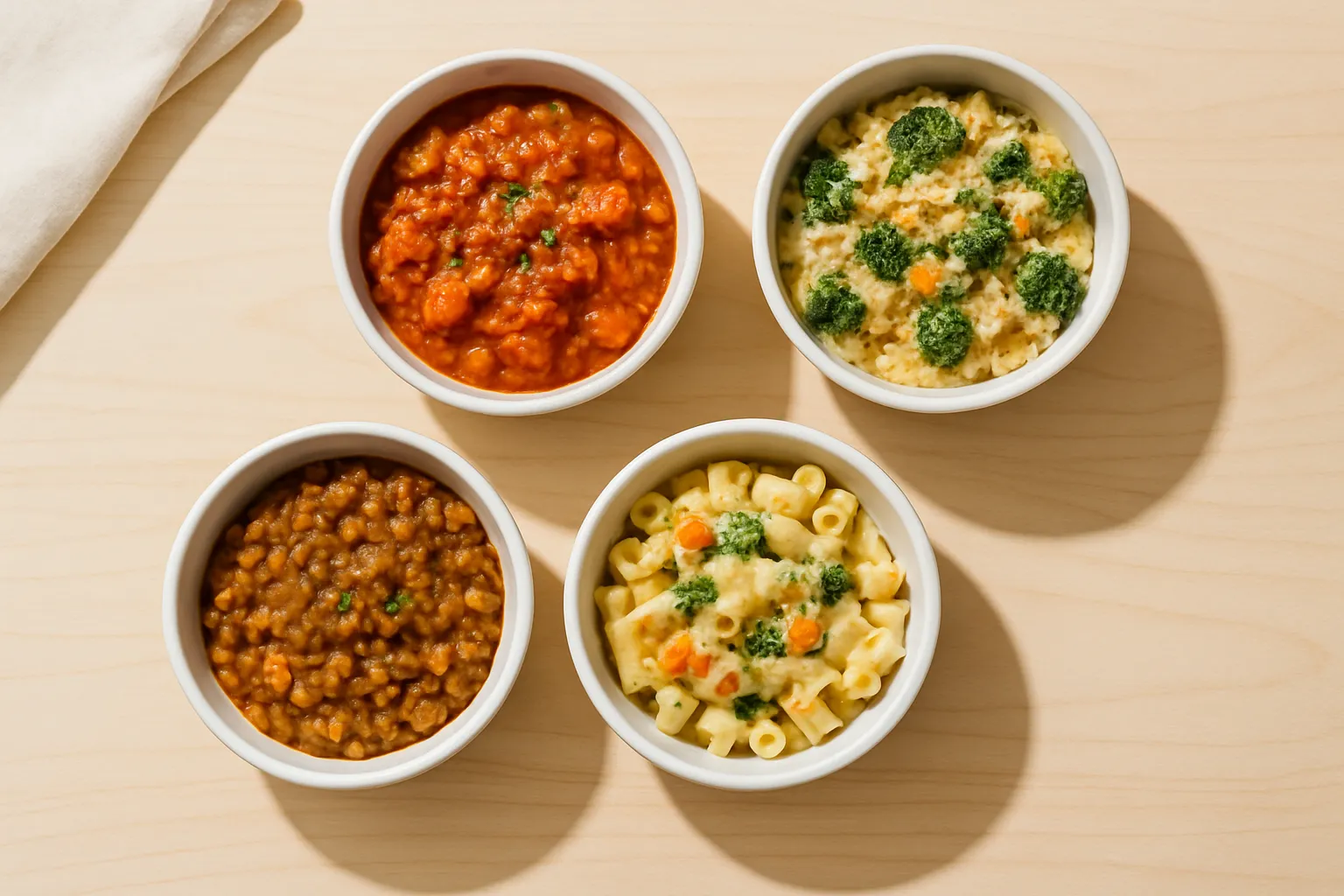
Photo credit: Pexels
Browse Cuisines
From the Blog
First up, a few no-fuss spring winners that keep sticky fingers and big clean-ups to a minimum. Quick to prep and easy for little hands to manage, these are the sorts of things I reach for when we want something...
Nice - here’s how Steve keeps dinner simple without sacrificing flavour or sanity. A few good habits and the right packing tricks mean you can pull a proper family meal out of the freezer in minutes.
Righto, a couple of quick fridge fixes will make everything a whole lot easier. These are the simple, practical habits and setups that keep snacks safe, obvious and actually reachable for little hands.

 Never miss a recipe from us, subscribe to our newsletter