
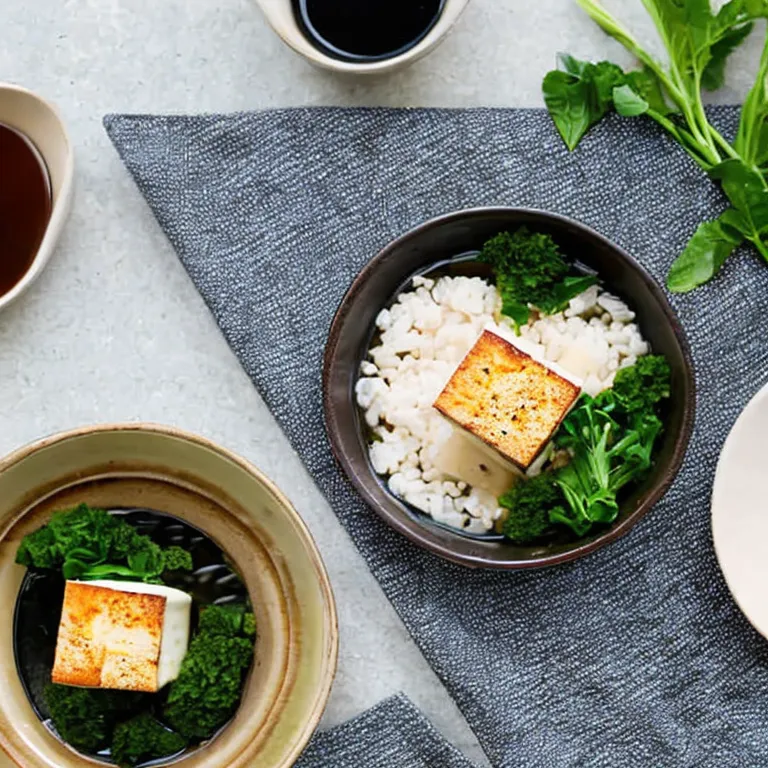
Age Dashi Tofu is a classic Japanese appetizer transformed into a toddler-friendly dish that the whole family will love - perfect for introducing your child to the gentle umami flavours of Japanese home cooking; made with crispy pan-fried tofu served in a delicate dashi broth infused with kombu and shiitake mushrooms, this wholesome version is toddler-friendly with minimal salt, soft enough for little mouths, great for practicing chopstick skills and can be adapted to use shop-bought dashi for quicker prep, made with extra vegetables for more nutrition, or simplified with just the crispy tofu and grated daikon for fussier eaters; follow this simple recipe for a restaurant-quality dish that brings authentic Japanese flavours to your family table while keeping everything soft, nourishing and utterly delicious.
General Information
- Servings: 3 (two adults and one toddler, or three toddler-sized portions)
- Keywords: age dashi tofu, tofu, toddler-friendly, low-salt, vegetarian, Japanese-inspired
- Calories: ~220 kcal per serving
- Protein: ~13 g per serving
- Carbs: ~14 g per serving
- Fats: ~15 g per serving
- Preparation time: 30 minutes (includes a 20 to 30 minute soak for dashi)
- Cooking time: 10 minutes
Hi, I’m James. By day I’m protecting companies from cyber nasties, and by night I’m usually inventing dinner that my little tornado will actually eat. This Age Dashi Tofu is a pared-back, no-salt, no-sugar version that keeps the gentle umami of a dashi broth using kombu and dried shiitake. It’s soft, easy for small hands to pick up, and cut into sizes that minimise choking risk. I’ll walk you through everything step by step because I used to be rubbish at the basics too.
Ingredients
- 400 g firm or extra-firm tofu (one standard block)
- 250 ml kombu and shiitake dashi (see below for how to make it)
- 30 ml neutral oil for frying (sunflower or light olive oil)
- 24 g potato starch (about 3 tablespoons) for coating
- 50 g daikon, peeled and very finely grated (for a mild topping and moisture)
- 30 g carrot, peeled and very finely grated (adds natural sweetness without sugar)
- 1 small piece kombu, 5 cm by 5 cm (about 2 to 3 g), or one 8 g dried shiitake plus kombu - see dashi method
- 1 teaspoon potato starch (5 g) plus 15 ml cold water for a slurry to thicken the broth slightly
- Optional: 1 teaspoon mild rice vinegar (5 ml) for a little brightness, only if your toddler is used to a touch of tang
- Optional garnish: 1 to 2 g very finely sliced chives or spring onion greens (slice into tiny pieces, check for choking risk)
Dashi makes the dish. To make 250 ml kombu-shiitake dashi:
- 500 ml cold water
- 1 strip kombu, about 5 cm by 5 cm (2 to 3 g)
- 2 dried shiitake mushrooms (around 6 to 8 g)
If you prefer a pure vegetable dashi instead, use 2 dried shiitake and 500 ml water and skip kombu.
Directions
I’ll assume you are working on a bench with all ingredients nearby. Wash your hands before you start and supervise your toddler while cooking. Keep small items out of reach.
- Prepare the dashi (do this first; it needs to soak)
- Put 500 ml cold water in a medium bowl or jug. Add the kombu strip and the dried shiitake. Cover and leave to soak at room temperature for at least 20 to 30 minutes. For a deeper flavour you can do this in the fridge overnight.
- After soaking, pour the water, kombu and shiitake into a small saucepan. Slowly heat over low to medium heat until tiny bubbles just start to appear around the edge. Remove the kombu just before the water reaches a simmer. Let the shiitake gently simmer for 2 to 3 minutes, then turn off the heat and leave to sit for 5 minutes.
- Remove the shiitake and slice it thinly if you want to keep a little for garnish. Strain the liquid into a jug. You should have about 250 to 300 ml. This is your dashi. If it looks a bit cloudy, that is fine.
- Quick joke during the soak: tell your toddler the mushrooms are having a bath. They will find this hilarious.
- Prepare tofu (dry it gently so it won’t splatter in the pan)
- Open the tofu and drain the water. Wrap the block in a clean tea towel or a couple of layers of paper towel. Put it on a plate and place a small, even weight on top, like another plate with a tin of tomatoes or a small cutting board and a canned food. Leave for 10 to 15 minutes. This presses out excess water and helps the tofu hold together.
- After pressing, unwrap and cut the tofu into toddler-safe pieces. For small children I cut into short rectangular sticks about 2 cm long, 1 cm wide and 1 cm thick. That size is easier to manage and less likely to block airways than big cubes or long rounds. If you prefer cubes, make them 1 to 1.5 cm on each side.
- Handle gently so pieces do not break.
- Make the coating and get your pan ready
- Put the 24 g potato starch in a shallow bowl or plate. Gently roll each piece of tofu in the starch so all sides have a thin coat. Shake off excess starch; you want a light dusting, not a thick paste.
- Warm a non-stick frying pan over medium heat and add 30 ml oil. Tilt the pan so it coats the base evenly. The oil should be hot but not smoking. To test, drop a tiny pinch of potato starch in the oil; it should sizzle gently.
- Fry the tofu
- Place tofu pieces in the pan with a spatula or tongs, with a little space between them. Cook for 2 to 3 minutes on each side until they are a pale golden colour. We are not deep frying until dark; we just want a thin crisp skin and soft interior.
- Take them out and drain on a plate lined with a paper towel. Let them cool on the paper towel for a few minutes so the surface no longer steams.
- Safety note: the inside will stay hot. I always blow on the first piece dramatically and pretend I am testing for malware, not temperature. Toddler thinks it is hilarious.
- Prepare the broth for serving
- Put 250 ml of your strained dashi into a small saucepan. Add the 30 g grated carrot and 50 g grated daikon. Bring to a gentle simmer for 1 minute so the grated veg softens and releases a little natural sweetness.
- Mix 1 teaspoon potato starch (5 g) with 15 ml cold water until smooth. Stir this slurry into the simmering broth to just thicken it slightly. Turn off the heat. If you use the optional 5 ml rice vinegar, add it now and stir gently.
- Taste a tiny drop yourself to check flavour. It will be mild and slightly sweet from the carrot and shiitake.
- Assemble and cool to a safe temperature
- Put a few tofu sticks into a shallow bowl. Spoon a small amount of warm broth over them so the tofu has some liquid but is not swimming. Top with a small spoonful of grated daikon. Sprinkle a tiny amount of the sliced shiitake or very finely sliced chives if you want.
- Cool the bowl to lukewarm before serving. Test the temperature with the inside of your wrist or a food thermometer aimed for 37°C. I always do the thermostat trick: if you put it on your wrist and it feels comfortable, it’s good for the toddler.
- Supervise while eating. Make sure pieces are the size and texture your child handles well.
- Leftovers and storage
- Keep leftover broth and tofu in separate containers in the fridge for up to 24 hours. Reheat the broth gently and add it to the tofu after reheating. Do not deep fry reheated tofu; just warm gently.
Recommended Sides
- Soft steamed brown rice, served in small, toddler-sized pieces (about 1 cm grains or sticky rice shaped into small balls)
- Mild steamed broccoli florets, cut into very small pieces about 1 cm across and cooled to lukewarm
- Soft steamed sweet potato cubes, cut to 1 cm cubes
- Small pieces of avocado for healthy fat and creaminess
Jokes
- I tell my toddler this tofu is undercover tofu. By day it looks innocent, but at night it protects dinner from being boring.
- While waiting for the dashi to steep, I say the kombu and shiitake are doing a secret meeting. My kid always asks if they brought cookies. They did not. They brought flavour.
- If you over-press the tofu I say it went to the gym too hard. That gets a giggle and rescues any tofu feelings.
If you want this adapted for babies under 12 months, tell me your child’s age and I’ll adjust textures and portion sizes. If you want a version with a tiny amount of low-sodium soy or fish-based dashi for more flavour once they are older, I can show how to add that safely.
Shop Ingredients
Find these ingredients on Amazon:
- carrot and very
- daikon and very
- firm or extra-firm
- kombu and shiitake
- neutral oil for
- potato starch for
As an Amazon Associate I earn from qualifying purchases.
Suggested Recipes

You Might Also Like
 Never miss a recipe from us, subscribe to our newsletter