
Snack station for winter: building an August-friendly fridge shelf your toddler can help themselves to
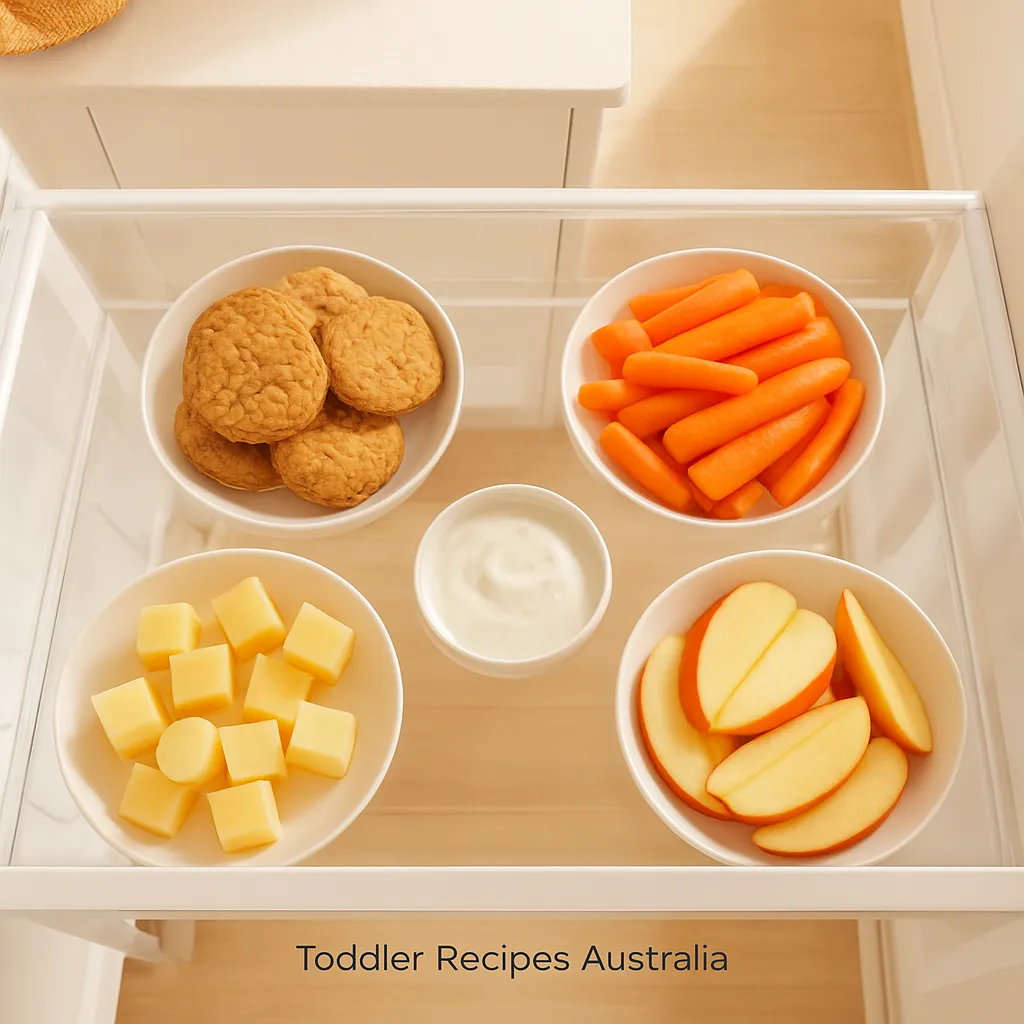
Righto, a couple of quick fridge fixes will make everything a whole lot easier. These are the simple, practical habits and setups that keep snacks safe, obvious and actually reachable for little hands.
- Temperature and safety first
- Aim for 1 to 4 degrees Celsius and pop a fridge thermometer in if yours doesn’t show it. Cold is your friend for keeping snack prep fresh.
- Keep raw meat on the lowest shelf in a sealed tray so it cannot drip onto other foods.
-
Avoid putting highly perishable stuff in the door. The door gets the most temperature fluctuation, so store milk, yogurt and leftovers further in.
- Create a clear grab zone
- Reserve one low shelf or a fridge drawer as the permanent grab-and-go spot. Consistency helps kids know where to look.
- Use shallow, clear containers so contents are obvious at a glance. Open-top tubs or small containers with snap lids work well; adults can pop lids back on quickly.
-
Keep frequently used items grouped together: dairy, fruit, pre-cut veg, and a small tub of dip for dipping.
- Smart containers and portioning
- Silicone muffin trays, small bento boxes, or tiny reusable tubs make portioning easy and tidy. They also make snack prep faster when you’re doing a weekly batch.
- Avoid glass on the low shelf. Choose unbreakable options for anything your toddler can reach.
-
Cut snacks into toddler-safe sizes. Halve grapes and cherry tomatoes, slice apples thinly, and break cheese into cubes or sticks.
- Labelling and rotation
- Label containers with the date you prepped them. A quick sticker or masking-tape label saves guessing and reduces waste.
-
General fridge timing to keep in mind: freshly cut fruit and veg 2 to 3 days, cooked leftovers 3 to 4 days, opened dips 3 to 5 days, opened yoghurt up to about a week. When in doubt, throw it out.
- Hygiene and helping little hands be tidy
- Keep a pair of small tongs, a child-safe scoop or ramekin in the grab zone so kids can pick without touching everything.
- Keep a cloth or paper towel nearby for quick wipe-ups, and do a quick check each evening to discard anything gone off.
-
Wipe the shelf weekly and clean spills straight away; a tidy shelf invites snacking without mess.
- Quick prep rhythm that actually fits family life
- A 30-minute Sunday arvo session can set you up: roast a tray of veg, chop fruit, make a batch of mini frittatas or muffins, portion into tubs and date-label them.
- Top up midweek if things run low. Keep a small running list on the fridge of staples to restock so you don’t end up with an empty grab zone.
These little routines and choices mean snack time becomes quick, safe and mostly stress-free. The rest is about what you fill those tubs with, and we’ll move into ideas next.
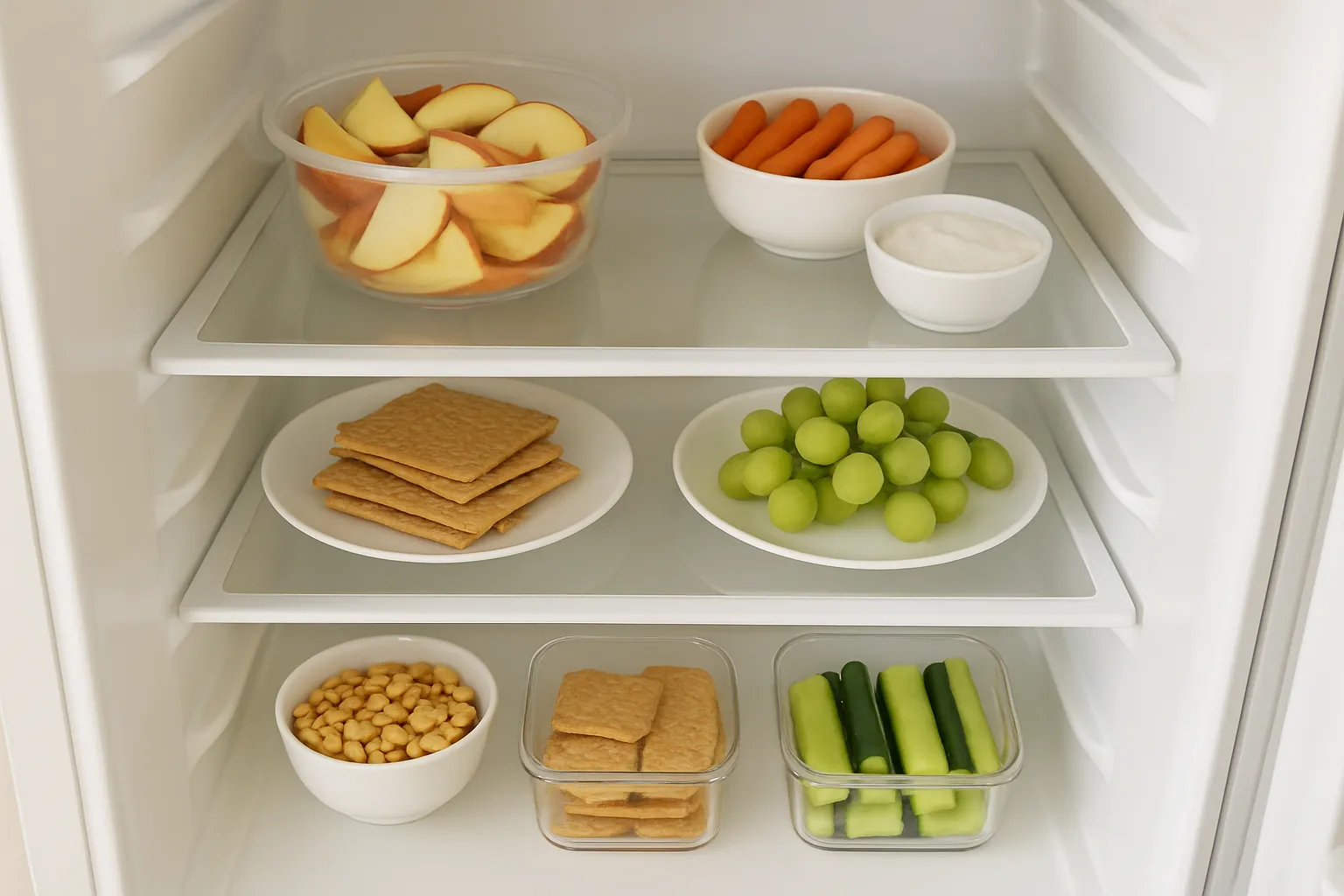
No peanuts? No dramas. Here are easy, fridge-ready, toddler-safe snack ideas that work well on a self-serve shelf and won’t give you a midday panic.
- Yoghurt pots: small snap-top containers filled with plain or lightly sweetened yoghurt and a spoonful of mashed banana or stewed apple. Keeps 2-3 days. Freeze extra in ice cube trays for quick thawed portions.
- Cottage cheese cups: dollop into tiny pots and add soft fruit like ripe pear or very ripe peach slices. Great protein hit and easy for little fingers.
- Soft cheeses: strips or thin slices of cheddar, mozzarella sticks cut into short batons. Cut into shapes if that helps appeal. Store in airtight container for a few days.
- Boiled egg wedges: quartered or sliced thickly so they are easy to pick up. Label and keep chilled for up to a week.
- Cold roast chicken strips: leftover roast chook or shredded rotisserie chicken kept in a small tub. Protein-rich and very fillable.
- Mini pikelets or pancakes: cool and slice in half for smaller portions. Dress with a smear of sunflower seed butter or ricotta and fruit. Freeze extras and thaw in the fridge overnight.
- Soft cooked veg sticks: steamed carrot, pumpkin or sweet potato cut into batons. Easy to grab and warm winter comfort.
- Hummus pots: single-serve hummus with cucumber or cooked carrot sticks. Check tahini if you need to avoid sesame; plain hummus usually is peanut-free but always read labels.
- Sunflower seed butter or soy-based spreads: peanut-free alternatives for toast fingers or rice cakes. Some centres ban seed butters so double-check if you share with others.
- Fruit sliced to safe sizes: banana chunks, peeled and quartered grapes, apple or pear slices tossed in a little lemon juice to slow browning. Keep chilled in a shallow tub.
- Canned fruit in juice: drained and portioned into small pots for busy days.
- Mini savoury muffins: make a batch with veg and cheese, cool and refrigerate. Reheat briefly or serve cold.
- Pasta salad bites: small pasta shapes mixed with tiny cheese cubes and soft veg. Store in a lidded container for a couple of days.
- Rice cakes or wholegrain crispbreads broken into smaller bits with a smear of cream cheese or seed butter. Keep crisp in a snap-lock bag away from wet foods.
- Leftover risotto or mashed potato patties: cold or warmed, cut into toddler-friendly pieces and chilled for quick grabs.
Safety and storage tips
- Always cut grapes and cherry tomatoes into quarters and make sure hard items are small enough to avoid choking.
- Label pots with contents and date so you rotate things quickly.
- Keep a clearly marked peanut-free zone and read product labels for “may contain” warnings.
- Portion into small clear pots so toddlers can see and choose without help.
Mix these up through the week and keep a couple of favourites in steady supply. Small changes each week keep their interest and make snack time low fuss for everyone.
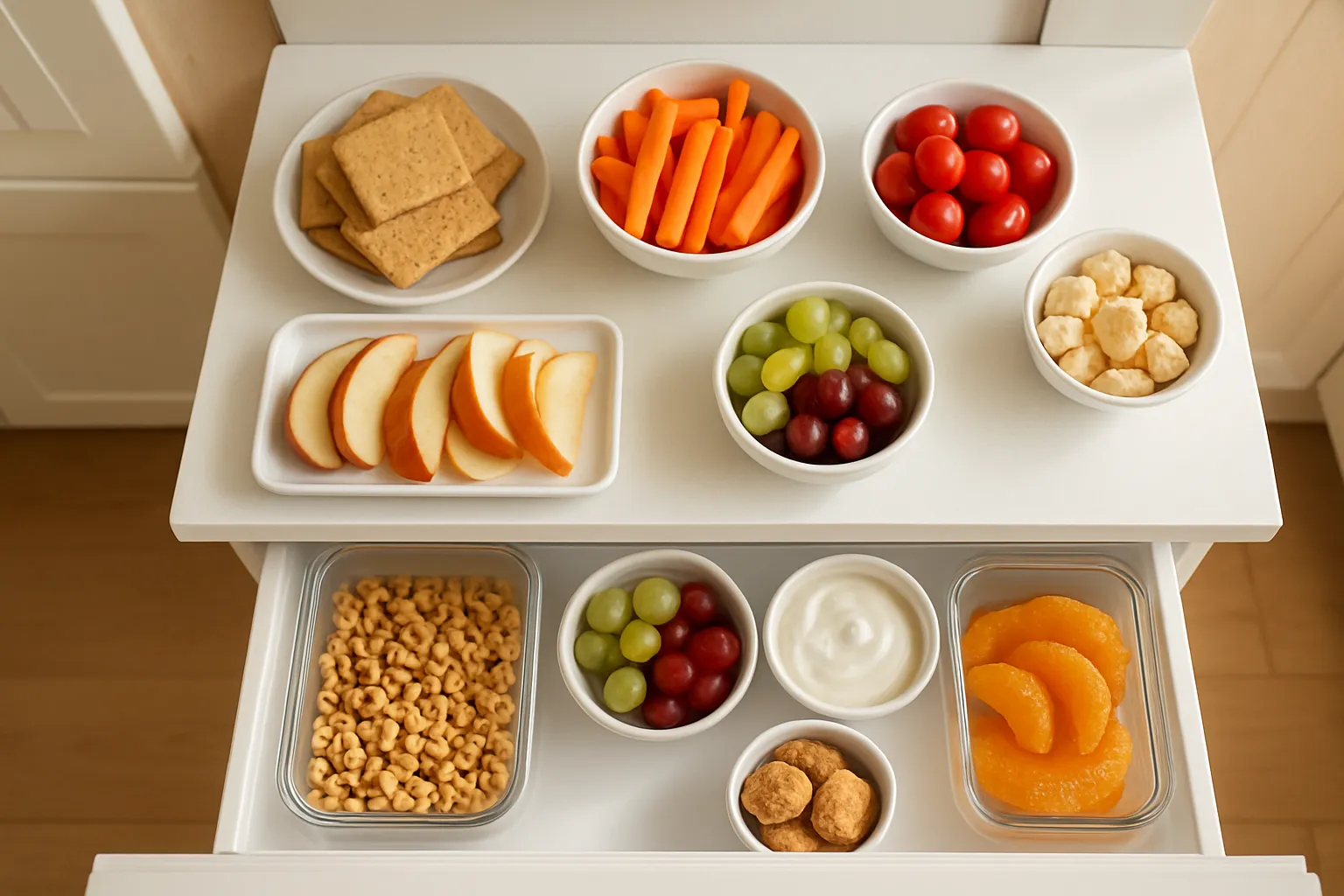
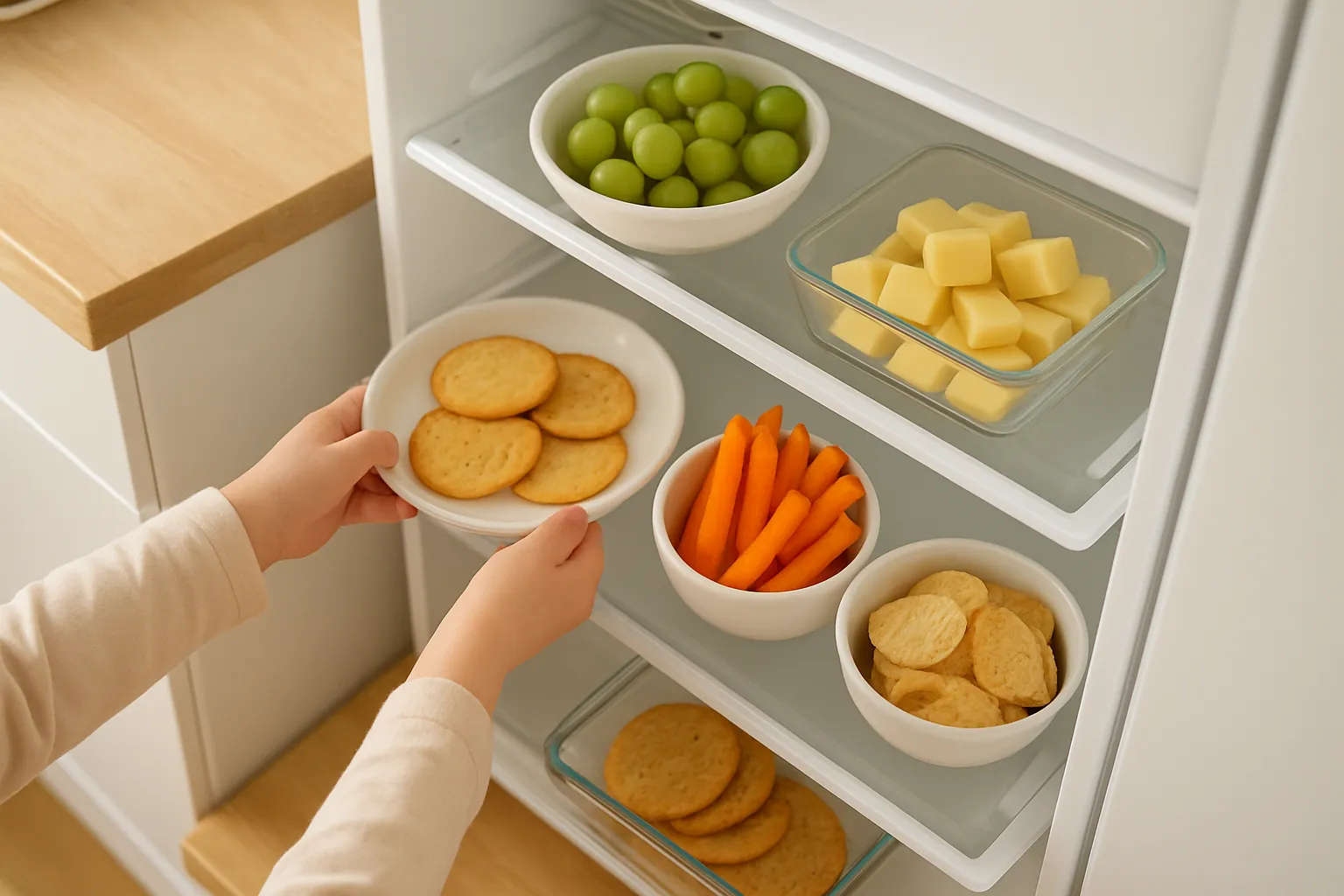
Now that you’ve picked the peanut-free snacks, let’s make them stupidly easy for small hands to grab.
Shelf placement
- Put the shelf at your child’s waist to chest height so they can see and reach everything without climbing. For most toddlers that ends up around 60 to 90 cm from the floor, but measure your own child to be sure.
- Keep heavy or breakable items higher up and out of reach. This shelf should be for grab-and-go stuff only.
Containers and tools that actually work
- Clear, shallow containers with wide mouths. They make it obvious what’s inside and are easier for little hands. Think small plastic tubs or silicone cups rather than deep jars.
- Easy-open lids that pop off or snap, not screw tops. You want them to be able to open things without help.
- Non-breakable wherever possible. Save glass jars for adult nibbles.
- Small plates or a shallow tray stored on the shelf so they can carry a few things to the table.
- A small pair of child-safe tongs or a spreader if you want them to practice independent serving.
How to arrange it
- Front and centre. Put the things you want them to choose first right at the front. Less reaching equals more success.
- Limit choices to three or four items per visit so they’re not overwhelmed. Rotate flavours or textures every few days.
- Keep like items grouped. Fruit in one shallow tray, cheese and dips in another, pre-portioned veg sticks in a little tub.
- Use picture labels if reading isn’t happening yet. A photo or drawing stuck on the bin helps them find things and put them back.
Food prep tips for safety and ease
- Cut grapes, cherry tomatoes and sausages in half lengthways. Make pieces the right size to reduce choking risk.
- Put single serves into muffin liners or small tubs so they can take one portion and leave the rest.
- Avoid small loose items like whole nuts, popcorn or uncut grapes on this shelf.
- If yoghurt pouches are on the shelf, pick soft spouts or let them sit in an open cup if they still struggle with squeezing.
Cleaning and stock rotation
- Do a quick sweep every evening: toss leftovers, wipe spills, swap out anything old. Keep it simple so it actually happens.
- Wash the little tubs weekly or as needed. Keep a labelled bin for dirty containers so they don’t go back on the shelf.
- Keep a supply list on the fridge or a sticky note on the shelf so you know what ran out during the week.
Teach the routine
- Show them where things go and practise putting items back together for a few days. Make it a game.
- Praise the small wins. “Nice job putting your apple back” goes a long way.
- Keep expectations realistic. This is about fostering independence, not perfection.
Quick setup checklist
- Measure child’s reach and choose shelf height
- Buy clear shallow tubs, silicone cups, and a small tray
- Pick 3 to 4 grab-and-go items and pre-portion them
- Add picture labels and a child plate
- Set a 1-minute nightly tidy and weekly wash routine
Simple, repeatable, and safe. Once it’s set up, they’ll be reaching for healthy snacks with a lot less drama and you’ll get a few extra minutes of peace.
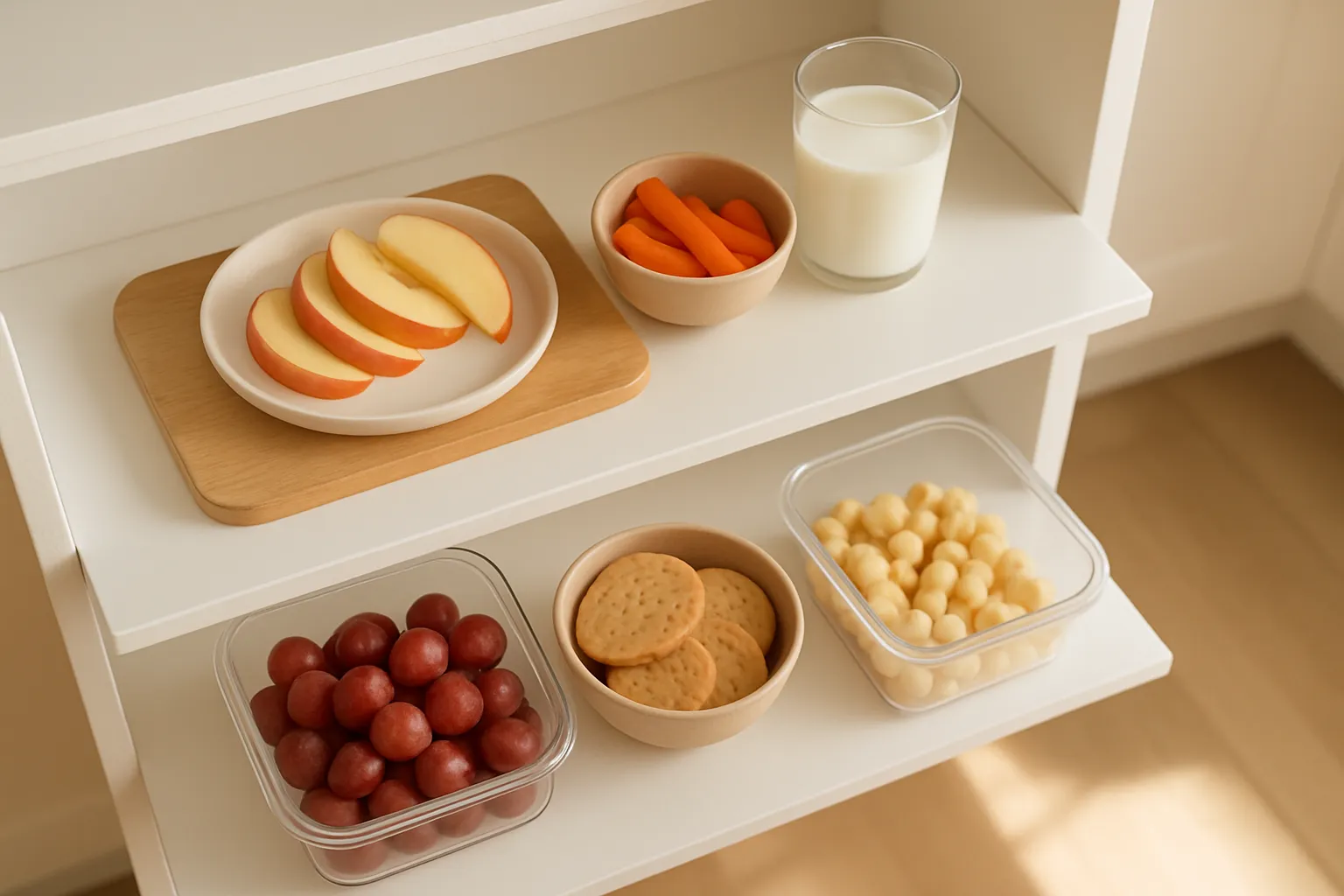
Picky eaters usually stick to familiar flavours and textures, so aim for simple, single-ingredient bites with tiny twists. Here are fridge-friendly options that tend to win kids over, plus quick tips for keeping them reachable and safe.
Go-to chilled bites
- Cheese cubes or thin slices: mild cheddar, babybels, or mozzarella pearls. Easy to grab and very predictable.
- Yoghurt pots or frozen yoghurt drops: plain or lightly flavoured. Put a spoon next to single-serve tubs or use silicone moulds for bite-sized frozen drops.
- Sliced banana or stewed apple: plain or with a tiny smear of sunflower seed butter for older toddlers who aren’t allergic.
- Soft-cooked carrot coins and steamed pumpkin cubes: warm for winter, but fridge-stored and reheated briefly if they prefer warm.
- Halved grapes and cherry tomatoes cut lengthways: less choking risk and still juicy. (Always cut small for under-4s.)
- Cold cooked pasta shapes: plain or tossed with a little olive oil and grated cheese.
- Mini pancakes or crumpets cut into squares: fridge-stable for a day and easy to nibble.
- Avocado mash or thin slices on rice cracker halves: creamy and mild.
- Rolled cold cuts or shredded chicken: keep simple, no strong spices.
- Cottage cheese or ricotta tubs with a side of fruit for dipping.
Small dips that help without overwhelming
- Plain hummus (no peanuts), Greek yoghurt with a tiny honey drizzle for over-1s, or mild beetroot dip. Serve dips in separate little pots so the texture doesn’t scare them off.
How to introduce slightly new things
- Same but different: swap one familiar item for a lookalike. If they like cheese slices, try cheese cubes the next day.
- One tiny taste rule: put a single new piece next to the usual favourites. That low-pressure exposure works wonders.
- Keep flavours plain at first. Offer a single new element rather than a plate full of surprises.
- Repeat, quietly. It can take many tries before a new food is accepted.
Presentation and shelf setup tips
- Use clear, small containers or tiny jars so the food is visible. Kids pick with their eyes.
- Stick a simple emoji or colour sticker on favourites so your toddler can learn where to find them.
- Offer two choices max. Too many options equals overwhelm.
- Portion into bite-sized pieces and at a toddler-friendly height. Rotate favourites weekly so it feels new without being scary.
- Keep a reliable fallback in the back of the shelf - a plain cheese stick or yoghurt pot - so there’s always something they will eat.
Safety and storage reminders
- Cut soft fruit and veggies into small, manageable pieces. Slice grapes and cherry tomatoes lengthways for toddlers.
- Check use-by dates and keep raw meats separate and wrapped.
- If reheating fridge items, cool them before putting them back on the accessible shelf.
Little wins add up. Keep things visible, predictable and tiny, and you’ll find the stubborn “no” softening into curious nibbles.
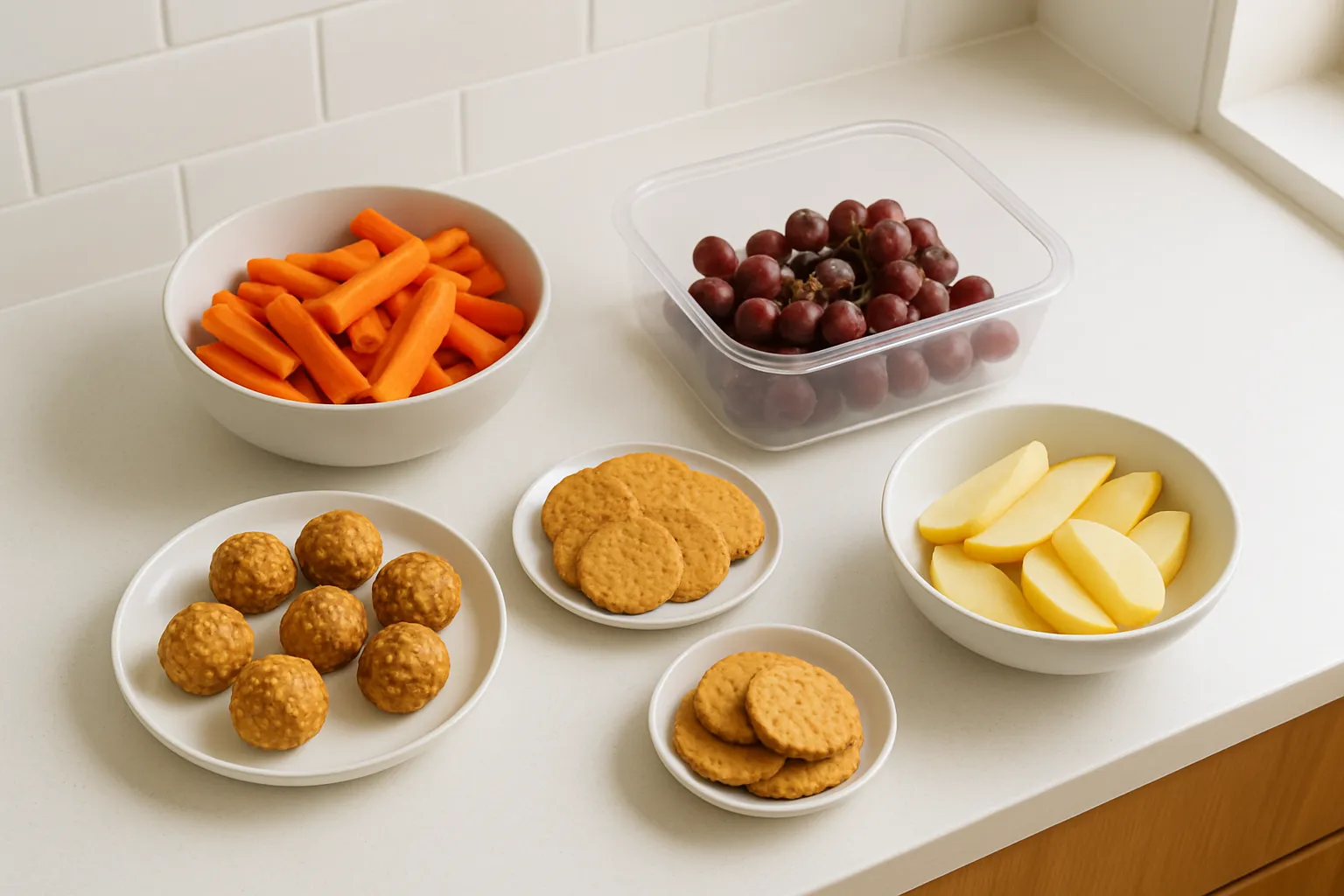
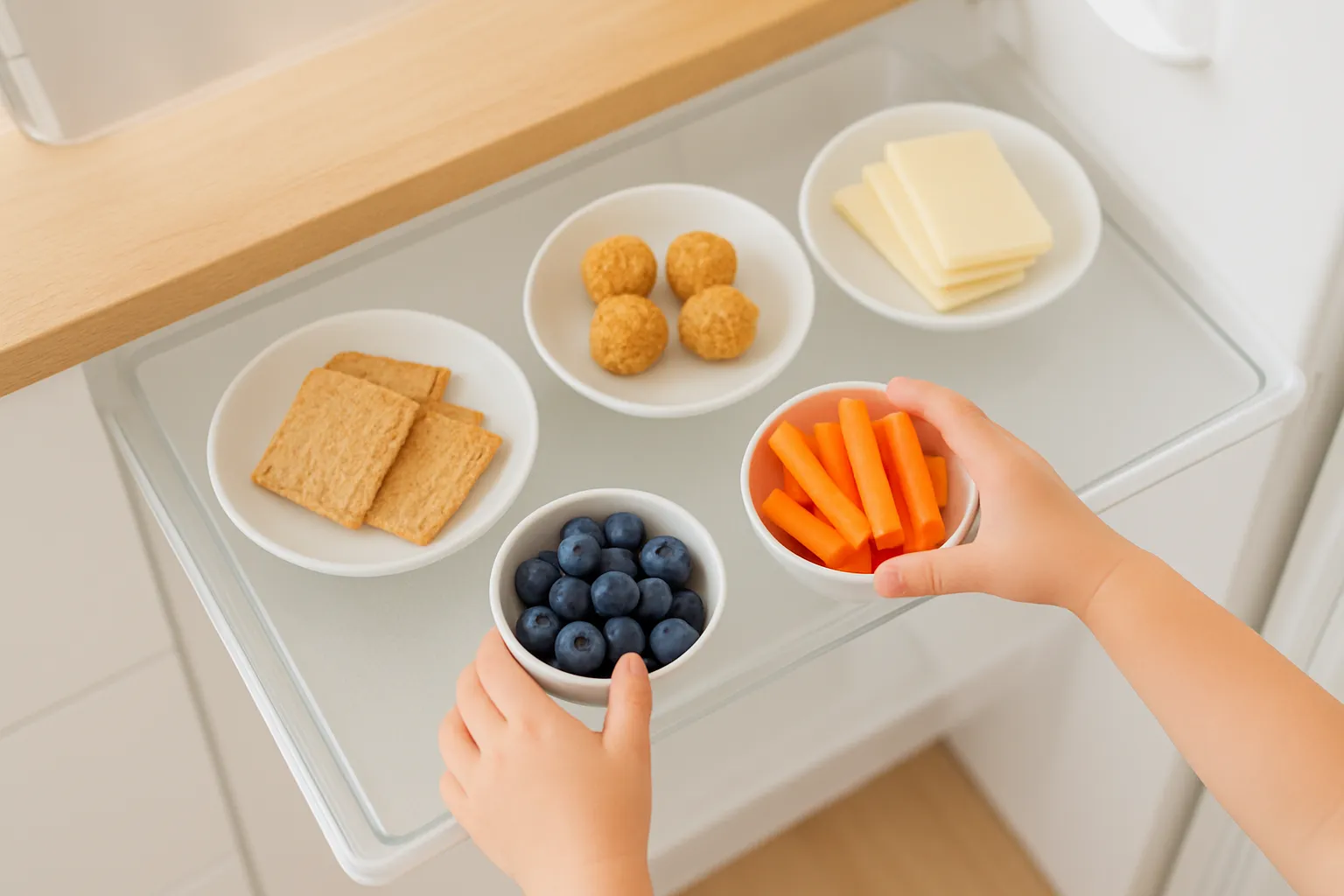
For when you want something a bit more grown-up on that shelf, try these fridge-ready nibbles that are quick to make, keep well, and pair beautifully with crackers, sliced sourdough or veg sticks.
Marinated feta in olive oil
- Cube a block of feta, toss with extra virgin olive oil, lemon zest, chopped oregano, a few chilli flakes and a smashed garlic clove. Add a bay leaf or two if you have them.
- Store in a small jar in the fridge. Keeps 4 to 5 days. Serve with crackers or on top of a tomato salad.
Quick pickled cucumber and red onion
- Thinly slice cucumber and red onion, pour over a mix of white vinegar, a little sugar and salt, and a splash of water. Leave to sit at least 30 minutes.
- Keeps up to 2 weeks. Bright and sharp next to richer cheeses or smoked fish.
Labneh pot with herbs
- Strain plain Greek yoghurt through a cloth for a few hours, mix the thickened labneh with olive oil, zaatar or chopped herbs and a drizzle of honey if you like sweet-savoury.
- Keeps 4 to 5 days. Great on crispbread or dolloped onto warm roast veg.
Whipped ricotta with lemon and chilli
- Whip ricotta with a little olive oil, lemon zest and a pinch of chilli flakes until fluffy. Season to taste.
- Keeps 3 to 4 days. Yum with roasted cherry tomatoes or on crostini.
Smoky salmon bites
- Flake smoked salmon into a jar, scatter with capers, dill, lemon slices and a little cracked pepper. A splash of cream cheese stirred through makes it richer.
- Best eaten within 2 days. Lovely on toasted sourdough or blini-style crackers.
Olive and orange herb mix
- Mix green and black olives with strips of orange zest, chopped rosemary and a splash of olive oil.
- Keeps a week. An easy bowl for grazing and a lovely contrast to salty cheeses.
Roasted mushrooms with thyme
- Sauté button mushrooms in olive oil with garlic and thyme until browned. Cool and store in an airtight container.
- Keeps 4 days. Use as a warm-ish topping or room temp on bread.
Sun-dried tomato butter
- Blend softened butter with chopped sun-dried tomatoes, garlic and parsley. Pack into a jar.
- Keeps 5 days. Smear on warm bread or melted over steamed veg.
Pearl couscous salad jar
- Cook pearl couscous, toss with roasted capsicum, chopped parsley, a handful of pitted olives and a lemon-olive oil dressing. Add crumbled feta at serving.
- Keeps 3 to 4 days. A filling fridge jar that feels grown-up but is bite-sized.
Quick anchovy and caper spread
- Mash anchovies with butter, a squeeze of lemon and chopped capers until spreadable.
- Keeps 5 days. Intensely savoury, a little goes a long way on toast.
Practical tips so the grown-up shelf actually works
- Use small lidded jars or airtight tubs so flavours don’t mingle and so little hands can’t help themselves as easily. Stack smaller jars on a higher shelf or in a clear plastic tub labelled “Grown-ups” that you can pull out.
- Keep little spoons or herb tongs handy so you don’t use your fingers. Label jars with the prep date and toss anything older than the suggested times.
- Make double batches and keep one jar for adult-only flavours and one milder version for the kids if you want to share. That way no one misses out, and you still get the extra kick.
A small selection of these jars makes afternoon grazing feel a tiny bit fancy without any fuss. Grab a dry cracker, a slice of sourdough and a glass of something chilled and enjoy the break.
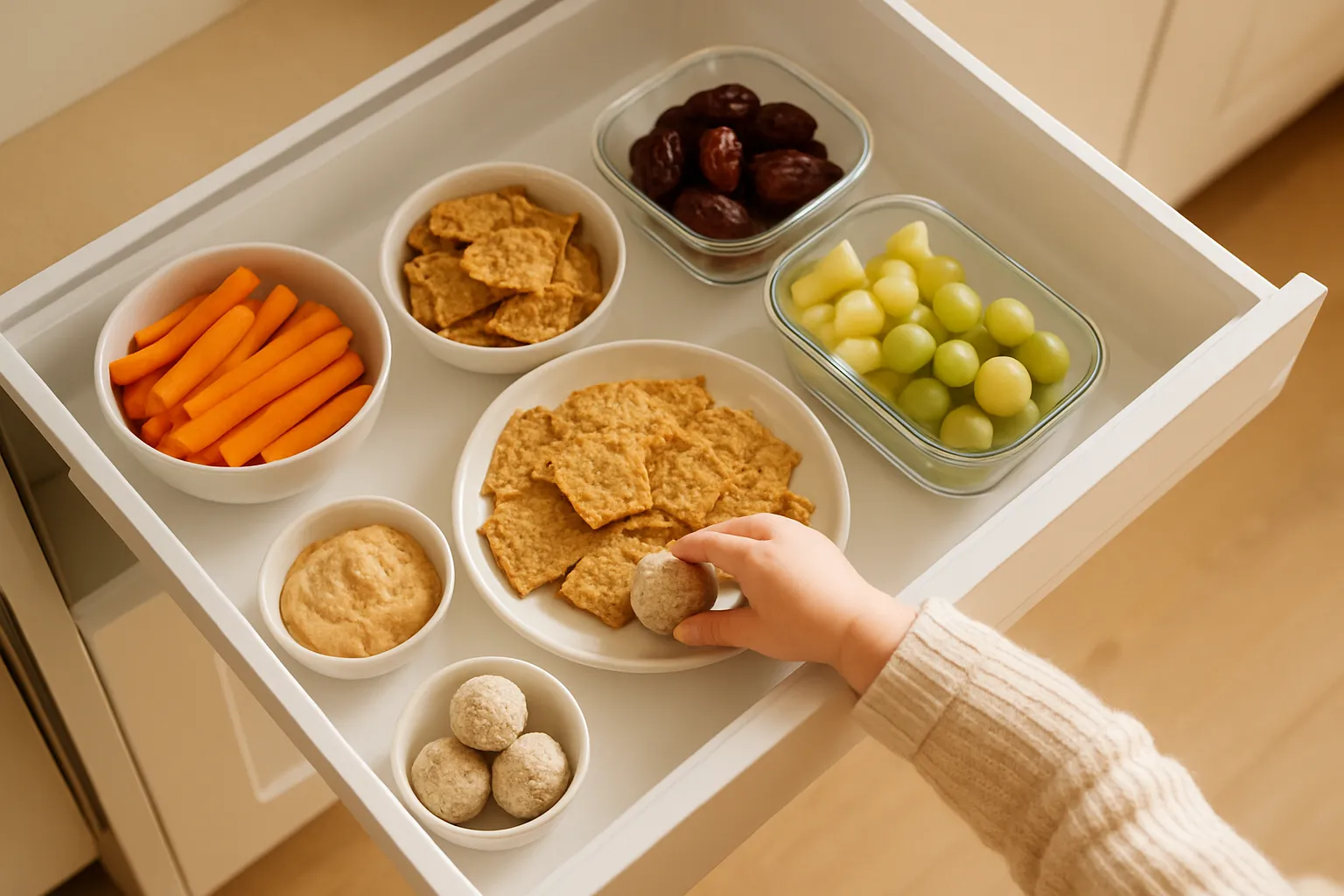
Photo credit: Pexels
Browse Cuisines
From the Blog
First up, a few no-fuss spring winners that keep sticky fingers and big clean-ups to a minimum. Quick to prep and easy for little hands to manage, these are the sorts of things I reach for when we want something...
Nice - here’s how Steve keeps dinner simple without sacrificing flavour or sanity. A few good habits and the right packing tricks mean you can pull a proper family meal out of the freezer in minutes.
Righto, a couple of quick fridge fixes will make everything a whole lot easier. These are the simple, practical habits and setups that keep snacks safe, obvious and actually reachable for little hands.


 Never miss a recipe from us, subscribe to our newsletter