
One-pot soup recipes that toddlers can help prepare
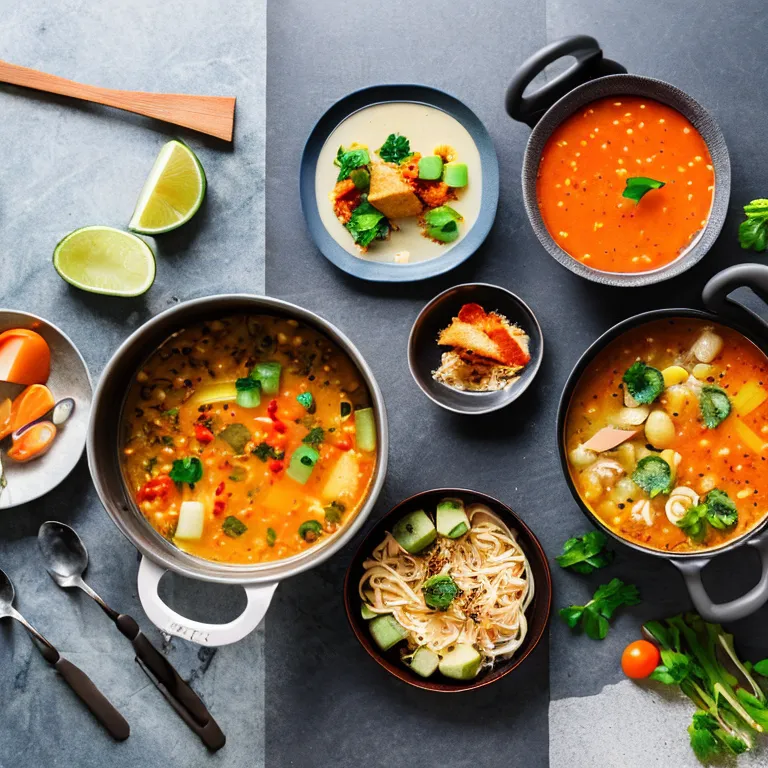
Quick note before we get stuck in: this is about the practical steps that let you go from keeping kids well away from the heat to safely having them help with the pot. Small, predictable routines and the right set-up make the whole thing fun instead of frantic.
Practical steps to move from firewall to stockpot
-
Set up clear work areas. Create a hot zone around the stove where only adults go, a helper station at the benchtop or a sturdy step stool, and a wash-and-prepare spot for the kids. When everyone knows where they belong, things run smoother.
-
Use the back burners and turn handles in. Cook on a back burner and always point pot handles inwards. Heavy-based pots are harder to tip, so they are a safer bet.
-
Make a physical barrier that still lets kids watch. A removable stove guard or baking tray mounted vertically will stop reaching-in while keeping little eyes on the action. If you don’t have a guard, place a chair or the highchair a safe distance away so the child can see but not touch.
-
Lower the risk before you invite help. Do the chopping, browning and any high-heat frying yourself. Bring the pot down to a gentle simmer, or move it briefly off the heat, before you ask a child to add ingredients or stir.
-
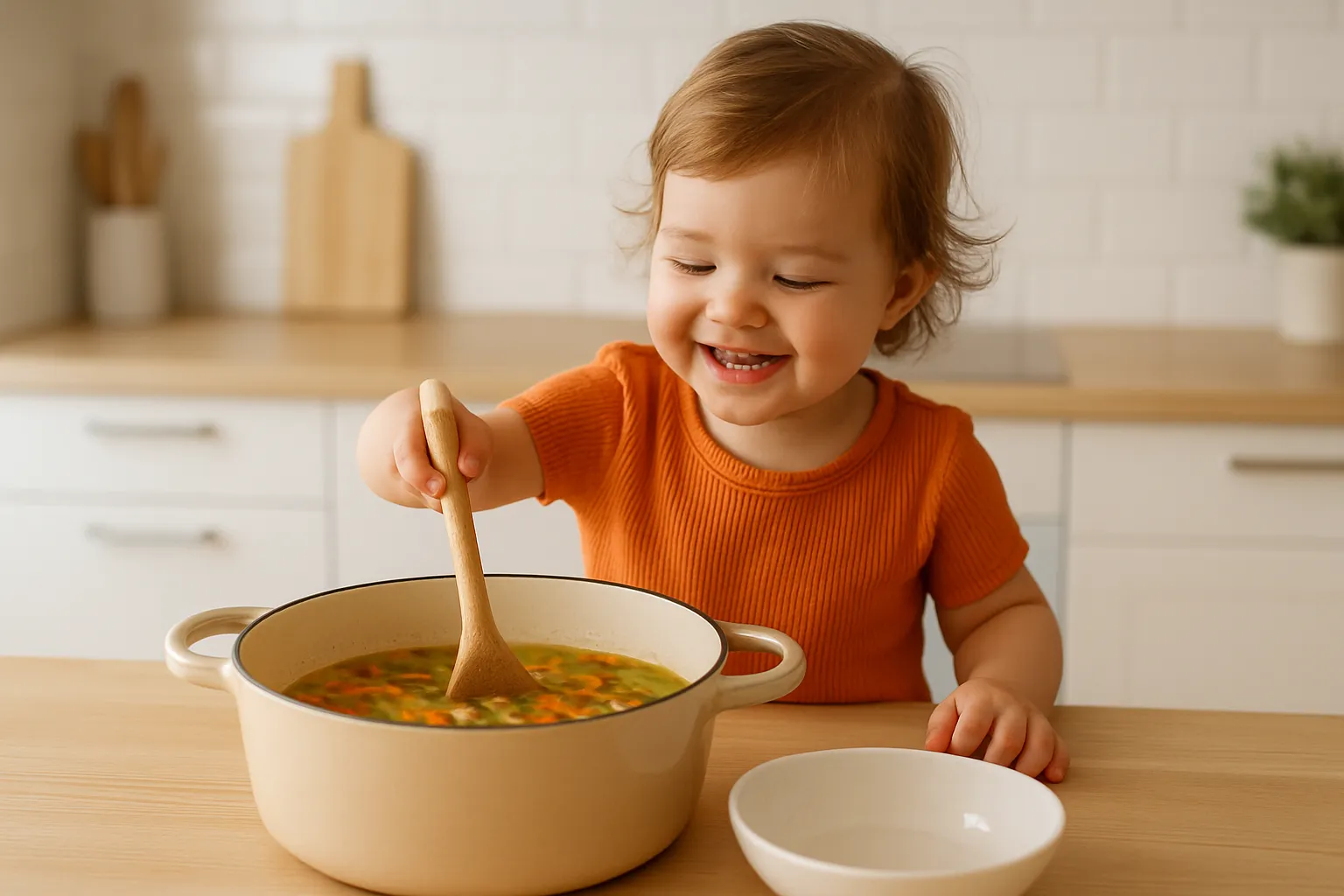
Use kid-friendly tools. Give them lightweight wooden spoons, silicone spatulas, measuring cups and a shallow bowl to tip from. Long-handled spoons let them stir safely without getting too close.
-
Pre-measure and pre-cool. Pop measured ingredients into small bowls or ramekins. Let hot stock cool a touch before any transferring, and never ask kids to pour boiling liquid.
-
Teach one simple rule at a time. Start with “hands stay on the spoon” or “wait until I say add” and praise them when they follow it. Short, repeatable rules stick better than a long safety lecture.
-
Manage splashes and steam. Use lids and splatter screens, and always tilt lids away from little faces to release steam. If something is likely to spit, do that step yourself.
-
Start with short tasks and build confidence. Washing veg, tearing lettuce, sprinkling pre-measured herbs or stirring for 20-30 seconds are perfect starter jobs.
A short sequence you can copy 1) Adult cooks base, reduces heat and moves pot to back burner. 2) Child at helper station is given a bowl of pre-measured veg and a long-handled spoon. 3) Adult calls “ready?” then child adds veg and stirs for a set time while the adult steadies the pot. 4) Adult finishes off any final hot steps and plates up.
Little changes in how you set up and sequence the cooking make it safe and enjoyable. The goal is to keep the real hazards off-limits while giving kids simple, meaningful jobs that let them feel part of dinner.
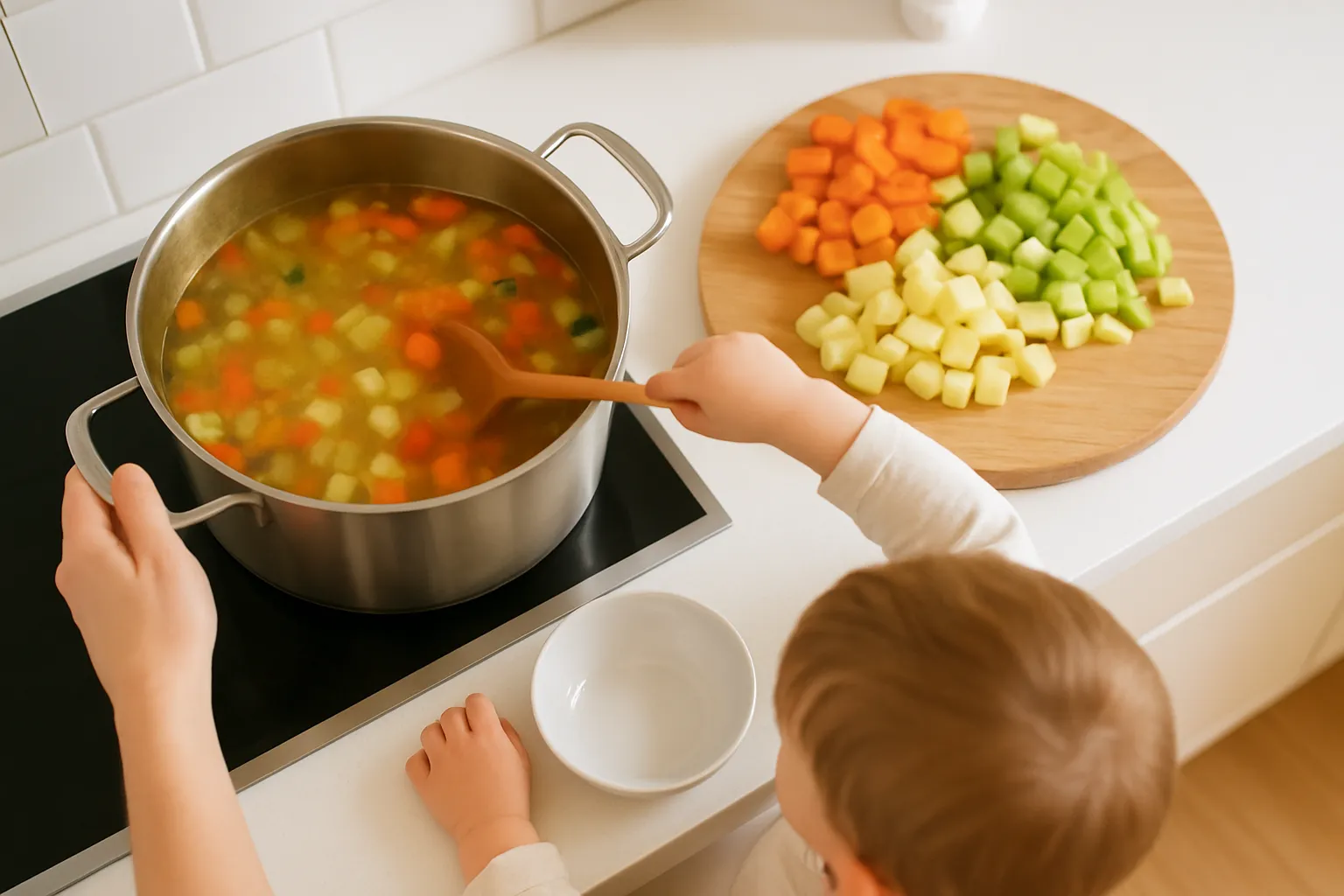
If you’ve got your stock on the go, here are simple, useful jobs toddlers can actually do without slowing you down.
Age-friendly tasks
- 12-24 months
- Rinse veg in a large colander while you hold it steady. Let them splash under a gentle tap.
- Tear washed lettuce or baby spinach into a bowl with their hands.
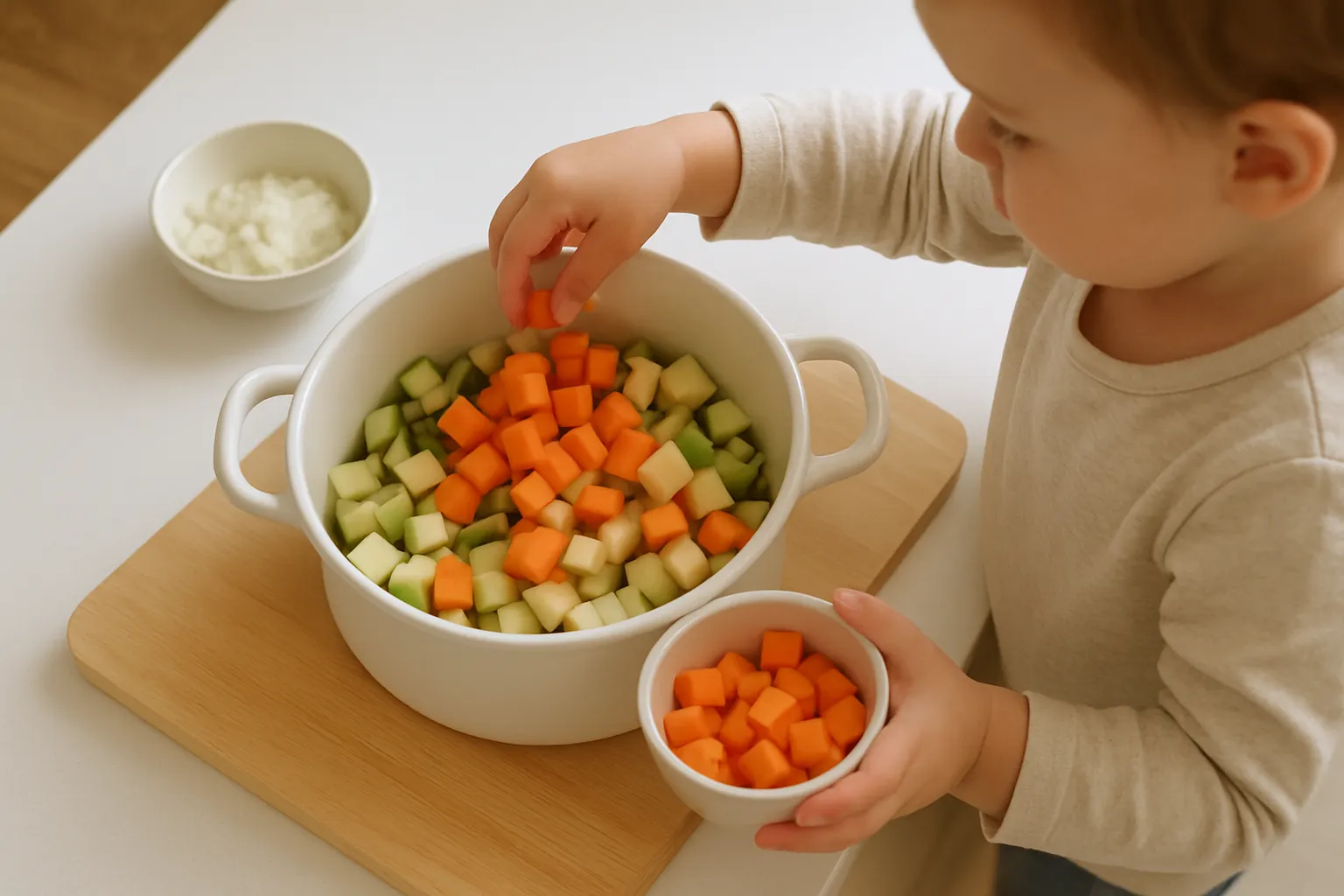
- Drop pre-measured spices, pasta shapes or frozen peas into a bowl or pot.
- Push soft things into a bowl with a wooden spoon for stirring.
- 2-3 years
- Hold a small bowl steady while you scrape grated carrot or cheese into it.
- Use toddler tongs to transfer cubed soft veg between bowls.
- Mash cooked potato or pumpkin with a fork or potato masher.
- Twist lids off jars or push fridge drawers closed.
- 3-4 years
- Measure and pour pre-measured liquids from a small jug into the pot (use two hands).
- Grate with a small hand grater designed for little hands, under supervision.
- Peel soft fruit or veg with a kid-safe peeler, or peel corn kernels with hands.
- Stir gently while the pot is off the heat or cooling.
- 4+ years
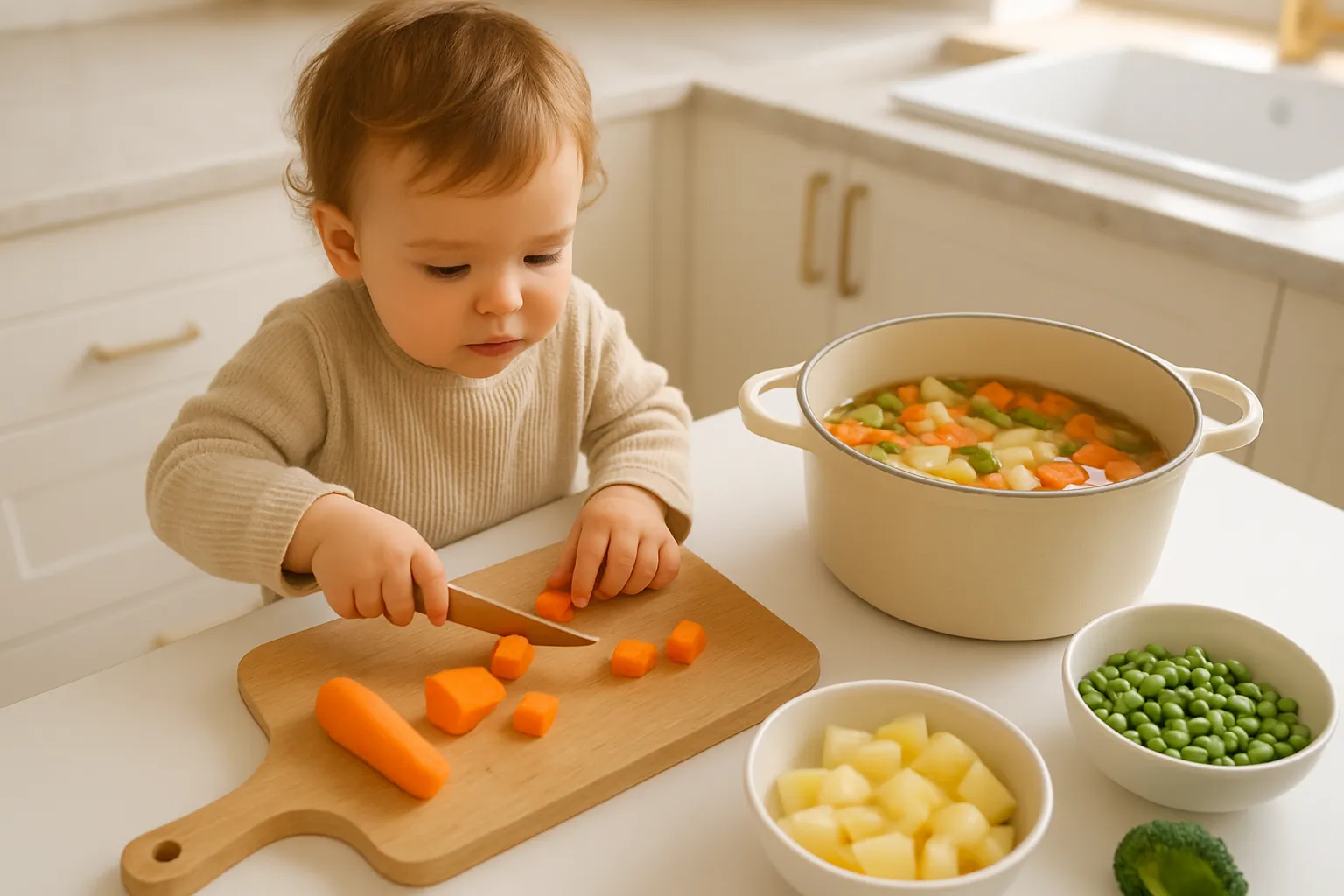
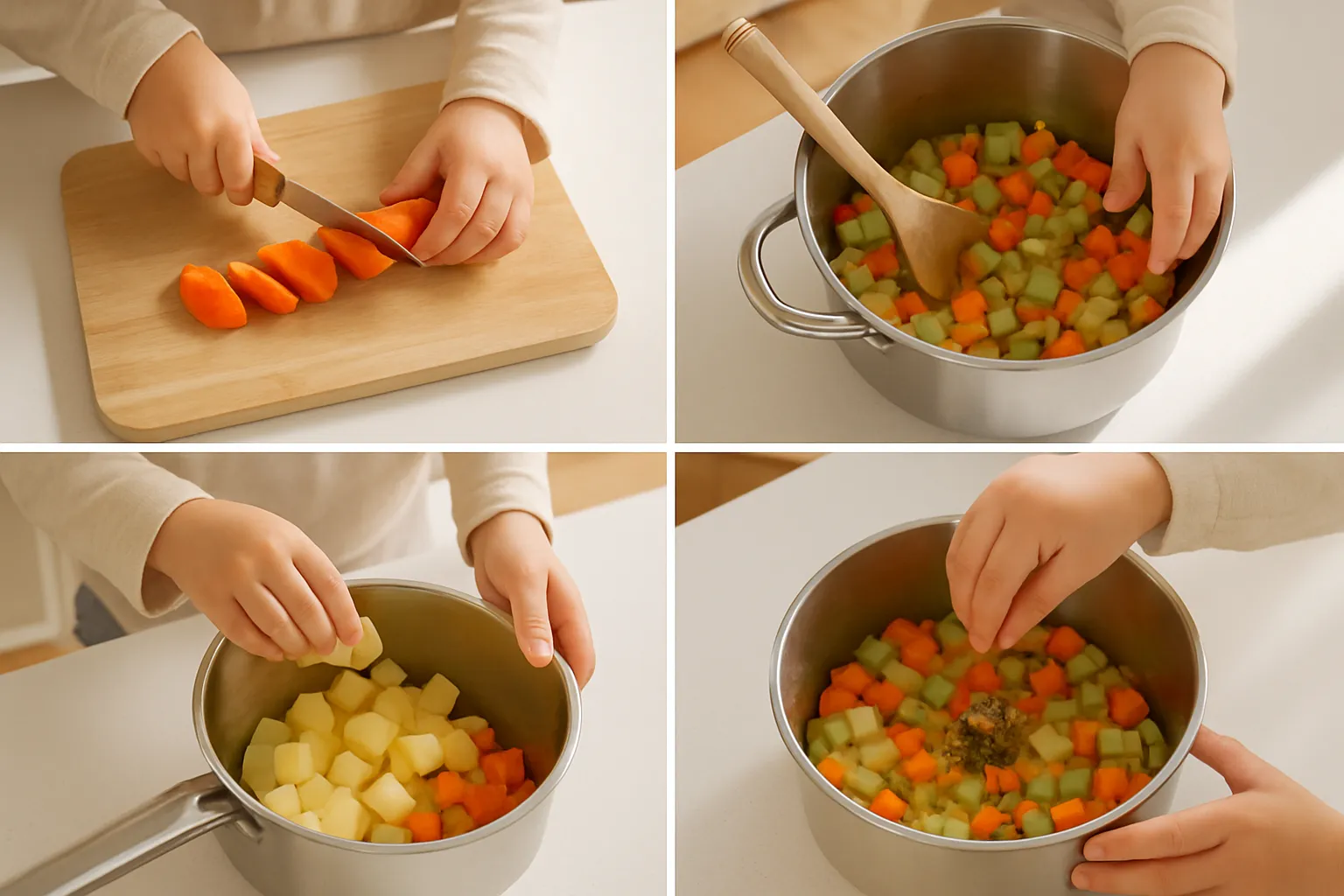
- Chop soft-cooked veg with a child-safe knife on a non-slip board.
- Read a simple step aloud and hand you the next ingredient.
- Help ladle soup into containers for the fridge.
Tools that make prep easy
- A stable colander and low-sided bowls so small hands can reach.
- Child-sized spoons, silicone spatulas and plastic tongs.
- A jug with a spout and two-handled cups for easy pouring.
- Non-slip mat for bowls and boards.
- A blunt child-safe knife and a small grater with a hand guard for older toddlers.
Quick tips to keep it smooth
- Pre-measure the tricky stuff so their job is just “drop and pour.”
- Give one clear instruction at a time. Two tasks max before a break.
- Turn jobs into a mini game: who can count three bay leaves, or make the loudest stir?
- Use praise and simple choices: “Do you want to stir or pour the peas?”
- Keep it short. Little ones lose interest quickly, so change tasks every few minutes.
Tiny cleanup jobs that build habits
- Wiping a small area with a damp cloth.
- Placing scraps in the compost bucket.
- Putting used measuring spoons back in the drawer.
- Stacking light bowls or rinsing utensils in a bowl of water.
Little jobs = big confidence. Give them a real role, praise the effort, and you’ll be surprised how helpful they become at dinnertime.
Italian minestrone
- What goes in: soft carrots, zucchini, potato, a small handful of pasta shapes, a can of diced tomatoes, veg or chicken stock, a tin of cannellini or borlotti beans.
- How to make it toddler-friendly: keep the veg chunks larger for older toddlers and smaller or partly mashed for younger ones. Use low-salt stock and add a bay leaf while it simmers, then remove.
- Little helpers: kids can drop in the pasta, rinse and add beans, and stir gently while an adult watches.
- Serve with: a drizzle of olive oil, grated Parmesan or a scatter of chopped basil. Crusty bread or cheese toast soldiers make it a hit.
Mild Indian dhal
- What goes in: red lentils, finely chopped tomatoes, a pinch of turmeric, mild curry powder or just cumin seeds, chopped spinach or sweet potato, coconut milk optional.
- How to make it toddler-friendly: red lentils break down and make a naturally thick, spoonable soup that babies and toddlers love. Keep spices gentle and try one new spice at a time.
- Little helpers: kids can pour in rinsed lentils, add coconut milk, and mash some cooked sweet potato with a spoon.
- Serve with: soft naan pieces or toasted pita for dipping, and a tiny squeeze of lemon on the side.
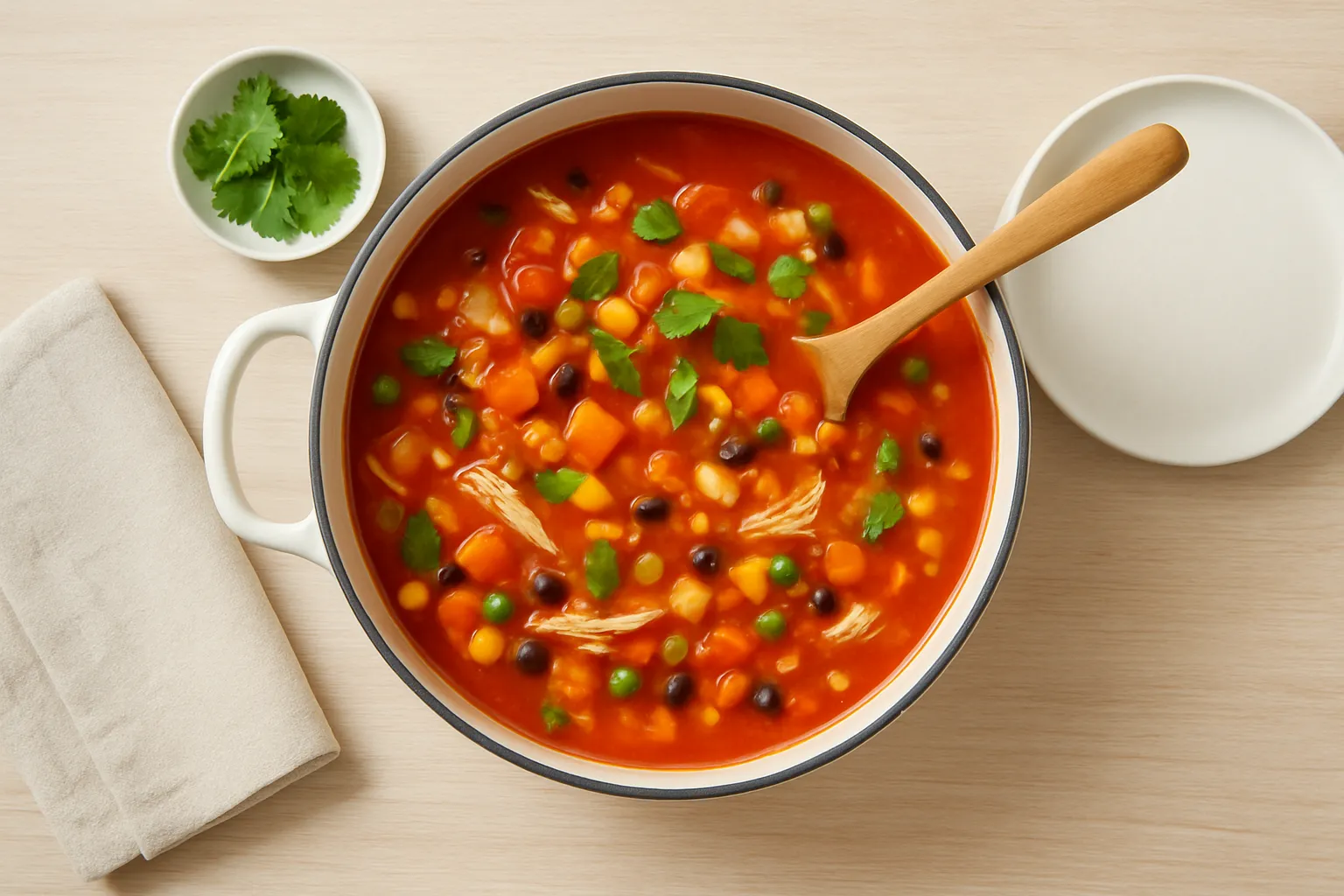
Mexican-style chicken and corn soup
- What goes in: shredded cooked chicken, sweetcorn, black beans (optional), diced tomato, mild chilli-free taco seasoning or smoked paprika, corn tortillas cut small.
- How to make it toddler-friendly: skip the chilli; smoky paprika gives flavour without heat. Cut tortillas into strips and crisp lightly for toddler-friendly dipping.
- Little helpers: children can add corn, stir the pot, or sprinkle cheese on top.
- Serve with: avocado chunks, grated cheddar, or a dollop of natural yoghurt.
Japanese-inspired miso noodle soup
- What goes in: light dashi or veg stock, a spoon of white miso (stirred in at the end), soft silken tofu cubes or shredded chicken, baby spinach, and soft udon or soba noodles.
- How to make it toddler-friendly: add miso off the heat to keep the beneficial probiotics alive and use small noodle pieces for easier eating.
- Little helpers: kids can add the spinach and tofu, and watch the noodles sink in.
- Serve with: thinly sliced spring onion on the side so children can decide whether to add it.
Thai-style coconut chicken soup, mild
- What goes in: chicken pieces, coconut milk, a small piece of galangal or ginger, a stalk of bruised lemongrass for aroma removed before serving, mushrooms and carrot.
- How to make it toddler-friendly: leave out bird’s eye chillies and fish sauce; use a splash of light soy or a pinch of salt instead. Strain out lemongrass before serving.
- Little helpers: toddlers can add shredded chicken, scoop out mushrooms, or press lime wedges for a little burst of flavour.
- Serve with: soft jasmine rice or rice noodles and a few coriander leaves if they like them.
Moroccan-style tomato and lentil soup
- What goes in: red lentils, canned tomatoes, mild smoked paprika, a tiny pinch of cinnamon, carrot and celery.
- How to make it toddler-friendly: simmer until soft, then either leave chunky for older toddlers or lightly blend for younger ones. Keep spices mild.
- Little helpers: children can add lentils, stir, and help scatter a little chopped parsley on top.
- Serve with: chunks of focaccia or soft flatbread to dunk.
Greek lemon and orzo (light avgolemono-style)
- What goes in: chicken stock, small orzo pasta, shredded chicken or white beans, lots of soft-cooked veg, and lemon for brightness.
- How to make it toddler-friendly: instead of whisking raw egg into hot soup, gently stir in a little natural yoghurt thinned with warm soup or fold in a lightly beaten egg slowly off the heat for older kids’ portions.
- Little helpers: kids can tip in orzo, gently stir, and choose between lemon or yoghurt topping.
- Serve with: olive oil-drizzled bread and a few cucumber sticks.
Quick tips for introducing global flavours
- Start small. Use tiny amounts of new spices and repeat them across meals so kids get familiar.
- Keep textures predictable. If you’re trying a new spice, pair it with something they already like, such as potato, pasta or rice.
- Let them choose a topper. Offer a small selection like grated cheese, yoghurt, avocado or chopped herbs and let your toddler pick.
- Save a plain scoop. For fussy days, reserve a ladleful before adding herbs or citrus so you have something familiar on the plate.
These little swaps and simple flavour bases mean you can travel the world from one pot while kids take part and feel proud of dinner.
Kitchen Safety For Little Hands
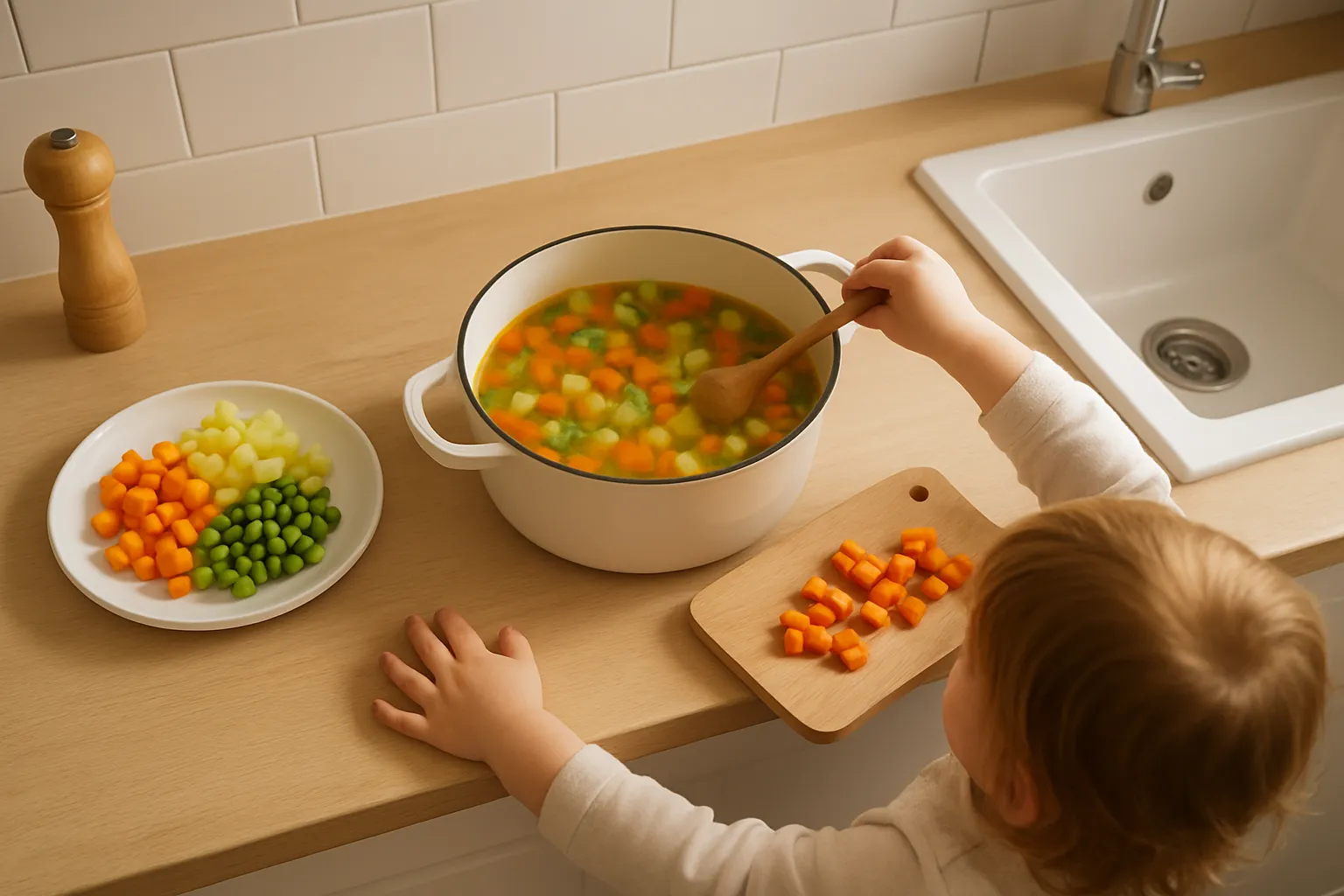
Make safety part of the routine and the kitchen becomes a place kids can learn without you worrying the whole time. Here are practical tips that actually work on busy weeknights.
Set up a safe spot
- Use a sturdy step stool or learning tower so they can see and reach without climbing on benches. Put a non-slip mat under it.
- Keep them facing you rather than the stove whenever possible. It’s easier to supervise and they won’t accidentally reach for hot pots.
- Clear the area of tripping hazards. A quick sweep of toys and spills before cooking saves drama later.
Hot surfaces, pots and pans
- Turn pot handles in toward the back of the cooktop and use the back burners when you can.
- Keep saucepan lids tilted so steam vents away from little hands. Teach kids that steam can burn as much as the pot.
- Simmer instead of full boil to reduce splatter. Use a splatter guard for frying or very hot liquids.
Age-appropriate tasks
- Safe jobs for toddlers: rinsing veg, tearing herbs, stirring cool or warm (not boiling) mixtures, pouring pre-measured ingredients from small cups, and placing clean spoons or bowls on the bench.
- Practice tasks with cold food first so they can get the hang of it without any risk.
- Use short, clear instructions: “Hold the cup here, pour slowly,” or “Stir the soup at the side of the pot.”
Knife and cutting safety
- Leave real knives to adults. For supervised cutting practice, use a child-safe knife or a butter knife with soft food like cooked veg, banana, or bread.
- Put a damp cloth under the chopping board to stop slipping. Show the safe finger hold rather than just grabbing the food.
- Herbs and leafy greens can be torn by hand. Scissors are great for toddlers to help with herbs.
Tasting and serving
- Cool a spoonful on the bench for a moment before offering a taste. Test with your own spoon first so you know the temperature.
- Use small, shallow tasting spoons or mini bowls. Don’t let them lick the communal stirring spoon.
- Teach them to blow on hot food and say “hot” so it becomes a habit.
Appliance safety
- Keep cords tucked away and out of reach. Move kettles off the bench if little hands can reach the cord.
- Slow cookers and instant pots are fine when sealed, but keep curious hands away from steam-release valves and hot lids.
- Microwaves can heat unevenly. Stir and test temperature first, especially with dairy or small portions.
Clothing and hygiene
- Roll sleeves up and avoid loose clothes that could catch on handles or flames. Tie back long hair.
- Handwashing before and after handling food is non-negotiable. Turn it into a tiny song or count to 20 together.
Spills, slips and burns
- Clean spills straight away and keep a towel handy. Non-slip mats are worth the money.
- Basic burn first aid: cool the burn under running cool water for 20 minutes, then cover with a clean, non-fluffy cloth and get medical help for anything more than a small blister. Keep your local after-hours and Poisons Information numbers on the fridge.
Set rules and practise them
- Keep rules simple: “No touching hot pots,” “Ask before you taste,” and “Stand on the stool with both feet.” Repeat them every time.
- Role-play kitchen rules when nothing is cooking. Practising habits when calm makes them stick when the kitchen’s busy.
Supervision and timing
- Have a plan for each job you want them to do and keep them within arm’s reach when heat is involved. Little jobs that take five minutes are better than a long, risky “help me” session.
- If you’re doing a risky step like draining pasta or opening a pressure cooker, move the child to a safe activity nearby until that part is done.
A few small changes make a big difference. Keep things simple, stay close, and make safety part of the fun so everyone gets to help and no one gets hurt.
With the safety basics sorted, here are practical, quick dinner ideas you can throw together after daycare, plus the little jobs your toddler can do so they feel proud of dinner.
Tomato and red lentil soup - 20 minutes
- Toddler jobs: add pre-measured lentils to the pot, stir with a wooden spoon.
- Ingredients: tinned tomatoes, red lentils, veg stock, onion, garlic, a carrot grated, pinch of mild chilli flakes optional.
- Method: sauté onion and garlic, toss in grated carrot and lentils, add tomatoes and stock, simmer 10-12 minutes until lentils are soft. Blitz a little for smoother texture if needed.
- Notes: freezes well in single portions. Serve with buttered toast fingers for dipping.
Creamy corn and chicken chowder - 25 minutes
- Toddler jobs: scatter frozen corn into the pot, stir, tear pre-cooked chicken into bite-sized pieces.
- Ingredients: diced potato, frozen corn, pre-cooked shredded chicken, chicken stock, milk or light cream, a little thyme.
- Method: simmer potato in stock until tender, add corn and chicken, pour in milk and heat gently. Mash a few potato pieces for a toddler-friendly texture.
- Notes: swap chicken for chickpeas for a vegetarian version.
Speedy pumpkin and red lentil soup - 25 minutes
- Toddler jobs: pop pre-cubed pumpkin into the pot, press the lid down (supervised), crumble a toasted bread crouton on top.
- Ingredients: diced pumpkin, red lentils, onion, mild curry powder or turmeric, veg stock.
- Method: sauté onion, add pumpkin and lentils with stock, simmer until soft. Blend for a velvety finish or leave slightly chunky.
- Notes: mild spices are toddler-friendly; serve with plain yoghurt dollop or grated cheese.
White bean minestrone - 20-30 minutes
- Toddler jobs: pour pasta into a measuring cup and tip it in, stir.
- Ingredients: tinned white beans, small pasta shapes, tinned tomatoes, carrot, celery, spinach leaves.
- Method: soften veg, add tomatoes and beans, simmer, add pasta late so it does not go soggy, stir in spinach at the end.
- Notes: great for packing veggies. Freeze leftover in lunch-size tubs.
Sausage, lentil and veg pot - 20 minutes
- Toddler jobs: line up the pre-peeled sausages, pat them gently, press the start button on the timer.
- Ingredients: good-quality sausages cut into coins, brown lentils, tin of tomatoes, mixed frozen veg.
- Method: brown the sausage slices, add lentils, tomatoes and stock, simmer until lentils are soft, toss in frozen veg at the end.
- Notes: sausages add appeal for picky eaters but you can use plant-based sausages too.
Mild fish and potato chowder - 20 minutes
- Toddler jobs: scatter frozen peas in at the end, sprinkle chopped parsley.
- Ingredients: firm white fish, potato, leek or onion, milk, small handful of peas.
- Method: simmer potato and leek in stock, flake in fish near the end so it just cooks through, stir in milk for creaminess.
- Notes: check for bones carefully and flake fish yourself.
Quick tricks to keep dinners fast and kid-friendly
- Keep a jar of mixed frozen veg, pre-cooked grains, and cooked beans in the freezer for instant bulk.
- Batch-cook lentils and quinoa at the weekend and fridge-freeze in portions. They thaw quickly in a hot pot.
- For texture: blend half the soup and leave half chunky so you can decide what your toddler prefers.
- Season at the end and taste after cooling a spoonful for the kids; avoid adding extra salt before serving.
- Freeze single portions in labelled tubs. Thaw overnight or reheat from frozen on the stovetop, stirring to break up icy spots.
- Make mealtimes fun: let them sprinkle cheese, place croutons, or arrange toast soldiers. Little tasks build confidence and keep them interested in the food.
Quick reminders
- Toddlers can help a lot without being near hot surfaces. Give them dry jobs or supervised stirring with a long wooden spoon.
- Always check temperature before serving and remove whole herbs, bay leaves or big chunks that could be a choking risk.
There you go. A handful of go-to pots that are quick on a weeknight, easy to freeze or stretch, and come with tiny helper jobs so the little one gets in on dinner without slowing you down.
Browse Cuisines
From the Blog
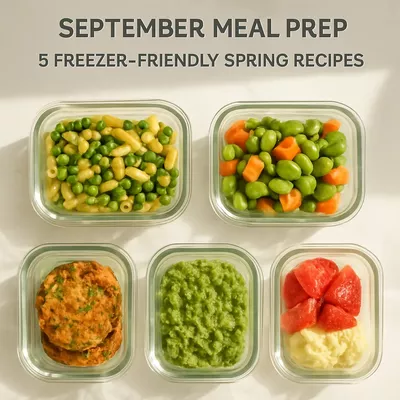
First up, a few no-fuss spring winners that keep sticky fingers and big clean-ups to a minimum. Quick to prep and easy for little hands to manage, these are the sorts of things I reach for when we want something...
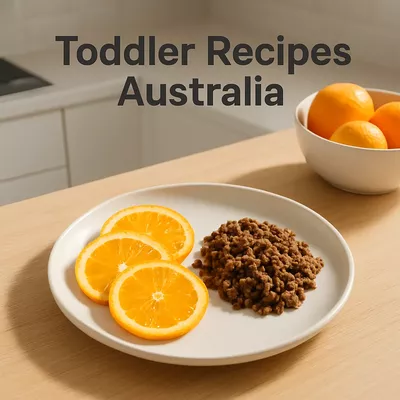
Nice - here’s how Steve keeps dinner simple without sacrificing flavour or sanity. A few good habits and the right packing tricks mean you can pull a proper family meal out of the freezer in minutes.
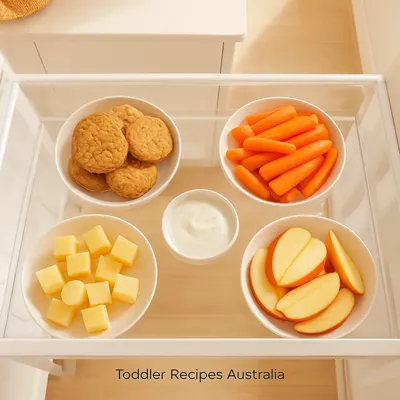
Righto, a couple of quick fridge fixes will make everything a whole lot easier. These are the simple, practical habits and setups that keep snacks safe, obvious and actually reachable for little hands.

 Never miss a recipe from us, subscribe to our newsletter